


History, faith and action will come together in a facility opening Sept. 15 at 16th Street Baptist Church in Birmingham, Ala.
The date marks the anniversary of the 1963 Klu Klux Klan bombing that killed four girls during Sunday services at the church, stunning the nation and galvanizing the Civil Rights Movement.
While the congregation has housed an exhibit detailing the tragedy, the new 16th Street Education and Visitor Center is designed to educate in ways that inspire movements for justice.

Arthur Price
“We want visitors who encounter the history of 16th Street Baptist Church to reflect on its meaning and then ask the question, ‘What does that history require for me to do today?’” said Arthur Price, pastor of the historic downtown congregation affiliated with the Progressive National Baptist Convention. “The center allows us to connect our past and present in ways that inspire personal responsibility moving forward.”
Church members who lived through the bombing and its aftermath relied on faith to guide them to answers and actions they needed to take, said Deacon Terrence Brown, executive director of the center.
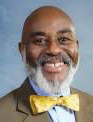
Terrence Brown
“The people who came before us sat in those very same pews we sit in today and they listened to the word of God and they asked the question, ‘How do I use what I’ve learned to discern the direction we ought to go in our society?’” Brown said. “That is the formula, in my mind, that propelled the Civil Rights Movement. The thing that grounded them was a biblical tradition that all God’s people are created equal.”
The new 13,000-square-foot facility is located next to the church’s historic sanctuary and includes spaces designed to transform the 1963 tragedy into a force for education, community engagement, dialogue and education. The center will host artist residencies, oral history presentations, public speaker series, quilting programs and other initiatives to foster memory, justice and reconciliation.
The 63rd anniversary of the attack and opening celebration for the center will include an address from Bryan Stevenson, founder of Equal Justice Initiative, in addition to a lineup of church leaders, civil rights advocates and community members connected to the Civil Rights Movement.
The vision is to ensure people know that the bombing and the struggle for justice and equality are things that really happened, Brown said. “We want to make sure the history of 16th Street Baptist Church, the history of Birmingham and the history of the Civil Rights Movement are not just relegated to memory and not relegated to where memory becomes mythology.”
Organizers want to ensure the church and its history translates into the motivation to speak truth to power today, he said, adding that 16h Street was the city’s first Black Baptist church.

Artist’s rendering of the new welcome center.
“The power of the voices and the leadership that took place on this stage in 1963 came in their lifting up of the truth and having the courage to tell the truth about injustice and inequality. It required people who are willing to speak that truth to lead courageously and challenge injustice just as we must do today.”
The center and its programs will convey that message in part by approaching teaching and learning as forms of discipleship, Brown added.
“This center gives us the opportunity to talk about education as formation, not simply as information, because it reminds us that the more that we know, the more we become about what we know,” he said. “We see it as a place for like-minded people to convene and to have these conversations in a spirit of community and to present the 16th Street story and the Civil Rights story as America’s story.”
After the bombing, “this sanctuary was a place where people found the courage they needed to participate in the movement. Now we have this new entity, the Education and Visitor Center, as a place where we’re going to tell those stories so people will remember, reflect and get reengaged in order to go back to their respective communities and transform this land.”