


“Pope Francis has died.” Those words were the first banner I saw on my iPhone when I woke up Easter Monday.
The Supreme Pontiff and Bishop of Rome (yes, it’s hard for a Baptist to type those words) died at 7:35 a.m. local time after a whirlwind weekend of liturgical celebration that culminated in his granting a shotgun audience with U.S. Vice President JD Vance, who was in Rome with his family. Vance’s wife, Usha, a practicing Hindu, did not attend.
I recall sitting in the antechamber conference room of a congressional hearing in 2013 when the white smoke billowed out of the Sistine Chapel chimney, signaling the election of a new pope. A group of congressional staffers and I watched and played the guessing game about which cardinal had secured the necessary votes.
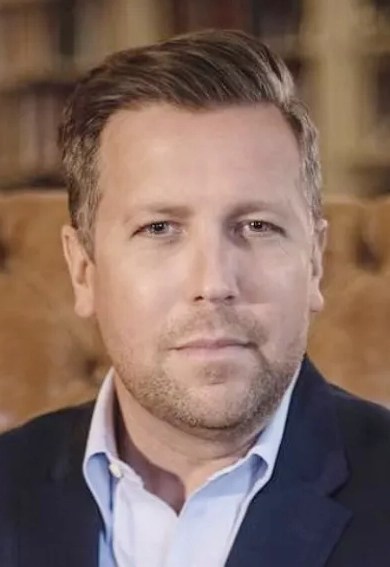
Benjamin Cole
“Let’s pray it’s not Bergoglio,” my colleague and staff director said. “He’ll be the worst.”
Within the hour, Cardinal Bergoglio appeared in a simple white cassock on the balcony of St. Peter’s and delivered his first papal address. The crowds gathered in St. Peter’s Square cheered and shouted. In our little conference room, there was a sense of dread.
Later that evening in my home on Capitol Hill, I hosted an ecumenical dinner that included one Catholic priest from the Archdiocese of Washington, a former member of Capitol Hill Baptist Church who had been excommunicated, my former staff director and colleague, and Father Arne Panula, director of the Catholic Information Center and former vicar of Opus Dei, an ultra-conservative personal prelature of the Roman Catholic Church.
“Nobody at dinner that night was enthusiastic about Francis’ new pontificate.”
Nobody at dinner that night was enthusiastic about Francis’ new pontificate. In fact, it was a pretty gloomy salon. After a while, Father Arne asked to lead us all in a prayer for Pope Francis that I never have forgotten, not for the words he prayed but for how it changed the entire mood in the room. Without reproving us for our uncharitable and dire predictions, he reminded us that our confidence and hope was in the Lord alone.
A few days later, I had a private lunch with Father Arne and asked him what he really thought about Francis. “Ben,” he said flatly, “I think he is the pope. And I think he needs our prayers.”
Now I knew Father Arne well enough to know he was not pleased with the selection of a left-leaning South American prelate with Liberationist commitments. I tried every way I could to get him to speculate whether Francis’ pontificate would witness the re-emergence of Soviet-style Marxism in Russia and across Latin America. But he wouldn’t take the bait. He listened and would only say, “He needs our prayers.”
Probably owing to Father Arne’s kind admonition, I have prayed for Pope Francis regularly over the 12 years of his papacy. Just this week, I prayed for his health and strength. I prayed when I saw his meeting with Vance. And I prayed when I saw him at his final Urbi et Orbi message this past weekend.
In fact, apart from my own pastor, Pope Francis is the only religious leader who’s been more consistently included in my private intercession for more than a decade. Why that is, I’m not exactly sure, except for my sense that despite our profound theological differences the global Christian community is commanded by Scripture to seek unity under Christ. History proves that the timely words and prophetic witness of a Catholic pope — despite my own repudiation of apostolic succession and papal supremacy and infallibility — has the power to bring despots, tyrants, evil rulers and wayward theologians to heel.
Think Henry IV at Canossa. Or Ernesto Cardinale at Managua.
Yes, the world needs a pope with the moral authority to reprove, rebuke and denounce evil, error and tyranny. It also needs a pope who does justly, loves mercy and walks humbly.
The final jury verdicts on Francis’ pontificate are rolling in, and they are as split and divided as the pope’s legacy has been since his election in 2013. To some, Francis was a welcome voice of social moderation who softened the church’s stance on human sexuality and reinvigorated, as a committed Jesuit might, the church’s concern for the poor.
“Those gentle moments of pastoral kindness were the best of Francis.”
To others both within and without the Catholic Right, Francis was a contemptible departure from the theological and public policy trajectories set by John Paul II and his successor, Benedict XVI. Francis cracked the door open for non-Catholics to partake of the Eucharist. He prevaricated on questions of soteriological exclusivity. At times, Francis left his harshest critics wondering if a good Jesuit could be a Catholic at all.
I’ll freely admit: I’ve been troubled by Francis’ efforts to push Catholics further left. And yet, I’ve wiped away tears as I’ve watched him bless children and the severely disabled who came to St. Peter’s. Or when he washed the feet of prison inmates. Those gentle moments of pastoral kindness were the best of Francis. And it is those moments that likely will mark the major themes of his legacy.
Ours is a generation that thinks in pictures and memes and not one concerned too much with words. And it was Francis’ words that got him into trouble.
Years ago in Washington, I got to know Rep John Lewis, the Civil Rights leader lovingly called “the conscience of Congress.” Lewis was fond of telling people to get in “good trouble,” that is, to raise all kinds of hell for all the right causes. As I thought about the “trouble” Pope Francis has caused the Catholic Church, I’m left wondering whether it was good or bad. Truth be told, it is probably both.
In that way, Francis’ legacy will be similar to the legacies of every Southern Baptist pastor, layman, politician, county clerk, shoe salesman and homeless vagrant. Some of what we do is good. Some is not so good.
And who am I to judge?
Benjamin S. Cole is a crisis communications consultant who lives in Plano, Texas, and tweets about SBC life under the pen name The Baptist Blogger. He is co-host with Mark Wingfield of BNG’s podcast, “Stuck in the Middle with You.” He is a former Congressional staffer in the U.S. Capitol and still works in political consulting.
Related article:
Remembering the ‘People’s Pope’ | Analysis by Steven Harmon