

The editor of Riforma, an Italian-language newspaper published by and for Baptists, Methodists and Waldensians in Italy, invited me to contribute a 5,000-character front-page article for this week’s edition sharing my perspective on the shooting of Charlie Kirk and American Christian responses to it. This is what I wrote, prior to its translation into Italian:
In June, I contributed an article to Riforma offering an American Christian perspective on political developments in the United States at the end of a week that included controversy over accelerating arrests of undocumented immigrants, protests against the immigration crackdown in Los Angeles, and political assassinations targeting lawmakers and their families in Minnesota. The Italian title of the article was “Costruire comunità in una nazione lacerate” — which literally translates into English as “Constructing community in a lacerated nation.” An English-language version appeared in Baptist News Global.
Three months later, it seems the laceration of the nation has only grown more acute.
Steven Harmon
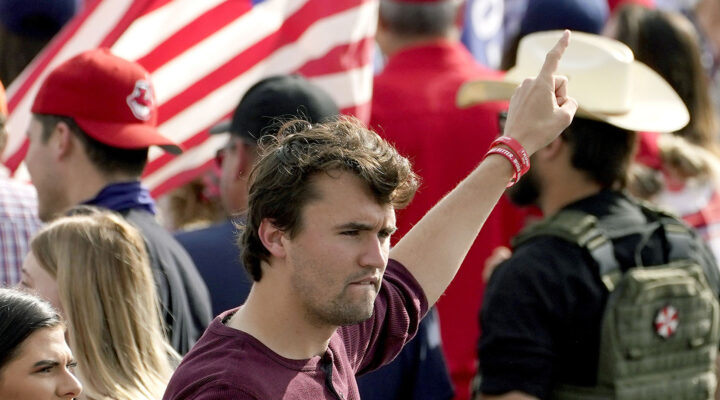
On Sept. 10, American conservative political activist Charlie Kirk, 31, was fatally shot while speaking at an event sponsored by his youth conservative political engagement organization Turning Point USA on the campus of Utah Valley University in Orem, Utah. At the time of the writing of this article, much is unknown about the accused gunman and his motive.
Much more is known about Kirk. At the age of 18, he founded Turning Point USA to enlist young people in conservative political activism against the backdrop of the presidency of Barack Obama. In 2016, Kirk led Turning Point USA to establish the “Professor Watchlist,” a website that invites students to “expose and document” professors thought to “discriminate against conservative students, promote anti-American values and advance leftist propaganda in the classroom.” In 2019, Kirk founded Turning Point Action to enlist young voters in support of specific conservative candidates for office. In 2021, Kirk founded Turning Point Faith to enlist pastors and church leaders in conservative political activism and “eliminate wokeism from the American pulpit.”
Early in the COVID-19 pandemic, he encouraged students to defy public health orders issued by state governors. In advance of the congressional certification of the 2020 U.S. presidential election on January 6, 2021, Kirk encouraged groups of students to travel to the U.S. Capitol for the “Stop the Steal” rally and arranged bus transportation for them (he later granted it was not wise for protesters to enter the Capitol). He is credited with shifting a higher percentage of younger voters toward Donald Trump in the election of 2024 than was the case in 2016 or 2020.
“Kirk encouraged groups of students to travel to the U.S. Capitol for the ‘Stop the Steal’ rally and arranged bus transportation for them.”
The foregoing leads some American Christians to laud Kirk’s life and influence in the wake of his death and others to denounce his killing and any celebration of it while noting what they regard as Kirk’s negative influence on American civil life and the church’s relationship to it.
I am in the latter category.
As a professor, I regard Kirk’s challenge to students to “expose” their professors as an assault on the academic freedom essential to higher education.
As a Baptist advocate of my tradition’s historic opposition to state establishment of religion, I am opposed to the embrace of Christian nationalism by Kirk and his movement.
As a minister who marched in Black Lives Matter protests along with my minister wife and some of our fellow church members, I think Kirk’s claim that ministers who encouraged people to participate in Black Lives Matter rallies were “introducing an unclean spirit from Satan into the church” is absolutely wrong.
But I recognize the appeal Kirk had for young conservative American Christians. Less than two hours before Kirk was killed, I told a colleague over lunch about an experience I had teaching an undergraduate philosophy class the previous day. Following a unit on ancient Asian philosophy, I asked students if they could think of any contemporary examples of philosophical “sages.” One bright, articulate student mentioned Kirk. I told my colleague I was still processing that response.
“The American church must offer … a clear opposition not only to the political violence that killed Kirk but to all violence as contrary to God’s intention for our world.”
I believe in the aftermath of Kirk’s death, the American church must offer to my student and other young American Christians a clear opposition not only to the political violence that killed Kirk but to all violence as contrary to God’s intention for our world.
But I believe to do that, we also must oppose the unofficial canonization of Kirk as a saintly martyr in the popular American Christian imagination. His verbal violence toward whole racial, gendered, religious and political categories of people documented in a Sept. 11 article in Baptist News Global titled “Charlie Kirk in His Own Words” should be more than enough to disqualify Kirk from such unofficial canonization. (I mention this with some degree of risk: The Washington Post reports some senior Trump administration officials have suggested a “campaign, calling out schoolteachers and college instructors who have made public statements criticizing Kirk since his death.”)
But we must also offer young American Christians an alternative to the “confrontational Christianity” and invitations to attendees to “Prove Me Wrong” that featured in Kirk’s campus speaking events. We must model instead the humble invitation to take up the way taught and lived by Jesus Christ, and we must seek to embody that way ourselves.
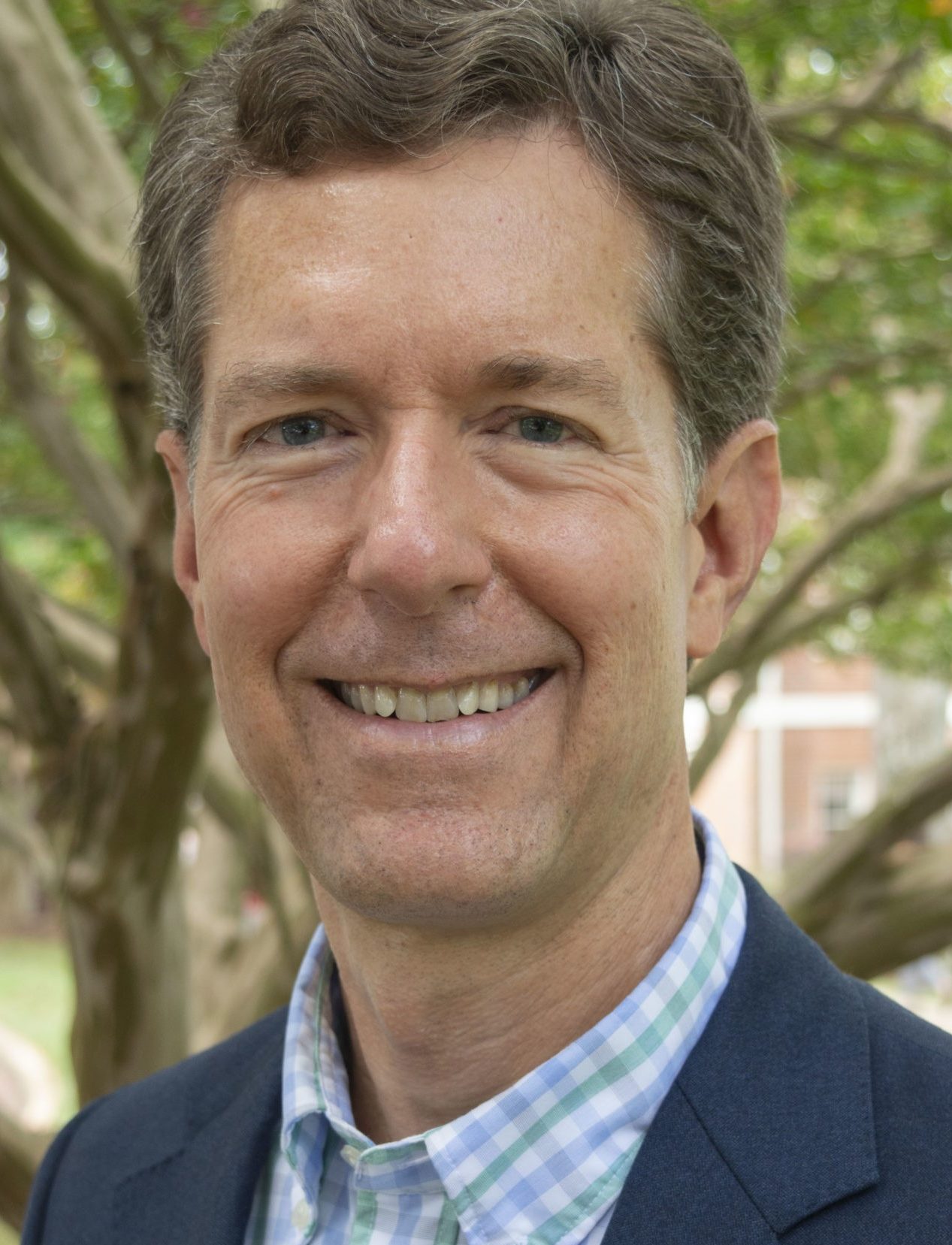
Steven R. Harmon serves as professor of historical theology at Gardner-Webb University School of Divinity in Boiling Springs, N.C. His most recent books are Baptists, Catholics, and the Whole Church: Partners in the Pilgrimage to Unity and Seeds of the Church: Towards an Ecumenical Baptist Ecclesiology (co-edited with Teun van der Leer, Henk Bakker and Elizabeth Newman).
Related articles:
Was Charlie Kirk a martyr? | Analysis by Rodney Kennedy
How Charlie Kirk went from college dropout to Trump influencer | Analysis by Mara Richards Bim