


My longest-standing disagreement with my mother stems from an early childhood memory. I recall waving to my great-grandmother while an adult held me in loving arms. I vividly remember Big Granny smiling and waving back to me as strangers carried her on a stretcher out of my grandmother’s house.
Not so, my mother insists. “Big Granny died. You saw people take her away.” I was 3½ years old. My mother’s edits have not altered my visceral memory of that event. I still stand by my pre-school story. I believed she was happy to be with me. I don’t know what to believe now, but I am filled with warmth when I remember her smile.

Paula Mangum Sheridan
I share the early Celtic Christian belief in the “thin place,” a space where little or no barrier exists between heaven and earth. Some people identify geographic sites such as Iona as a thin place. However, I wonder if we discover our own sacred, thin places wherever we are vulnerable to God’s spirit, our authenticity and the pathos of others.
Ancient civilizations established traditions to remain connected to those who have gone before us. We observe forms of these rituals today. Lighting candles, sharing food, and remembering the deceased with family and friends occurs in many ways with varied meanings. We link our lives to those who precede us and to those who come after us. We continue to seek the thin places in our ancestors and our descendants.
Our version of Halloween is influenced by Pope Sixtus IV establishing All Hallows’ Eve — or Hallowe’en — an evening before an eight-day observance of the holy or “hallowed” people. Some Christian traditions celebrate All Saints Day on Nov. 1 and All Souls Day on Nov. 2 to acknowledge the communion of the saints on earth and in heaven. The timing of the harvest made feeding the observant easier.
Centuries before, the Aztecs also honored the harvesting season, commemorating a new life cycle in pre-Colombian Mexico. It was a time not only of endings but also beginnings. Death was a part of life, a new portal, not an absolute end. These practices, later shaped by Catholicism, now appear in Mexico, the United States and other countries.
Lalo Alcaraz, a two-time Pulitzer Prize-nominated cartoonist and a consultant for the Oscar-winning Pixar film Coco, explains a historically based annual practice known as Dia de los Muertos, Day of the Dead.
On Nov. 1 and 2, participants honor ancestors and acknowledge one’s place in a family lineage. The souls who have moved to the next station can return to their loved ones for a brief visit. The living prepare ofrendas, or altars, to sustain and welcome the deceased with food, drink and things they loved while alive. The calaveras, or skulls on the altar inspired by the artistry of José Guadalupe Posada, remind us that no matter our fortune in life, we all are equal in death. The calaveras de azúcar, or glistening sugar skulls, show us death can be celebrated as well as mourned.
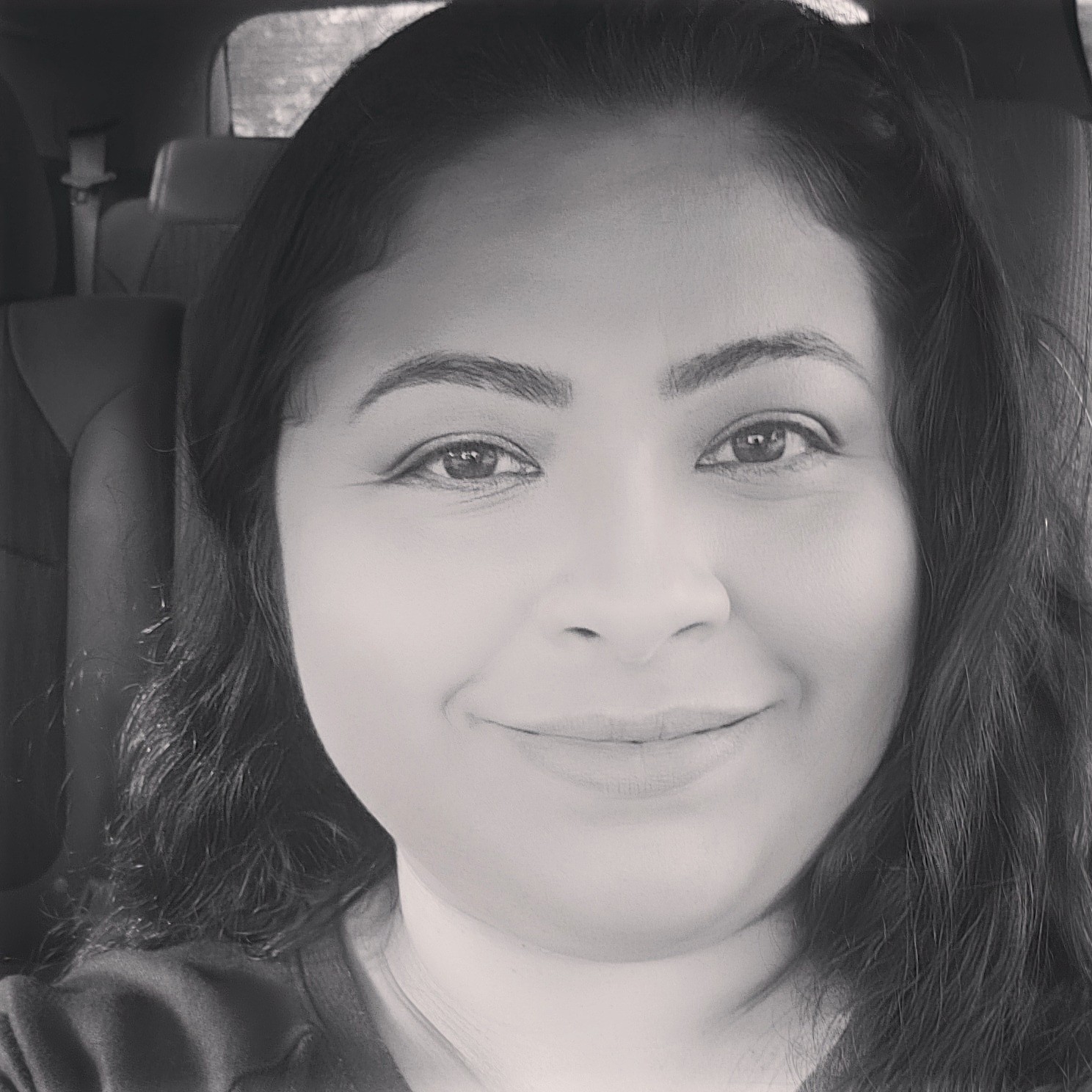
Susan Guerra Roberts
Susan Guerra Roberts, a wife, mother and social worker who serves children with ongoing health conditions and their families, articulates the importance of Día de los Muertos in her personal and family life.
She initiated this tradition with her family ofrenda, including pictures of loved ones who have passed, food, and gifts from family and friends. “It makes me feel connected to people before me and to those still here,” she explains. She remembers her grandfather asking, “What do you want to do today?” when she visited him as a young child in Mexico, filling her pockets with Mexican candy he provided her. “You can’t share that without talking about it,” she recalls. She uses the ofrenda as an opportunity to tell her children about relatives who died before her children were born.
My family of origin had few recurring traditions honoring our deceased. Instead, I remember the Baptist women nourishing our stomachs and souls during illness and death, layering the kitchen table with pound cakes, fried chicken and potato salad. Folks visited us at the funeral home, added our names to the prayer chains, and sent sympathy cards during our early days of grief.
After we wrote thank-you notes and returned Tupperware with names taped on the bottom, the house seemed empty. We returned to our lives with an aching hole that we folded into whatever we needed to do at work, home and church. The promise of spending eternity with loved ones in heaven didn’t ease my pain. I sometimes felt an unspoken expectation to “get over it” and get back to normal, although I didn’t know how normal looked or felt.
We may die a little bit when we lose a way of life that we no longer can share with our loved ones. I believe the saying that when someone dies, a library burns.
Daniel Hernandez, a Los Angeles Times culture reporter, defines three types of death. The first experience of death occurs as we exhale our last breath. The second experience of death ensues when we are placed in the ground. The third experience of death happens when we are forgotten. While we all may experience the last breath and a resting place, we hope others remember us. How will we be remembered?
Stories of my deceased loved ones become more precious as I age. We carry the DNA of those before us, reproducing eye color and physical build. We know now we also genetically carry their joys, fears and other imprinting emotions, particularly trauma.
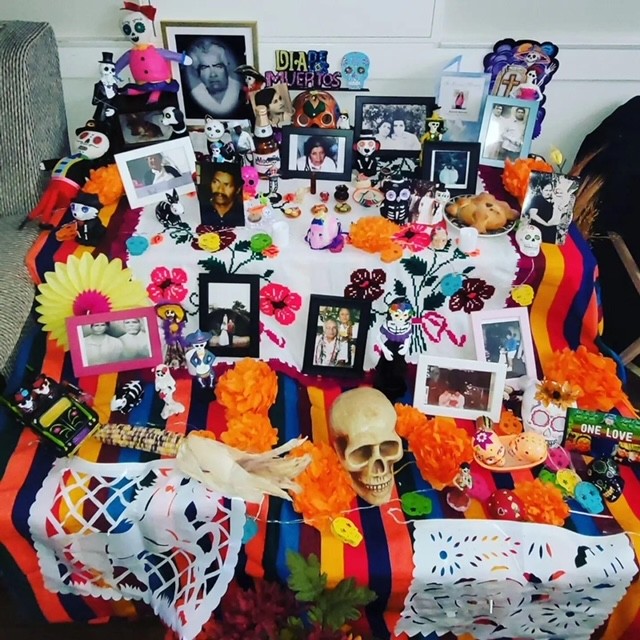
Susan Guerra Roberts’ family ofrenda.
I want to pass the few stories I know to my children — not of familial heroes or transgressors, but about people whose lives are the lessons that can help us now. If we receive our ancestors’ stories with a discerning heart, we may be wise and kind to those dwelling among us in this world. It’s how we remember them that matters. We cultivate the gracious characteristics they gave us. We interrupt unloving patterns that have no place in our future.
We also can integrate the many forms of death into our lives now. Of course, we encounter multiple deaths along the way — the loss of a dream, a relationship, a career, or the realization that things we hope for are beyond our reach. Yet some deaths are necessary to free us to become authentic, shedding that which no longer serves us.
As fall becomes winter, may we incorporate the losses in our lives — those necessary, those welcomed and those who leave us with gaping holes in our souls.
May we see the fluidity of life and death.
May we reflect on our mortality without flinching, believing our actions nourish not only us but those who will follow.
May we be brave enough to show up for our loved ones and even strangers when they are transitioning to a new portal.
We can accompany them as far as we are allowed and welcome their presence when they return to us in spirit and story.
Paula Mangum Sheridan, Ph.D., LCSW, recently retired from Whittier College as an associate professor and program director of the Social Work Department. She is a licensed clinical social worker and supports voter accessibility and the rights of people without homes in her community.
Sheridan notes: “I’m grateful for the contributions Susan Guerra Roberts made to this article. It would not be complete without her co-authorship and insights about Dia de los Muertos.”
Related articles:
Learning from ‘Coco’: Challenges and opportunities / Opinion by Nora O. Lozano
We believe in the communion of saints / Opinion by Molly Marshall