


Another Black man was found hanging Friday. His name was Demetrius Fleming. He was 38 years old.
Fleming was found Aug. 21 in Roanoke Rapids, N.C., connected to a ligature. His death remains under investigation. Police Chief Lawrence Wiggins has called the case “equivocal,” careful not to rush toward either suicide or homicide.

Demetrius Fleming
“We are aware of the implications surrounding the death of a Black man by hanging,” Wiggins said.
Six days earlier and less than 100 miles away, another Black man was found hanging from a tree in downtown Raleigh.
In Raleigh, police say the evidence tells a much clearer story. Surveillance footage reportedly shows the unidentified 32-year-old man approaching the tree alone carrying an electrical cord. Police say they found no evidence anyone else was involved. His mother told investigators her son had struggled with his mental health. The evidence points toward suicide.
And still, when the first reports began circulating, Black people across North Carolina and beyond asked a question we have learned to ask whenever we see a Black body hanging from a tree: What happened? Perhaps the more important question is why we still have to ask.
Over the last year, Black bodies have been found hanging from trees in Mississippi, Georgia, North Carolina, Wisconsin, Florida and elsewhere.
The circumstances are different. Some deaths have been ruled suicides. Some families have disputed those findings. Some investigations remain open.
There is no credible evidence establishing these deaths are connected. There is no evidence of some coordinated campaign of racial violence sweeping across America. We should be careful enough with the dead not to manufacture one.
“Why aren’t we talking about the fact that Black bodies are still being found hanging from trees at all?”
But I wonder if our insistence on answering whether these deaths technically qualify as lynchings has allowed us to avoid a more uncomfortable question: Why aren’t we talking about the fact that Black bodies are still being found hanging from trees at all?
In September 2025, Demartravion “Trey” Reed, 21, was found hanging from a tree on the campus of Delta State University in Cleveland, Miss. The state medical examiner ruled his death a suicide.
In November, 39-year-old Torrance “Tory” Medley was found hanging from a tree at a golf course in Brookfield, Wis. Authorities said evidence indicated suicide. His family continued asking questions and called for greater transparency.
In February, 21-year-old Kyle Bassinga was found hanging from a tree at Fair Oaks Park in Cobb County, Ga. Authorities said evidence indicated suicide and no foul play.
In May, 16-year-old Juliana Nzita was found hanging from a tree on church property in Charlotte after she had been missing for 11 days. Police concluded she died by suicide, although questions about the investigation continued within the community.
In June, 27-year-old Tonea Nicole Miller was found hanging from a tree in Miami. Authorities classified her death as a suicide. Her family and supporters continued demanding answers.
On Aug. 3, 29-year-old Tasia Fortune, a mother of four, was found hanging from a tree behind a vacant home in Jackson, Miss. Her death remains under investigation. Her mother has publicly rejected the possibility her daughter killed herself, and questions surrounding the investigation continue.
Different people. Different places. Different investigations. Different evidence. The same image. An image that has a history.
“For much of American history, the hanging Black body was not simply evidence someone had died.”
For much of American history, the hanging of a Black body was not simply evidence someone had died. It was communication. Lynching was murder, but it also was theater. Black people were tortured and killed before crowds. Photographs were taken. Postcards were made. White families sometimes brought their children to watch. The dead body remained because the body had something to say. Stay in your place. Don’t vote. Don’t organize. Don’t look at a white woman. Don’t forget who owns this country.
The lynching tree preached a sermon, and Black America was its intended congregation. That is why a Black body hanging from a tree never can be merely another crime scene in the American imagination.
Even when it is not a crime scene at all.
James Cone understood this. In The Cross and the Lynching Tree, Cone places two of history’s most recognizable instruments of public execution beside one another: the Roman cross and the American lynching tree.
For Christians, the connection should be unsettling. We have spent 2,000 years transforming one instrument of state-sponsored torture into jewelry. We hang crosses in sanctuaries. We place them over Communion tables. We wear them around our necks. But before the Cross became decoration, it was terror. Rome did not crucify people privately. The spectacle was the point. Crucifixion announced the power of empire. The broken body communicated what happened to those who challenged the social order.
America found its own tree. Cone argued that Americans cannot understand the Cross without confronting the lynching tree. The two are not identical, but they force Christians to confront the same terrible image: A body brutalized in public as an announcement about power.
Years later, Otis Moss III returned to that connection after the murder of Ahmaud Arbery in his sermonic film The Cross and the Lynching Tree: A Requiem for Ahmaud Arbery.
Moss stood beneath the shadow of Cone’s question and asked another generation of Christians to recognize the uncomfortable proximity between Calvary and America’s racial violence.
We know how to look backward at a brown man hanging from Roman wood and call it crucifixion. We have been less willing to look at Black bodies hanging from American trees and reckon with what America was doing. Perhaps we are even less prepared to talk about what those trees mean now.
This is where the conversation becomes complicated. Because some of these deaths appear to be suicides. That matters. Black mental health matters. Black suicide matters.
“There is a danger in allowing our understandable fear of racial violence to erase the very real mental health crisis within Black communities.”
And there is a danger in allowing our understandable fear of racial violence to erase the very real mental health crisis within Black communities. If a Black man died by suicide in Raleigh, we should tell the truth about how he died. If Trey Reed died by suicide, we should tell the truth about how he died. Calling every hanging a lynching without evidence does not honor Black life. Truth matters too much for that.
But suicide does not erase history. That may be the distinction our public conversation has been unable to hold. The forensic question and the historical question are different questions. How did this person die? That is a question for investigators, medical examiners and evidence.
What does it mean for Black people to encounter another Black body hanging from a tree in America? No autopsy can answer that. History already has.
The Raleigh Police Department can establish that nobody else approached the tree. It cannot make the noose historically neutral. A medical examiner can determine the manner of death. They cannot perform an autopsy on America’s memory.
Which brings me to the part I cannot shake. We are barely talking about this. There have been individual news stories. There have been social media posts, some responsible and some wildly irresponsible. Families and activists have demanded answers. Local officials have held press conferences. But where is the sustained national conversation?
Where is the church? Where are those of us who spent the years after Ferguson learning to say Black Lives Matter? Where are the denominations that issued racial justice statements after George Floyd? Where are the predominantly white churches that hosted book studies on racism? Where are the moderate Baptists who have spent the last decade learning the language of racial reconciliation? Where are we now?
I am not asking the church to declare these deaths lynchings. I am asking why the church seems to have so little to say about them at all. Because surely there is something between conspiracy and silence.
Surely we can refuse to spread information unsupported by evidence while also refusing to look away. Surely we can believe investigators when evidence warrants belief while also understanding why Black communities have inherited a complicated relationship with official explanations of Black death. Surely we can talk about suicide and racial trauma in the same sentence. Surely we can grieve. Surely we can demand transparency. Surely we can say their names.
Our silence is also a form of interpretation. Silence tells grieving Black families this is a local matter. Silence tells frightened Black communities not to make too much of the image. Silence allows each death to exist as an isolated incident so we never have to wrestle with what it means to encounter the same image again and again. And silence permits those of us who call ourselves Christians to keep staring at one tree every Sunday while refusing to talk about the others.
Another Black man was found hanging Friday. His name was Demetrius Fleming. He was 38 years old. It was Friday, and Sunday was coming.
Sunday came. Churches opened their doors. Organs played. Choirs sang. Preachers stood behind pulpits and proclaimed that Jesus got up from the tomb.
And Demetrius was still dead. There was no empty tomb in Roanoke Rapids. No stone rolled away. No resurrection announcement. Just another Black body that had been hanging from something, another family without someone they loved and another investigation trying to determine what happened.
Maybe that is why Cone’s insistence that Christians look at the Cross and the lynching tree together remains so difficult.
Because the Cross is safe for us now. We already know what happens on Sunday. The lynching tree offers no such comfort. There is no resurrection in the photographs. The thousands of Black people lynched across this country did not come home three days later. And whatever investigators ultimately determine about Demetrius Fleming’s death, his family will not receive him back.
Are we willing to stand at the tree long enough to see the body? To resist speculation, yes. To wait for evidence, yes. But also to refuse the comfort of looking away. Because another Black man was found hanging Friday. His name was Demetrius Fleming. Sunday has already come. And he is still dead.
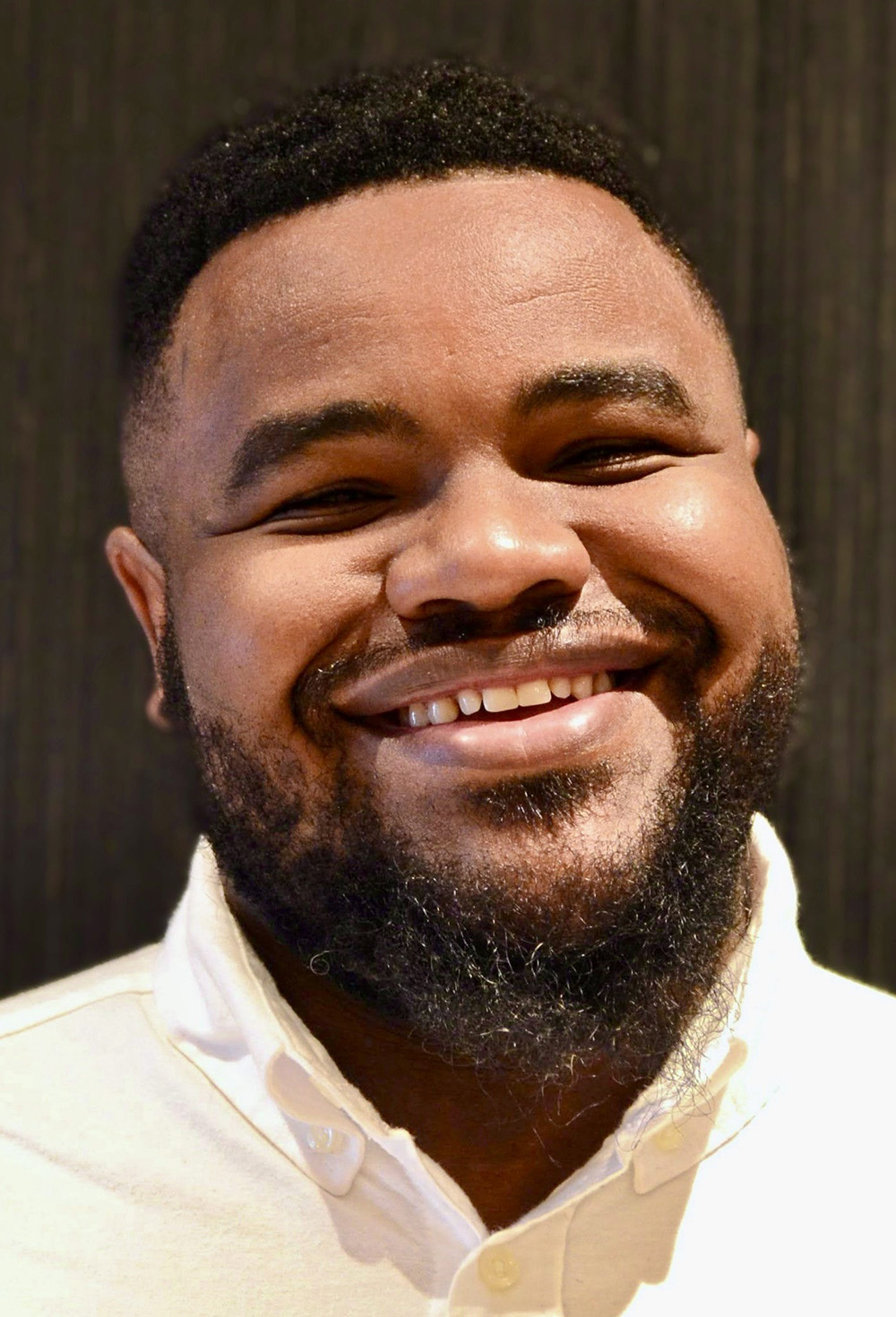
Braxton Wade
Braxton Wade is a Clemons Fellow with BNG. He is a graduate of the University of Richmond and Chicago Theological Seminary and lives in Richmond, Va.