


Psalm 1 opens with a warning that feels hauntingly modern: “Blessed is the man who does not walk in the counsel of the wicked.”
The verse is not simply about personal morality. It is about influence, power, allegiance and the dangerous ease with which societies normalize injustice when it is repeated enough times by leaders, media, institutions and crowds. The verse reads less like devotional poetry and more like a political and social diagnosis of nations in moral decline.
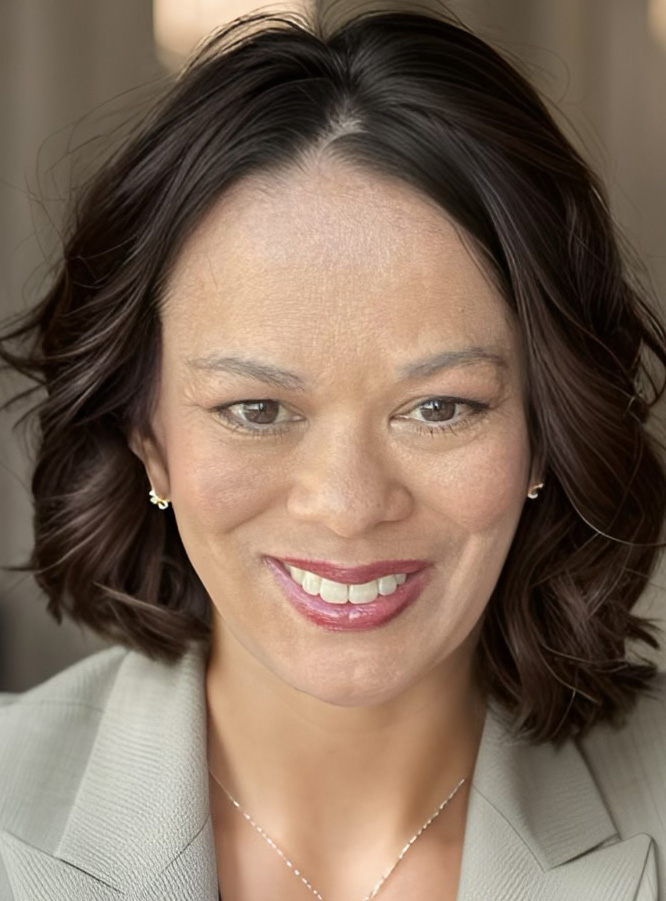
Nicole Wiesen
When reading this passage alongside The Handmaid’s Tale by Margaret Atwood and observing the current political climate under the second Donald Trump administration, uncomfortable similarities emerge around authoritarianism, public obedience, nationalism disguised as morality, attacks on dissent and the erosion of democratic norms.
America now stands at a crossroads where faith, fear, political identity and power have become dangerously entangled.
In Psalm 1, the progression is critical. First, one “walks” in the counsel of the wicked. Then one “stands” in the way of sinners. Finally, one “sits” in the seat of mockers. Corruption is incremental. It begins with listening. Then participating. Then becoming fully settled within the system itself.
This progression mirrors how authoritarian movements develop. Democracies rarely collapse overnight; rather, people slowly accommodate what once shocked them. What once would have caused outrage becomes routine.
“The terrifying power of Gilead was not simply its brutality; it was the normalization of brutality.”
This is precisely the warning embedded in The Handmaid’s Tale. Atwood’s fictional Republic of Gilead did not emerge out of nowhere. It emerged through political exhaustion, religious extremism, fear-based nationalism, attacks on women’s autonomy and the public’s willingness to trade liberty for promises of security and order. Citizens accepted increasing restrictions because they were introduced gradually, often under the language of patriotism, family values and divine purpose. The terrifying power of Gilead was not simply its brutality; it was the normalization of brutality.
Today, many Americans feel that same unease. The current political atmosphere is marked by growing polarization, public distrust of institutions, attacks on journalists, book bans, increasing Christian nationalist rhetoric and loyalty tests within political parties.
Critics of the Trump administration argue that democratic guardrails are weakening under the pressure of populism and grievance politics. Supporters argue they are defending America against corruption, elitism and cultural decline.
Yet Psalm 1 asks a deeper question beyond partisan affiliation: Whose counsel are we following, and what kind of people are we becoming because of it?
The recent primary elections reveal a nation increasingly divided not merely by policy but by reality itself. Candidates across the country have been rewarded for ideological purity, aggressive rhetoric and unwavering loyalty to political tribes rather than thoughtful governance. Moderation has become politically dangerous. Compromise is viewed as betrayal. Public discourse increasingly rewards outrage over wisdom. In this environment, many Americans are not evaluating ideas critically; they are consuming narratives emotionally.
“Many Americans are not evaluating ideas critically; they are consuming narratives emotionally.”
That is where Psalm 1 becomes profoundly relevant. The verse warns against surrendering moral discernment to corrupt influences. The “wicked” are not merely criminals or obviously immoral figures. Biblically, wickedness often refers to those who distort justice, exploit fear, manipulate truth and place power above righteousness. Wicked counsel can come through governments, religious leaders, influencers, media personalities or even crowds. The danger is not only evil leadership but a population willing to internalize that leadership without reflection.
One of the most disturbing themes connecting The Handmaid’s Tale and contemporary America is the use of religion as political theater. Atwood’s Gilead weaponizes Scripture selectively to justify oppression while abandoning the broader ethical teachings of compassion, humility, mercy and justice. Similarly, modern American politics increasingly uses Christianity not as a spiritual framework but as a cultural identity marker and political weapon. Public displays of religion often coexist alongside cruelty toward immigrants, hostility toward marginalized groups, attacks on public education and indifference toward poverty and systemic suffering.
This contradiction matters because Psalm 1 does not describe righteousness as loud, performative or nationalistic. The blessed person is grounded, thoughtful, rooted in truth, resistant to corrupt influence. In contrast, authoritarian movements thrive on emotional reaction, fear and public conformity. They require enemies. They require loyalty. They require citizens to stop asking difficult questions.
Perhaps the most chilling similarity between Atwood’s dystopia and modern America is the growing fatigue many citizens feel toward democracy itself. Increasing numbers of Americans no longer trust elections, courts, journalism, science or public institutions. When institutional trust collapses, strongman politics become appealing because certainty feels safer than complexity. Yet history repeatedly demonstrates that societies willing to sacrifice democratic norms for temporary security often lose both.
“Societies willing to sacrifice democratic norms for temporary security often lose both.”
America today stands in a fragile moment. The nation faces rising economic inequality, racial tensions, political extremism, attacks on reproductive rights, misinformation and widespread social isolation. Meanwhile, public discourse increasingly resembles spectacle rather than civic engagement. Social media rewards performance over substance. Politicians become celebrities. Outrage becomes currency. Truth itself becomes negotiable depending on tribal allegiance.
Psalm 1 offers an alternative vision. It calls people to resist becoming absorbed by systems rooted in corruption and contempt. It reminds us that character is formed by what we repeatedly listen to, celebrate and normalize. A democracy cannot survive if citizens lose the ability to distinguish wisdom from manipulation or morality from spectacle.
The warning of both Psalm 1 and The Handmaid’s Tale is not simply about governments. It is about ordinary people. Democracies decline when citizens become passive, cynical or consumed by ideological loyalty. Tyranny depends not only on powerful leaders but on populations willing to “walk,” “stand” and eventually “sit” comfortably within injustice.
The question facing America today is not whether we already are Gilead. We are not. But the deeper question is whether we are becoming comfortable with behaviors and rhetoric that once would have alarmed us. Are we normalizing cruelty? Are we replacing truth with loyalty? Are we allowing fear to override democratic principles? Are we confusing political dominance with moral righteousness?
Psalm 1 reminds us that blessing is found not in power, outrage or ideological conquest, but in the courage to resist corrupt counsel even when it is politically popular. In an age of division, propaganda and escalating extremism, that may be one of the most radical acts left in American public life.
Nicole L. Wiesen is a nationally recognized expert in Post-Incarceration Syndrome, public health social worker, consultant, lecturer and author. She is the founder of Returning Her Home, a trauma-informed reentry housing and support initiative dedicated to helping women heal, stabilize and successfully reintegrate following incarceration.