


Sixteen months ago, Benjamin Boswell was forced to leave Myers Park Baptist Church in Charlotte, N.C.
“Being called to Myers Park Baptist Church was a dream,” Boswell told me in a recent conversation. “This was the church I always said, if they called me, I would go.”
Yet after nine years of leading one of the most visible progressive Baptist congregations in the South, his tenure came to an abrupt end — not quietly, not without tension, and not without revealing something deeper about the church and specifically the white progressive church.
Because while progressive churches often pride themselves on being different — more inclusive, more aware, more just — Boswell’s departure raises a harder question: What happens when a church that claims to value justice and equity is asked to actually embody it?
That’s the way he sees it still. Church leaders see the conflict differently and have made claims about leadership style and the need to bring more people into the church. Both Myers Park and Boswell have moved on, and for him that includes launching a new congregation in Charlotte. Myers Park Church continues to bill itself as “a faith community on a journey seeking a welcoming, loving and just world” and is currently considering changing its name.
“Boswell’s ministry has consistently pressed beyond posture into something far more demanding: transformation.”
In a moment when many congregations are working hard to signal openness, Boswell’s ministry has consistently pressed beyond posture into something far more demanding: transformation. Not solely cosmic change or expanded language, but the kind of transformation that disrupts power, reorders relationships, denounces racism and refuses to let the church hide behind its own self-perception.
When we spoke, what became clear quickly was that Boswell is not primarily interested in what the church says about itself. He is interested in what the church is still unwilling to confront.
At one point, he spoke about whiteness not as an abstract concept, but as a reality that shapes the church in ways many congregations still struggle to see. This is the water we are swimming in, and that is precisely the problem.
Because if whiteness remains unnamed, unexamined and unchallenged, then even our most progressive spaces risk reproducing the very systems they claim to resist. The language may change, the posture may soften, we may hang a rainbow flag on the front lawn, but the structure remains intact.
Boswell’s critique is not aimed only at conservative expressions of faith, it reaches into progressive churches that have learned how to speak the language of inclusion without embracing the cost of justice.
“There is a difference between being welcoming and being transformed,” he said. “There is a difference between representation and liberation. Often the church settles for the former while convincing itself it has achieved the latter.”
I told him many pastors I know feel the pressure to dilute their convictions just to survive — to soften the edges, to say just enough without saying too much, to pander to the pew rather than proclaim justice to the oppressed, to keep the peace even if it comes at the expense of truth.
“There is a difference between being welcoming and being transformed.”
“There are always consequences,” he acknowledged.
Boswell has experienced grief, loss and the quiet anxiety that comes when you begin to realize what you believe is faithfulness may cost more than you expected.
This is the part of pastoral leadership that rarely gets named. We celebrate prophetic voices, but we do not always sit with what it takes to sustain them. We quote courage, but we do not always account for its cost. And yet, Boswell was clear: “The work cannot be avoided.”
The deeper issue is not simply who is included, but what kind of community we are becoming.
“Black faces in high places,” Boswell noted, “is not the same as liberation.” Access is not transformation and if the systems, assumptions and power structures beneath the surface remain unchanged, then what we call progress may be sheep in wolves’ clothing.
This is where Boswell’s work pushes the church into uncomfortable territory. It is one thing to affirm diversity. It is another thing to interrogate the conditions that make diversity necessary in the first place. It is not enough for a church to desire to be diverse or not be racist; that church or community of faith must be willing to confront its complicity in racism and work to become antiracist. It is one thing to say all are welcome. It is another to ask who still holds power once they arrive.
It is here that many churches — even well-intentioned ones — begin to hesitate. Because transformation is not abstract; it is disruptive. Transformation requires letting go, it requires listening differently, it requires the kind of honesty and confrontation that unsettles not solely systems but identities.
In our conversation, Boswell also spoke about his new calling, Collective Liberation Church — a vision of the church that is not centered on individual access or personal inclusion but on a shared reimagining of what it means to belong, to flourish and to be free together. A diverse community that has been transformed by Christ and is committed to the transformation of Charlotte, the country and the world.
That vision is harder to articulate. And even harder to embody, as it asks more of us.
It asks us to move beyond performative gestures and into sustained practice. It asks us to confront not just what we believe, but how we live. It asks us to consider whether the communities we are building actually reflect the justice and Jesus we proclaim. Most importantly, Boswell challenges, “ We (the church) must ask whether we are willing to genuinely be transformed.”
Progressive Christian friends, do not hear me wrong. I’m proud of the work we have done, the lives we’ve seen transformed, the hope we’ve found in the wilderness. However, this reminds us that even churches committed to progress are not immune to resistance. That even communities fluent in the language of justice can struggle to live it. That even the most forward-facing congregations must still decide what they are ultimately willing to risk.
The danger is not that the church does not know what justice looks like. The danger is that it has learned how to talk about it without ever surrendering to it. The danger is that we have chosen comfort over confrontation.
And if that is true, then the question before us is not whether we are inclusive, it is whether we are willing to be transformed. The question is: Does inclusion equal transformation? Because liberation never has been about who is invited into the room; it always has been about whether the room itself is willing to change.
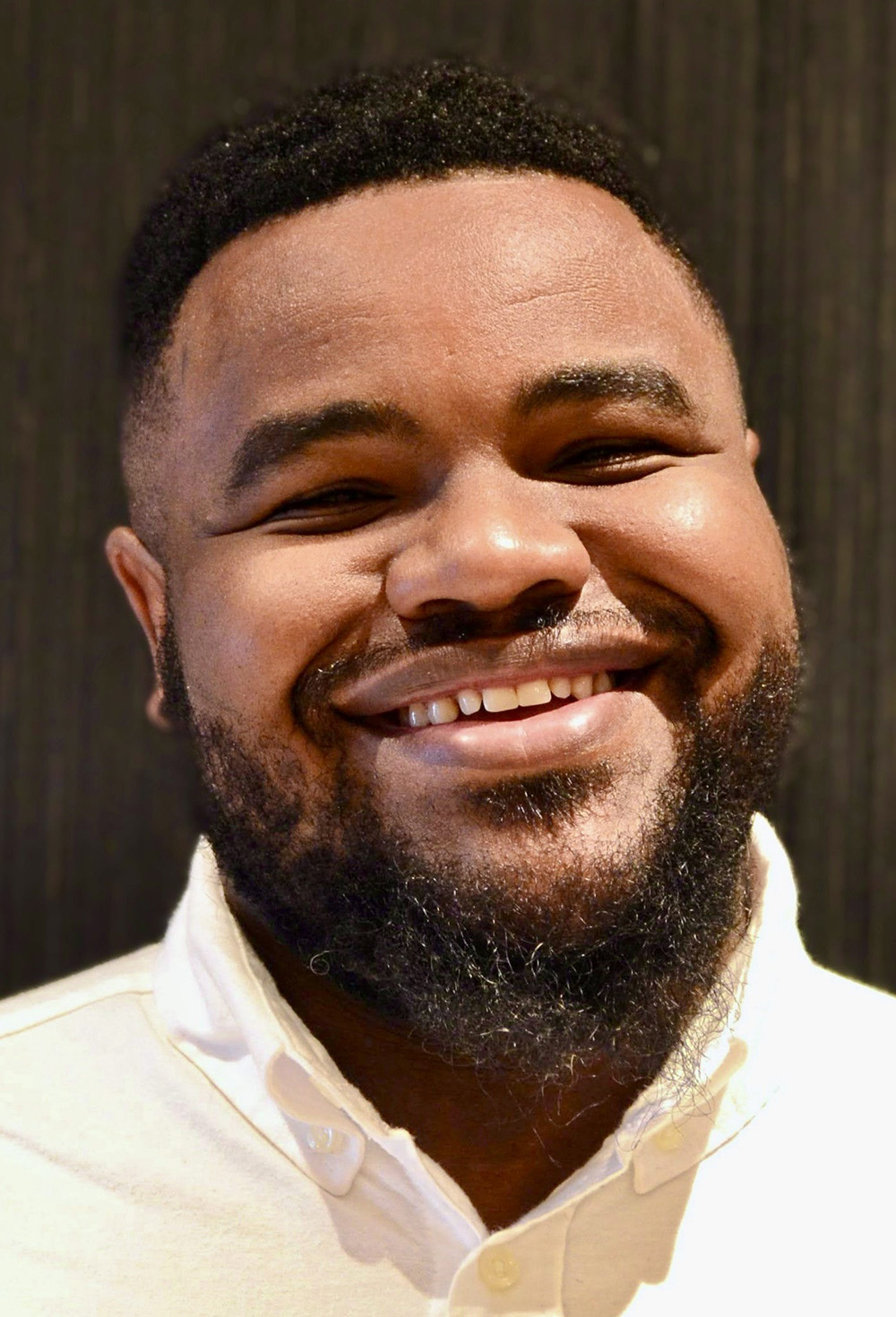
Braxton Wade
Braxton Wade is a Clemons Fellow with BNG. He is a graduate of the University of Richmond and Chicago Theological Seminary and lives in Richmond, Va.
Related articles:
North Carolina pastor abruptly forced out of prominent pulpit
A week later: Myers Park offers lessons for us all | Analysis by Mark Wingfield
Liberalism is not liberation | Opinion by Benjamin Boswell