


For 18 years, Jim Somerville has done something many pastors talk about but far fewer actually attempt. He has led a historic congregation to change.
This change isn’t merely cosmetic or programmatic but rather the kind that presses on identity — who belongs, who leads, what Jesus requires in real time.
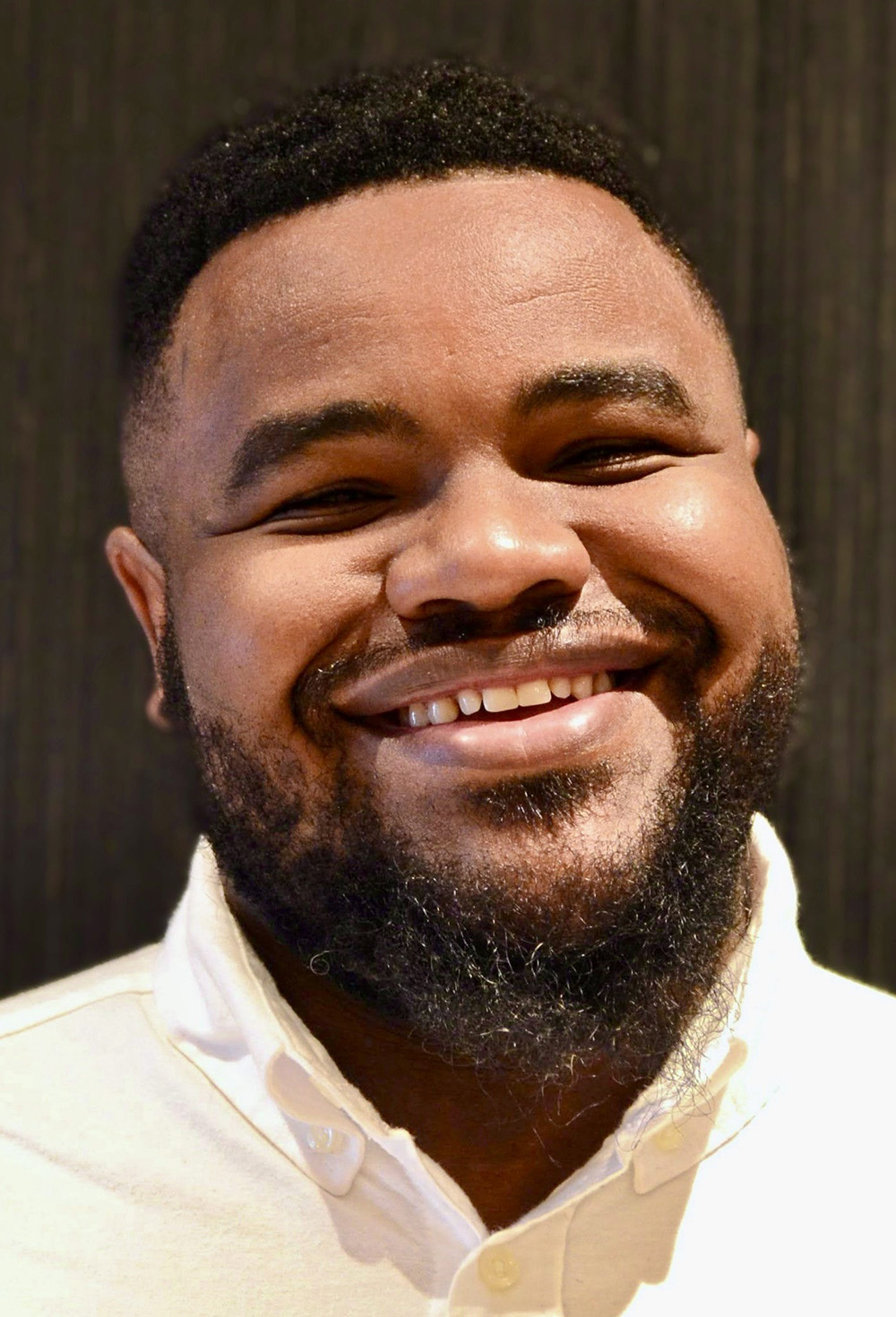
Braxton Wade
At Richmond’s First Baptist Church, that has meant wrestling openly with race, with power, with human sexuality and what it means to welcome people not as issues to be solved, but as image-bearers to be received. This change has not been easy. However, Somerville says, “I’m proud of the people we’ve become together.”
“2020 was a perfect storm,” the Virginia pastor said. “Global pandemic, election year, racial injustice, not being able to gather with your neighbor, everything happening at once.” Then, more plainly: “It was a tough time to be a pastor.”
And yet — Somerville and First Baptist sat in that place together in ways many congregations didn’t even though it was painful.
Somerville recalls one of the most symbolic moments of Richmond’s racial reckoning: As Confederate monuments began coming down along Monument Avenue, the bells of First Baptist Church rang out across the city. The church is located on that famous avenue near one of the intersections where a larger-than-life statue stood.
For Somerville, it was not an act of celebration over defeat, but a sacred acknowledgment that Richmond was stepping into a new chapter — a chapter that told the full story and saw the deep hurt these Confederate monuments caused to many of his neighbors. The sound of the bells became both lament and hope — lament for the pain and history tied to those monuments and hope that the city might finally tell a fuller truth about itself.

The statue of Confederate General Robert Lee is removed at Monument Avenue on Sept. 8, 2021, in Richmond, Va. Put up in 1890 to help legitimize a state run by and for white people only, pressure to remove the statue increased after the murder of George Floyd by police in Minneapolis. The Lee statue was the last of Southern Civil War leaders to be taken down. (Photo by Andrew Lichtenstein/Corbis via Getty Images)
This moment captured Somerville’s ministry: Pastoral, courageous and deeply aware that faith communities have a responsibility not just to preserve history, but to help heal it.
And now, after nearly two decades of guiding that kind of evolution, he’s stepping away, not because the work failed, but because, in his words, “It just feels like the right time.”
When Somerville talks about his decision to retire, there’s no sense of urgency or panic — only clarity and deep discernment. “I never wanted to be the person who stayed too long,” he said.
In a profession where the average pastor lasts five to seven years at a church, Somerville’s 18-year tenure already sets him apart. But longevity never was the goal. “There’s a sense that this season is complete,” he said.
What makes the decision striking is not just its timing, but its context. “The church is in a really good place,” he said. “They’re doing well. They take really good care of the staff.” This raises a harder question — one many leaders avoid: What does it look like to leave when things are still working?
Yet if Somerville’s tenure has been marked by evolution, it also has been marked by tension.
“You can try to be faithful in those moments, but you can’t control how everyone responds.”
“You can try to be faithful in those moments,” he said, reflecting on the last several years, “but you can’t control how everyone responds.”
He recalled conversations with many congregants over the last 18 years. “I’ve grown to follow Jesus’ theology,” a theology he says “is built on following the life of Jesus.”
That choice — to listen, to center Jesus’ life — came with consequences.
“People left,” he said. He didn’t soften it. Didn’t explain it away. Just named it. Because for Somerville, leadership isn’t about keeping everyone. It’s about being faithful in the moment he has been given.
Part of that faithfulness meant refusing to reduce diversity to a slogan or a staff position. “We were really intentional about growing in all areas of diversity,” he said, pausing on the word “all.”
“It wasn’t something we wanted to isolate,” he said. “Not something you just hand off to one person.” Instead, it became a communal call — one that shaped preaching, leadership and the life of the church.
When Somerville says “Kingdom of Heaven to RVA,” he sees that kingdom including all God’s children.
That required having conversations many congregations still sidestep. “Human sexuality is one of those places,” he said. “People are discovering things about themselves.” Then, more pointedly: “And the question becomes, how do we welcome them?”
For all the change Somerville has helped lead, he returns again and again to a theological center that has not shifted.
“Everything I know about God, I learned from Jesus.”
“Everything I know about God, I learned from Jesus,” he said. “That’s what I’ve been after the whole time. Jesus is Lord. No one else is!”
That’s not a statement meant to resolve tension but to hold it. In a church navigating questions of identity, belonging and change, that kind of clarity matters. “If we’re going to reflect the kingdom of God,” he said, “that has to be where we start.”
With his retirement announced, Somerville is not stepping away from a finished product. If anything, he is leaving in the middle of the work.
“I’ve never thought of myself as an elder,” he said. “I’ve just been doing my job.”

A full. house at First Baptist Richmond’s 2024 congregational meeting about severing ties with the SBC.
That sense of calling hasn’t faded. “It’s still a living, breathing thing,” he said. “I want to know more about what God is doing.”
When asked about the future of First Baptist, Somerville doesn’t speak with control but with hope.
“I hope they’ll make good decisions,” he said. “I want to be proud of them.”
After 18 years of shaping a congregation — pushing it, stretching it, walking with it through conflict and change — the final act of leadership may not be holding on. It may be trusting what you’ve helped build enough to release it.

Richmond’s First Baptist Church (Photo: Church Facebook page)
“It never has been Jim’s First Baptist Church, it’s always been Richmond’s First Baptist Church, and they have done a great job of maintaining their identity” Somerville emphasized.
His retirement comes at a time when many pastors are leaving under pressure — burned out, pushed out or worn down. His departure tells a different story. Not of a pastor who couldn’t continue, but of one who chose not to.
Before we wrapped up our conversation, he said something that won’t leave me alone. I heard possibility, I heard preparation, I heard hope. Which means the question is not just who will follow this pastor in the pulpit.
The question is: Who is being formed right now? Who is learning how to listen when it would be easier to speak? Who is telling the truth when it would be easier to protect the room? Who is holding the tension without letting go of Jesus? Maybe they won’t look like what this congregation always has known, but they will carry the same call, the same Spirit, and the same God who is still speaking.
Braxton Wade is a Clemons Fellow with BNG. He is a graduate of the University of Richmond and Chicago Theological Seminary and lives in Richmond, Va.