


“Jesus spit on the ground, made some mud with the saliva, and put it on the man’s eyes. ‘Go,’ Jesus told him, ‘Wash in the pool of Siloam.’ So the man went and washed and came home seeing.”
This story from the Gospel of John is beloved by many, and for good reason. It challenges some deeply held notions of sin, empowers the marginalized to use their voice and places Jesus in solidarity with people with disabilities. But for the residents of Silwan, this text is a justification for Israel’s ethnic cleansing.

Carson Hollis (right) with Mitri Raheb
Silwan is a majority Palestinian neighborhood in East Jerusalem, in occupied Palestine. Silwan has a long and storied history; initially a Canaanite settlement, Silwan is mentioned in both testaments of the Bible. The prophet Isaiah, among other references in the Hebrew Scriptures, mentions the waters of Shiloah; and as already seen, this is the same location where Jesus healed the eyes of a man born blind.
Silwan’s current identity coalesced around the seventh century CE when the area fell into Muslim control. The Rashidun caliphate established the area as a farming village that also allowed Jewish residents to reside there in peace. Silwan’s identity remained intact until the 1948 War, when Silwan came under the protection of the Jordanian government.
Then, following the Six-Day War of 1967, it was occupied by Israel. Since then, Israel is slowly displacing Palestinians living in Silwan. Israel sends out demolition orders on Palestinian homes — many of which are older than the state of Israel itself. Palestinians are told to either demolish their own homes, or Israel will do it for them and mail them the bill.
The reason for doing this? According to Palestinian residents of Silwan I had the pleasure of speaking with, Israel is slowly and systematically demolishing homes so a “biblical Disneyland” — an archaeological tourist park aimed at Christians — can be built where Palestinians once lived.
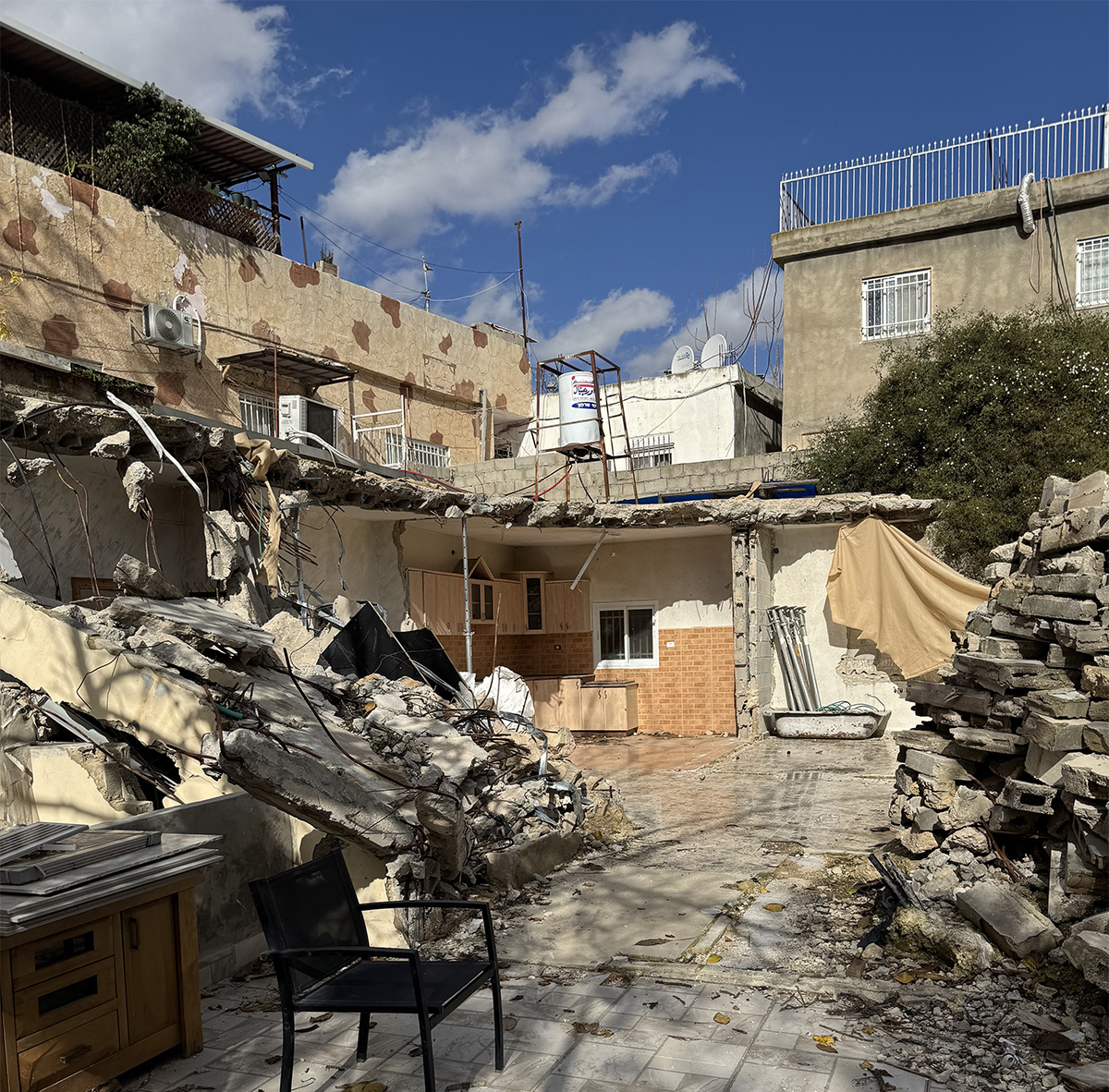
The home of Fakri Abu Diab, which was demolished by order of the Israeli government. Fakri was raised in this house, which is located in Silwan. Israel ordered this house demolished to build a biblical theme park to entice Christians to visit Israel.
In response, a group of activists in Silwan began to paint giant murals of eyes all over the neighborhood. Eyes for these activists are symbols of solidarity, that Israel’s ethnic cleansing and forced expulsion of Palestinians has witnesses.
“The staring eyes,” says one of the activists, “says to people that we see them and they should see us too. We want to say that we are here — we love our land and our home.”
Eyes can’t lie. I went to Palestine this past January, and what I saw with my own eyes is ethnic cleansing, apartheid and genocide. Israel is doing all it can to push the Palestinians off the land.
Al-Nabi Samwil is a Palestinian village where the tomb of the prophet Samuel is located. Israel has flattened homes to build the Nabi Samuel National Park. A home of one of the residents has been confiscated, flattened and the land turned into the parking lot for the park.
Palestinian residents in H2 Hebron — the sector of Hebron occupied by Israel, despite being in the West Bank — have grates over their windows and doors to prevent settlers from throwing explosive cocktails and trash into their homes. The Gharib family in Giv’on HaHadasha — an illegal Israeli settlement that was built around their already existing home — is locked away in their house within the confines of an open-air prison. Activists in Umm al-Khair are killed by Israeli settlers with guns given by Itamar Ben-Gvir, Israel’s minister of national security.
Palestinian farmers are having their crops destroyed, and one such farm — the Tent of Nations, operated by the Christian Palestinian Nassar family — had all the buildings demolished by Israel to pressure the family to leave.
Palestinian waterways are being polluted and poisoned, if not drained by Israel to be used as drinking water for Israelis; indigenous plants are being killed; wildlife is being driven from their habitats so Israeli settlers can build illegal settlements on Palestinian land.
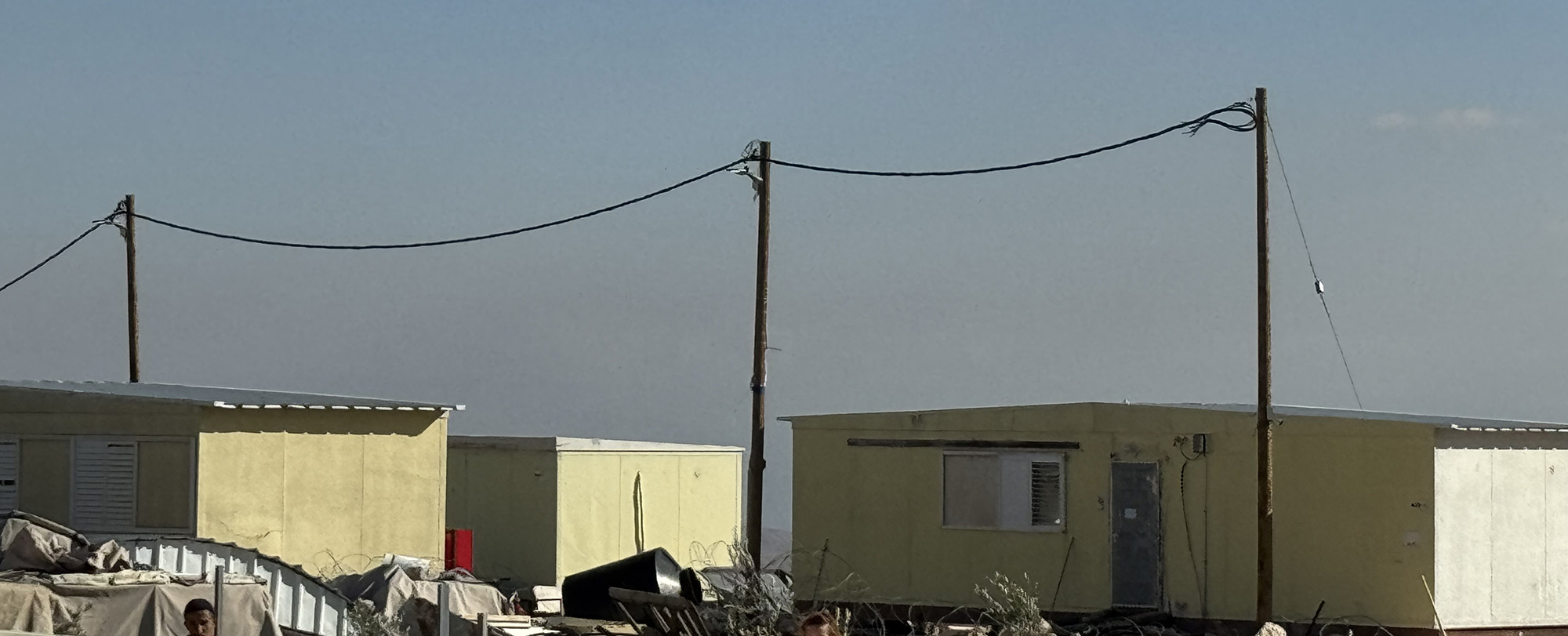
Settler homes in Umm al-Khair. This is the village where the Oscar-winning documentary “No Other Land” was filmed. After Awdah Hathaleen was murdered by settlers, settlers built these trailers to encroach on Palestinian land. His murderer still resides near the village.
All this is just the West Bank. What is seen in Gaza is a genocide. Women and children are bombed, despite a supposed “cease-fire.” Houses are flattened. Hospitals are destroyed. Humanitarian aid is restricted from entering Gaza.
And to make matters worse, it is currently winter in Palestine. Gazans are dying from hypothermia and exposure to freezing weather conditions. Communication is cut from Gaza and the West Bank to keep the Palestinians from unifying.
One man from Gaza I spoke to said he does not know if his family is alive or dead. Israel will not let him call his relatives.
Eyes do not lie. I saw what I saw. But you do not have to trust me. I invite you to go to Palestine and see for yourself. Mitri Raheb told me Palestinians need more Baptists standing up for them; and maybe by seeing for yourself, you can join me in being a Baptist for a free Palestine.
Carson Hollis is a member of First Baptist Church of Austin, Texas, and recently was ordained into ministry there. A graduate of Austin Presbyterian Theological Seminary, Carson is passionate about affirming ministry and plans to plant a church in Appalachia. He is married to Connor, and the two of them share their life with a three-legged cat named Chickpea.