


What happens when the president of the United States appears more willing to offer economic incentives to an invading nation than to guarantee the security of the nation being invaded?
For nearly five years, the world has watched Russia wage a devastating war against Ukraine. Yet the relationship between President Donald Trump and Russian President Vladimir Putin continues to raise an uncomfortable question: Is American foreign policy advancing American interests, or is Vladimir Putin repeatedly emerging with the better bargain?
The latest controversy involves Russian oil, diesel fuel, potential multibillion-dollar energy arrangements and the participation of presidential associates in international negotiations.
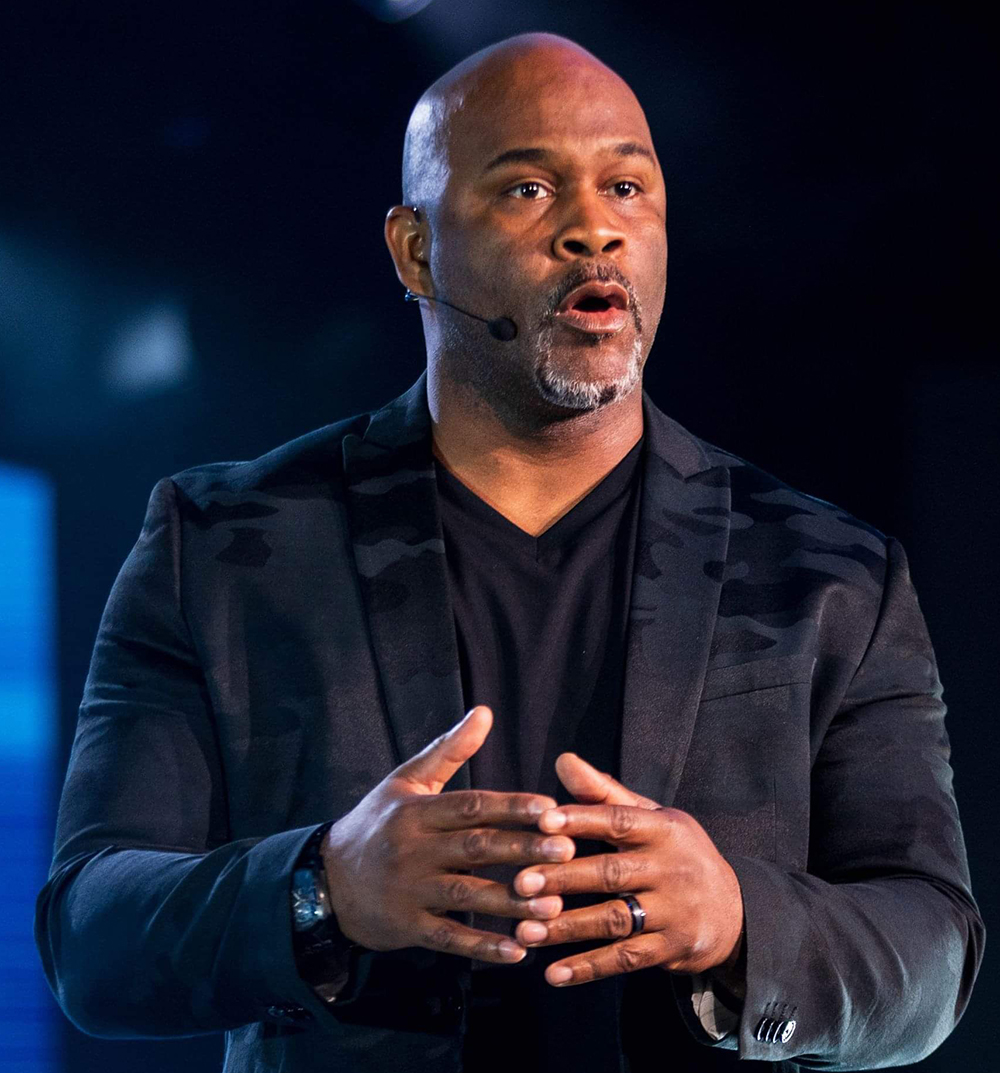
Edmond W. Davis
This is not simply about gasoline prices. It is about America’s credibility, economic independence and moral responsibility.
Russia’s full-scale invasion of Ukraine began Feb. 24, 2022. The Biden administration subsequently prohibited imports of Russian oil and petroleum products, a restriction reinforced in Congress by the Ending Importation of Russian Oil Act.
The purpose was straightforward: Reduce American dependence on Russian energy while limiting revenue that could support Moscow’s military operations.
Now, Trump’s pursuit of Russian diesel arrangements raises questions about whether economic pressure is being exchanged for uncertain diplomatic concessions.
Supporters argue that increased fuel supplies could lower energy costs and encourage negotiations. Critics counter that Russian energy revenue could strengthen Putin’s bargaining position without securing meaningful protections for Ukraine.
The central question is simple: What does America receive in return?
“An arrangement that rewards aggression without enforceable concessions is hardly a balanced agreement.”
Diplomacy must involve fairness. An arrangement that rewards aggression without enforceable concessions is hardly a balanced agreement.
The involvement of presidential relatives and private-sector figures in international negotiations deserves serious scrutiny.
Trump’s son-in-law, Jared Kushner, and longtime associate Steve Witkoff have participated in diplomatic efforts involving major international conflicts.
Their involvement raises legitimate questions about transparency, accountability and potential conflicts of interest.
Kushner’s investment firm, Affinity Partners, previously received a $2 billion investment commitment from Saudi Arabia’s sovereign wealth fund after Kushner served in Trump’s first administration.
That investment prompted congressional scrutiny concerning the intersection of government service and private financial interests.
However, a financial relationship is not, by itself, evidence of criminal conduct, and no verified evidence presented here establishes that Trump personally received money from a Russian oil agreement. Still, Americans deserve to know whether participants in sensitive negotiations have financial interests that could benefit from the agreements they help negotiate.
On Oct. 9, Trump announced an agreement to release Russian diesel onto American and global markets, accompanied by temporary sanctions relief.
“Why should Ukraine unilaterally surrender leverage while Putin receives economic relief?”
According to Reuters, the agreement initially involved more than 300,000 metric tons of diesel, with additional supplies anticipated. Meanwhile, Ukraine has faced pressure to stop striking Russian refineries, even as Russian attacks continue against Ukrainian infrastructure.
Ukraine is attacking facilities that contribute to Russia’s war economy. Russia is attacking a sovereign nation it invaded. Ukrainian President Volodymyr Zelensky has expressed willingness to consider a reciprocal energy cease-fire. But concessions must apply to both sides.
Why should Ukraine unilaterally surrender leverage while Putin receives economic relief?
The conflict involving Iran has further complicated global energy markets, placing pressure on oil supplies, shipping routes and American consumers.
Trump’s administration argues Russian diesel could help ease these pressures. Yet energy analysts question whether the relatively limited additional supply can significantly reduce prices.
Even some Republican lawmakers have criticized the arrangement. A bipartisan coalition of senators described the sanctions relief as a betrayal of Ukraine and urged the administration to reconsider according to Axios.
This is not merely a Democratic-versus-Republican controversy. It concerns whether American foreign policy remains consistent with the principles Washington has defended for generations.
The pursuit of peace is honorable. Reducing household energy costs is necessary. But pursuing either objective without accountability risks sacrificing long-term security for short-term political advantage.
On Oct. 14, Reuters reported that Kremlin envoy Kirill Dmitriev viewed the diesel agreement as an opportunity for broader American-Russian economic cooperation.
That statement deserves attention.
Russia sees possibilities for expanded business relationships. Ukraine sees weakened sanctions. European allies question American reliability. And American consumers have yet to see convincing evidence that the agreement will deliver substantial relief.
To be fair, diplomatic engagement with adversaries is not inherently wrong. A negotiated settlement could save lives and stabilize international markets. But Putin must make verifiable concessions. Peace cannot become a one-sided transaction in which Russia receives financial benefits while Ukraine receives additional demands.
“Peace cannot become a one-sided transaction in which Russia receives financial benefits while Ukraine receives additional demands.”
Nor should Americans assume corruption without evidence. Congressional oversight, financial disclosure and independent scrutiny are necessary to determine whether any private interests improperly influenced these negotiations.
As a social historian, I believe history does not judge presidents merely by their promises. It judges their decisions, consequences and the people who benefited.
Trump should explain why Russian sanctions relief was necessary, how the diesel agreement benefits American households, what Putin has offered in return and what safeguards prevent private financial interests from influencing diplomacy.
Congress must ask these questions regardless of political affiliation.
For nearly five years, Ukrainians have endured extraordinary suffering defending their country. They deserve a peace that protects their sovereignty — not an arrangement that rewards the aggressor.
If Putin gains revenue, Russia gains leverage and Ukraine loses bargaining power, Americans have every right to ask: Who actually won this deal?
And if the answer continues to point toward Moscow, perhaps the question in this headline deserves considerably more attention.
Edmond W. Davis is a social historian, journalist, professor and documentary host. He is founder of the National HBCU Black Wall Street Career Fest. A native of Philadelphia, he lives with his wife and son in the Little Rock, Ark., area. Davis is committed to cultural empowerment and educational equity through storytelling and civic engagement.