


Louisiana Gov. Jeff Landry recently dismissed the idea that racism remains structurally relevant in Louisiana politics, calling it a “failed narrative.”
A failed narrative? In Louisiana?
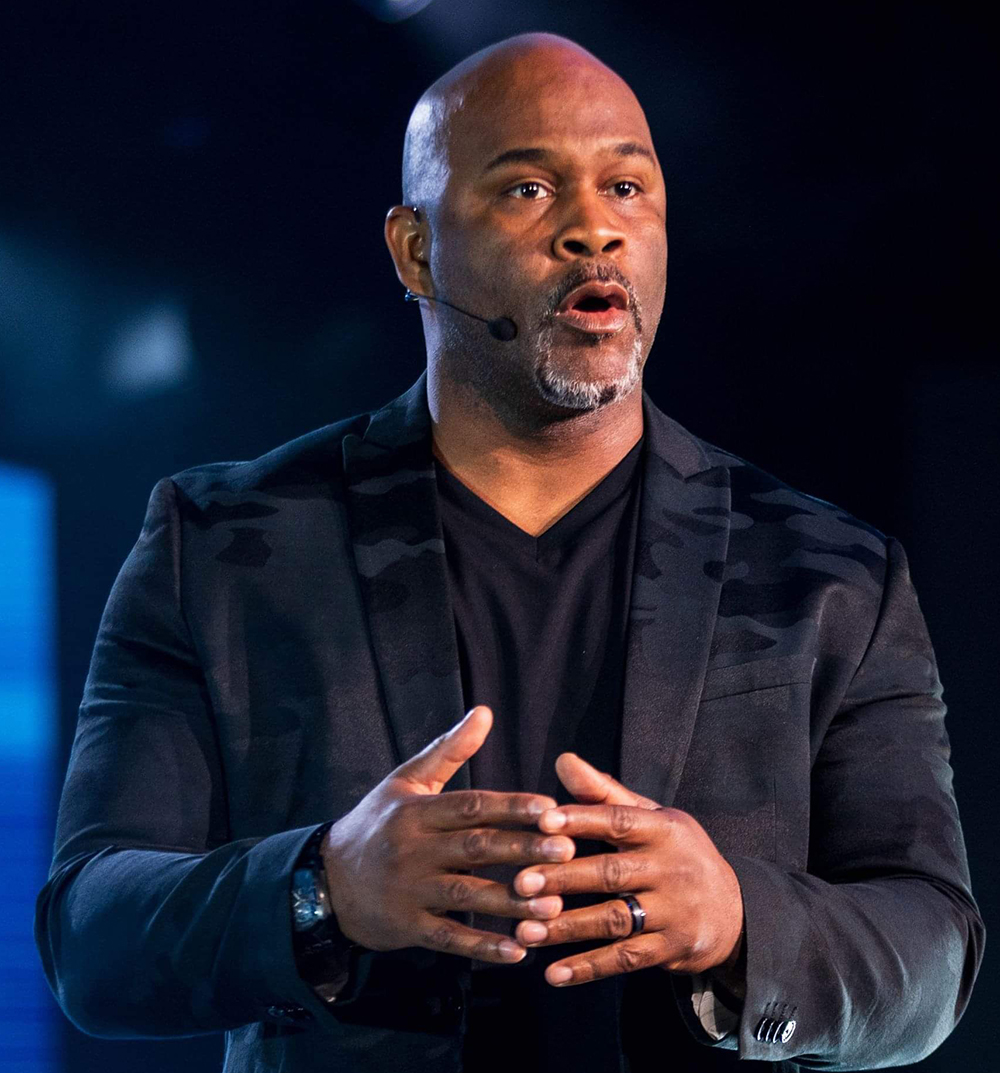
Edmond W. Davis
A state where African Americans make up nearly one-third of the population, yet political power remains overwhelmingly concentrated in white hands?
A state whose modern political architecture was built through slavery, Jim Crow segregation, racial terror, disenfranchisement, voter suppression and strategic exclusion?
This should have ignited a national firestorm.
Because when political leaders attempt to redefine history, democracy itself becomes unstable.
As Scripture warns in Isaiah 10: “Woe unto them that decree unrighteous decrees, and that write grievousness which they have prescribed.”
“Louisiana is one of America’s clearest case studies in racial political engineering.”
Louisiana is not merely another Southern state with a difficult racial past. It is one of America’s clearest case studies in racial political engineering.
Before Jim Crow cemented white supremacy into law, Reconstruction briefly offered Louisiana a glimpse of what interracial democracy could look like.
Following the Civil War, Black Louisianans voted, held office, built schools, organized politically and participated in governance in historic numbers. Louisiana sent Black lawmakers to Congress. African Americans served in local government and helped shape public policy.
For a fleeting moment, democracy actually looked like democracy.
Then came the backlash.
White political violence, intimidation, paramilitary terror, literacy tests, poll taxes, grandfather clauses and legalized segregation destroyed that experiment.
The Colfax Massacre of 1873 — one of the bloodiest racial political massacres in American history — was not merely violence. It was a warning shot against Black political participation.
And Louisiana listened.
Fast forward 50 years, and little changed.
Fast forward 100 years, and many structures simply evolved.
Fast forward to today — and Gov. Landry wants Americans to believe racism is merely a “failed narrative.”
Let’s examine the facts.
Louisiana has not elected a Black governor in modern history.
No Black Louisianan has been elected attorney general, U.S. senator or to most statewide constitutional offices in the post-Reconstruction era.
That is not coincidence. That is structural exclusion.
Over the past 50 years, Louisiana politics have repeatedly demonstrated racialized power preservation.
“Over the past 50 years, Louisiana politics have repeatedly demonstrated racialized power preservation.
From the 1970s onward, white conservative political dominance became institutionalized through district manipulation, party realignment, selective criminal justice policy, education inequity and strategic representation suppression.
The legacy of David Duke’s political rise in Louisiana should never be forgotten. A former Ku Klux Klan leader nearly became governor of Louisiana in 1991.
Think about that.
Not in 1891 but 1991.
That alone destroys the “failed narrative” argument.
Then came mass incarceration.
Then came felony disenfranchisement.
Then came racialized policing.
Then came economic abandonment in majority-Black communities.
Then came environmental racism through Cancer Alley.
Then came school inequities.
Then came voting-rights litigation.
Again.
And again.
And again.
“Louisiana became Ground Zero in national redistricting battles over Black voting power.”
Even in recent years, Louisiana became Ground Zero in national redistricting battles over Black voting power.
After federal protections under the Voting Rights Act were weakened, Louisiana’s congressional maps became a legal battlefield over whether Black voters deserved proportional representation.
The facts are straightforward.
Black Louisianans comprise approximately 33% of the state’s population. Yet for years, only one of six congressional districts was majority Black.
That discrepancy was not accidental. It was engineered.
The U.S. Supreme Court, federal courts, civil-rights organizations and legal scholars all have examined these disparities.
Yet somehow, we are being told racism is merely a narrative failure.
What exactly failed? The narrative? Or the willingness to tell the truth?
Louisiana’s state legislature remains overwhelmingly white relative to the demographics of the state.
Power clusters matter.
Committee chairs matter.
Leadership appointments matter.
Policy gatekeepers matter.
Representation matters.
When overwhelmingly white governing bodies control systems affecting disproportionately Black populations, the question is not whether race matters.
The question is why some insist it does not.
Scripture reminds us in Proverbs 31: “Speak up for those who cannot speak for themselves; ensure justice for those being crushed.”
Historical gaslighting is a political weapon.
If racism can be reframed as myth, then remedies can be dismissed.
“If racism can be reframed as myth, then remedies can be dismissed.”
If structural inequity becomes “old news,” then accountability disappears.
If Black political concerns are treated as exaggeration, democracy itself becomes selective.
Gov. Landry’s remarks are not merely commentary.
They reflect a broader national strategy: Minimize history. Redefine injustice. Discredit civil-rights language. Normalize inequity. Move forward without repair.
This is not uniquely Louisiana — but Louisiana remains one of its most visible laboratories.
And perhaps that is what makes this especially dangerous.
Because Louisiana’s racial history is not hidden. It is documented. It is measurable. It is visible in incarceration statistics. Visible in educational disparities. Visible in wealth gaps. Visible in environmental outcomes. Visible in political representation. Visible in voter suppression battles. And visible in who still holds power.
As Jesus declared: “You shall know the truth, and the truth shall make you free.”
Truth requires honesty, not nostalgia. Not revisionism. Not political branding.
The “failed narrative” is not racism. The failed narrative is pretending racism somehow vanished while its structures remain standing.
Louisiana’s story teaches us something larger about America. Systems do not need burning crosses to maintain inequity. They need policy. Maps. Appointments. Silence. Selective memory. And leaders willing to call reality fiction.
The issue is not whether Louisiana has made progress. Of course it has.
The issue is whether progress means completion. It does not. To suggest otherwise is historical malpractice.
Because racism in Louisiana never was simply personal prejudice. It was political design.
And political designs do not disappear simply because politicians say they have.
Edmond W. Davis is an American social historian, international speaker and Amazon No. 1 bestselling author. He is a global authority on the Tuskegee Airmen and serves as the founder of the National HBCU Black Wall Street Career Fest. A native of Philadelphia and current resident of Little Rock, Davis is committed to cultural empowerment and educational equity through storytelling and civic engagement.
Related articles:
The Republican Party’s Blackout | Opinion by Edmond Davis