


Amid a flurry of executive orders from the White House immediately after Donald Trump’s inauguration Jan. 20, immigrant and refugee advocates were on the lookout for signs of the campaign promises they fear most.
Some of those things came true almost immediately, but one of the most significant actions came at the same time in both houses of a Republican-controlled Congress: Passage of the Laken Riley Act. That bill now is on track to become the first one Trump signs into law as president.
Hailed by conservatives as a needed response to the threat of violence by illegal immigrants, the bill has been dismissed as dangerous political theater by others.
The measure would require the Department of Homeland Security to detain unauthorized immigrants accused of crimes such as burglary and shoplifting in addition to assault and other violent offenses.
Named after a Georgia nursing student murdered by a undocumented immigrant in 2023, the bill passed the Senate 64-35 Jan. 20 and the House of Representatives Jan. 22. Joining all Republicans in the voting were 12 Democratic senators 46 Democratic representatives.

Nicole Melaku
“By enabling the detention and deportation of individuals based on mere accusations, without the need for a conviction, this legislation sets a dangerous precedent that erodes America’s democracy,” said Nicole Melaku, executive director of the National Partnership for New Americas.
The legislation is a symptom of the anti-immigrant panic stoked by disinformation and fear mongering, she said. “Congress must regain its moral compass and stop scapegoating immigrants for political gain, separating families from their loved ones, and destabilizing our communities, workforce and economy.”
 As the first law Trump is expected to sign in his new term, the act represents a bleak milestone in the administration’s attack on immigrants, their families and the rule of law, said Hannah Flamm, acting director of policy at the International Refugee Assistance Project.
“This law is the direct result of political cowardice,” she said. “The Laken Riley Act does not make anyone safer. It opportunistically exploits a tragic death to advance a vicious political agenda to deprive immigrants of basic rights and liberties.”

Amol Sinha
Amol Sinha, executive director of the American Civil Liberties Union of New Jersey, criticized the bill as a tool in Trump’s mass deportation plans while profiting the private prison industry: “By passing this legislation, Congress is perpetuating racism and xenophobia, and depriving people of their fundamental constitutional rights.”
ICE raids in churches
In another move designed to widen the detention of unauthorized immigrants, the administration ended a longstanding policy prohibiting Immigration and Customs Enforcement and U.S. Border Patrol agents from raiding sensitive locations such as churches and schools to make arrests.
“This action empowers the brave men and women in CBP and ICE to enforce our immigration laws and catch criminal aliens — including murders and rapists — who have illegally come into our country,” said Benjamine Huffman, acting secretary of the Department of Homeland Security, in issuing the Jan. 21 directive.

Benjamine Huffman
“Criminals will no longer be able to hide in America’s schools and churches to avoid arrest. The Trump administration will not tie the hands of our brave law enforcement, and instead trusts them to use common sense,” he declared.
Huffman also directed the two agencies to narrow the use of parole programs that allowed migrants to enter the country for urgent humanitarian reasons. “This action will return the humanitarian parole program to its original purpose of looking at migrants on a case-by-case basis,” he pledged.
Opening schools and churches to immigration enforcement raids “strikes fear into the heart of our community, cynically layering a blanket of anxiety on families when they are worshiping God, seeking health care and dropping off and picking up children at school,” said Bishop Mark Seitz of the Catholic Diocese of El Paso.
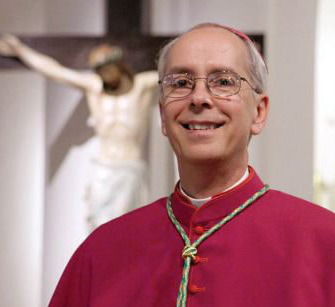
Mark Seitz
“We have also seen the rapid and indiscriminate closure of the border to asylum seekers and the return of the ill-conceived ‘Remain in Mexico’ policy, violating due process and restricting the few legal options available to the most vulnerable who knock on our door seeking compassion and aid,” he said.
“The real effect of this change is that people will be afraid to go to church on Sunday.”
Matthew Soerens, vice president of advocacy and policy at World Relief, lamented the end of the safe-space policy in a recent post on X: “I’m offended that my government is accusing churches of sheltering murderers. In any case, the guidance revoked today already would have allowed ICE to raid a church in that unlikely instance. The real effect of this change is that people will be afraid to go to church on Sunday.”
Restrictions on humanitarian parole and asylum will further victimize migrants who already have suffered, the U.S. Conference of Catholic Bishops said. “Preventing any access to asylum and other protections will only endanger those who are most vulnerable and deserving of relief, while empowering gangs and other predators to exploit them.”
Charging state officials
Meanwhile, a Jan. 21 Department of Justice memo directs law enforcement agencies and prosecutors across the country to press charges against state and local officials who refuse to cooperate with Trump’s immigration policies.
“The Supremacy Clause (of the U.S. Constitution) and other authorities require state and local actors to comply with the Executive Branch’s immigration enforcement initiatives. Federal law prohibits state and local actors from resisting, obstructing and otherwise failing to comply with lawful immigration-related commands and requests,” acting Deputy Attorney General Emi Bove said in the memo emailed to DOJ employees.
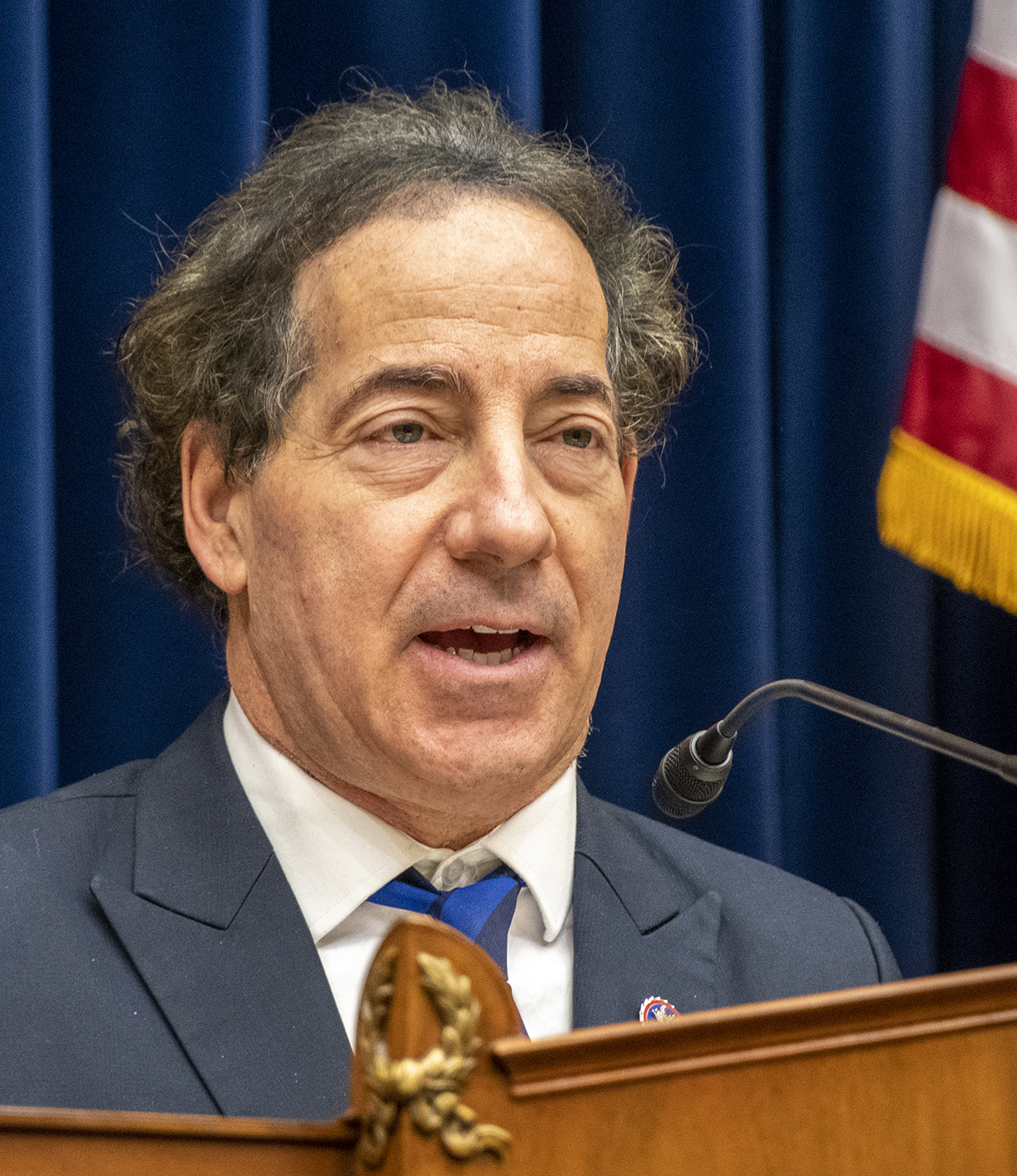
Jamie Rashkin
While the communication may be a warning shot for sanctuary cities across the country, it is definitely unconstitutional, said U.S. Rep. Jamie Raskin, D-Md., a member of the House judiciary committee.
Bove cited no Supreme Court decisions or other legal precedents when claiming the Supremacy Clause as requiring cities and states to comply Trump’s immigration policies.
Raskin said: “As Justice Scalia wrote in Printz v. United States (1997), which struck down a federal law requiring local sheriffs to conduct the federal government’s firearm background checks, ‘the federal government may neither issue directives requiring the states to address particular problems, nor command the states’ officers, or those of their political subdivisions, to administer or enforce a federal regulatory program.’”
The president clearly wants to “boss around” states and cities and use local taxpayer dollars to help finance his mass deportation plans and other immigration policies, Raskin claimed. “But the Constitution preserves state and local officials’ decision-making authority over the state-based question of how to use their own finite and self-raised resources to protect public safety in their communities.”
Foreign development aid
Also amid the avalanche of executive orders on the first day of Trump’s presidency was an action ordering a 90-day suspension of all foreign development assistance.
The executive order calls for a thorough review to ensure all international assistance and its recipients line up with the president’s foreign policy objectives.
The directive added a scathing assessment of the program up to Trump’s return to office: “The United States foreign aid industry and bureaucracy are not aligned with American interests and in many cases antithetical to American values. They serve to destabilize world peace by promoting ideas in foreign countries that are directly inverse to harmonious and stable relations internal to and among countries.”

Myal Greene
U.S. international assistance consists of financial and other resources provided to other nations to support humanitarian needs, economic and infrastructure development and security. The order did not specify which agencies, projects or nations could be disqualified, or if the temporary suspension would affect projects already appropriated by Congress.
World Relief responded by acknowledging the administration’s responsibility for ensuring proper and effective aid distribution but said the delay in releasing funds could intensify suffering in insecure nations and regions.
“President Trump has made it clear that addressing immigration issues will be a primary focus of his presidency. Global humanitarian crises are driving mass displacement and forced migration,” said Myal Greene, president of the international Christian humanitarian organization.
“We need public policy solutions that address the complex and interrelated challenges of mass displacement and migration. A blanket suspension of funding for humanitarian response and development assistance doesn’t move us closer to durable solutions to global and domestic crises,” he said.
Haiti, the Democratic Republic of Congo, Sudan, South Sudan and Ukraine are among the countries where World Relief works to leverage government aid and private donations to assist those experiencing severe adversity.
Related articles:
Here’s a rundown of Trump’s ‘day one’ immigration actions
Advocates reeling as Trump shuts down legal refugee entry