

More faith-in-action – and definitely less television – is needed to address the nation’s divisions over immigration and asylum seekers, said Jorge Zapata, a veteran Baptist pastor and church planter who ministers to refugees along nation’s southern border.
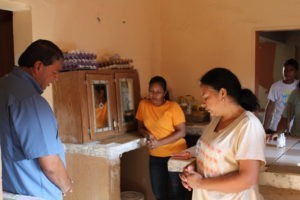
Jorge Zapata, left, prays in a home near the U.S.-Mexico border (Photo/Fellowship Southwest)
That means tuning into ways to give or volunteer instead of tuning into media reports that stoke fear and anger among Americans on both sides of the issue, said Zapata, the associate coordinator of missions and Hispanic ministries for the Cooperative Baptist Fellowship in Texas.
“Believers in Christ in the U.S. are attached to the TV, which gets your emotions pumped,” Zapata said. “We leave God out of what is going on at the border – we forget God.”
Clergy are susceptible, too, he added.
“Even though the issue has become political, we as pastors must put politics aside to take care of these people.”
That’s the message Zapata lives and preaches along the border, where refugees seeking asylum in the U.S. have languished in legal, physical and emotional despair.
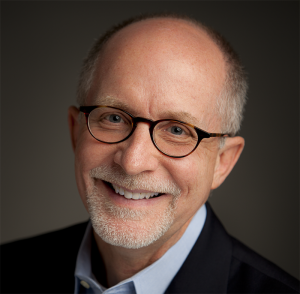
Marv Knox
CBF efforts in the region are guided by Fellowship Southwest, which in turn relies on Zapata’s calling and connections.
“Because he already developed close relationships with pastors and churches across the entire breadth of the border, he’s been able to come alongside them as they have served immigrants who landed on their doorsteps,” said Marv Knox, field coordinator of Fellowship Southwest.
Zapata spoke with BNG about the realities facing families, pastors and churches along the border. His comments are presented here, edited for clarity.
What are your responsibilities overall?
It is to do missions on the border. Missions have always been my heart. Most of the population along the border is very poor. Just in the Rio Grande Valley there’s about 200,000 living in poverty. I work the whole border from Texas to southern California, New Mexico, etc. I work with Fellowship Southwest and CBF Texas.
What are some of the biggest challenges you’ve tried to address?
We had this emergency crisis that hit the border with the (refugee) caravans that started coming into Mexico (2018). Marv Knox and I visited them. It was very hard to see babies and children and young women living in the open and in tents. There were warehouses full of people and the restrooms were so bad. Seeing the babies and the children running around – it just kind of broke our hearts. I was not looking forward to getting involved with refugees but when the Lord puts a passion in your heart and gets you thinking about it at night and seeing the picture in my mind of those children, I was moved by the spirit to do something about it, though not knowing what to do or how to do it.
How do you begin that effort?
Through Fellowship Southwest we partnered with an association to help in Tijuana. Then the Mexican government started sending the caravans up to Matamoros (across from Brownsville, Texas) – so we have refugees up and down the border. We started connecting with pastors and churches along the whole border, on both sides. Within months we were connected and we got to know each other. We learned the needs each of us had and how to do things. We also worked with local government on the U.S. side and the Mexican side. We didn’t know what we were doing. We were just moving forward. Today we are still tweaking here and there, and we are still learning.
What’s it like working with churches south of the border?
It’s a blessing to work with all these refugees and pastors and especially with the Mexican church. The Mexican church is a poor church. They don’t have the money, but they have the passion and the heart and the facilities.
What arrangement do you have with them?
Through Fellowship Southwest we receive money to feed families along the border and to help churches with their utilities and the rent. Some of the churches are leasing houses for the refugees. The federal governments, both of them, have been good to us and allow us to cross the border. Even our White House asked if we could help put together evangelical churches to host the refugees they are going to release from immigration facilities.
What kind of impact is the crisis having on churches and ministers?
Within two months I was able to see the burnout of pastors and church leaders from serving these refugees 24/7. It has taken a financial toll on the church. In some cases, their electric bills went up three times. Some churches shut down ministries. Some saw pastors lose jobs. It’s a big burden. I saw pastors crying, they didn’t know what to do. They want to help. Some church members left the church. It created a crisis within the body of Christ on both sides of the border.
Where do you see God working in all of this?
You talk to the refugees who walked the caravans and they tell you they have seen his protection and they are humbled before God. They have just experienced God like never before in their lives. We know God is doing something. God is behind everything. Even when it looks evil, God will convert evil into good. Revival is going on. God is putting governments together. God is putting agencies together. Churches are together as one body of Christ, one mind, one spirit. We are all on the same page.
What do you want American churches to do?
I would love for the American church to keep their eyes out of politics and put them on the border and join us. Join God and join us. Our work is healing to a lot of families in Central America and across the globe. There are many ways they can give. They can give and they can come and work beside us.