


Last January, I had the opportunity to spend a week in Richmond, Va., exploring the complicated role of religious freedom in our country. Specifically, the group I was with pressed on the wounds of race, power and inequality. We explored how those sore spots impact the way religious freedom exists for different people.
At the Valentine Museum, Bill Martin taught us about the myth of the Lost Cause. This myth, popularized after the Civil War, was an attempt by the former Confederacy to retell history. Do you remember this from high school history?
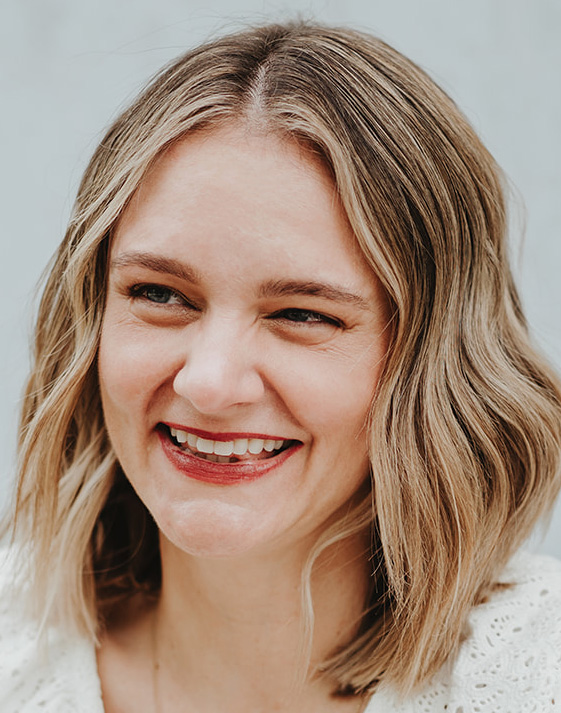
Britt Luby
The myth is “an important example of public memory, one in which nostalgia for the Confederate past is accompanied by a collective forgetting of the horrors of slavery,” explains Encyclopedia Virginia. Over generations, people in power erected monuments, edited history books and used the media to further the myth that the Civil War was about states’ rights, not slavery, and enslaved people were happier to be enslaved than they were to navigate the overwhelming responsibilities of freedom. With a white-knuckled grip on their version of the South, men with power controlled the story.
As we moved from site to site, I began to notice how often the stories we celebrate are incomplete — and whose voices are missing from them.
Our next stop was the historic Polegreen Church. We visited on a frosty day, and the unique structure glistened with snow against a bright blue sky. Here, our group learned about the church’s advocacy for religious liberty during a time when the only legal religion in Virginia was the Anglican Church. In the mid 1700s, Samuel Davies arrived to preach to a small group of non-Anglicans that had begun gathering on George Polegreen’s land to worship. Creating hymns, providing education for enslaved people — this church was a bright light of resistance to the established religious norms.
We delighted in this history, this diverse group of BJC Fellows I was part of. We have spent years learning about the First Amendment and its ramifications, observing ways religious liberty has grown and has been challenged in the United States and advocating for religious freedom for all. My training from this group, in fact, has contributed greatly to my previous publications about the Christian role in religious liberty at local, state and national levels.
And yet, we left Polegreen Church feeling a little unsettled.

Samuel Davies
Near the end of our visit, our guide highlighted the robust work Davies did to improve the lives of enslaved people. He cared deeply about literacy and advocated for their education; he evangelized to the enslaved community and encouraged baptism. But our guide’s retelling left out key truths. He did these good things, yet he owned two people. He did these good things, yet conversion under slavery was shaped by power and fear.
My background in Catholic social teaching insists that every person is made in the image of God — a truth that makes the paradox of Davies’ legacy impossible to ignore: a man who taught enslaved people to read Scripture while simultaneously denying their God‑given freedom.
Our guide shared a particular story with pride: Davies, after hearing enslaved people singing in their private congregation, invited them to come sing in his church. He had wandered down to their meeting house at night and was profoundly moved by their songs. We know about this from a 1756 letter Davies wrote to John Wesley.
But I was not feeling pride; I was feeling discomfort. I looked around the table at my group, a collection of incredible people, many Black or Hispanic. Would this story sound different from another storyteller? It would, I knew it would.
I hate conflict, but I love my new friends — and I’m learning that love sometimes requires discomfort and courage. I see many of my friends are tired and white women have a position of privilege we can use for justice, so I made myself push on the wound.
I raised my hand and asked what was churning in my belly: “I’m learning this week to approach everything with more curiosity, so I am trying to look at this story with more curiosity. I am trying to imagine being an enslaved person singing with people I know and love. And then a white man coming into our space and asking me to come sing at his church. If this man owns me or my friends, is he really inviting me to come sing? Or is he telling me we must come sing? How much agency did they have?”
Our guide seemed thrown by my questions. Politely, she emphasized the good work Davies did, but she confessed to not being asked such questions before. We left feeling grateful for her time, for the work of the Historic Polegreen Foundation and for the beauty of this space. But we also left wishing we could hear from more storytellers.
This is why Black History Month matters. We all have been taught that history is told through the eyes of the victors, but we do not have to limit ourselves to those textbooks. Curiosity, in this sense, becomes a spiritual practice — a way of examining our conscience and widening our circle of solidarity.
What if, using curiosity as a guide, we approached both history and today’s news through the lens of different storytellers? It can be more work to find these voices, often stifled by the choices of people in power, but these voices exist. And with today’s technology and resources, the work of finding these stories is easier than ever.
Black Christian writers, theologians, poets and historians have been telling their stories for generations, even when the wider church failed to listen. This Black History Month, I encourage you to seek out Black voices, to listen with curiosity and to allow these stories to reach your heart and mind. You also can look intentionally for Black authors at your next trip to the library or Black podcasters when you queue up your next car listen.
This Black History Month, let your reading, listening and learning become an act of discipleship — a way of practicing holy curiosity and honoring the image of God in voices too long ignored.
Britt Luby is an alumnus of the BJC Fellows program. She earned a master’s degree in religion (ethics and social theory) from the Graduate Theological Union in conjunction with the Jesuit School of Theology in Berkeley, Calif. After years of service as a lay Catholic university chaplain, she now works in hospital chaplaincy. She is a member of Daughters of Abraham, an interfaith women’s group. She lives in Fort Worth, Texas. Read more of her writing here.
BJC Fellows come from diverse educational, professional and religious backgrounds to learn in an intensive education program that equips them for advocacy to protect religious liberty. Learn more about the program here.