

By Amy Butler
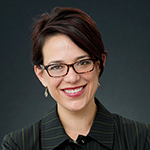 I think Michelle Alexander is a theologian. I mean, she’s a reluctant theologian for sure, but a theologian nonetheless. This is a designation to which, if you think about it, we should all aspire — both the theologian part and the reluctant part.
I gathered this conclusion last week when I had the opportunity to hear Michelle Alexander, author of The New Jim Crow, at Union Theological Seminary when she visited as the recipient of the Judith Davidson Moyers Women of Spirit Award. Alexander spent an evening talking about her book, which has increasingly garnered widespread attention as a powerful expose of the American criminal justice system.
With an obviously sharp intellect and a gentle spirit of persistent unwillingness to back down from the conclusions she’s drawn, Alexander laid out statistic after statistic painting a deeply troubling and incontrovertible picture of what she calls a new caste system in America.
According to her research, before the U.S. war on drugs began there were roughly 300,000 people incarcerated in the United States. Less than 30 years later, there are now 2 million people incarcerated in the U.S., which dwarfs the rates of incarceration in countries like Russia, China and Iran.
Though the raw numbers are startling in themselves, what Alexander notes as most striking to her is the racial dimension of this mass incarceration. “No other country in the world imprisons so many of its racial or ethnic minorities. The United States imprisons a larger percentage of its black population than South Africa did at the height of apartheid.”
Her research uncovers what the Children’s Defense Fund has called a cradle to prison pipeline, in which minorities in this country are inequitably subjected to a crippling system that, instead of supporting economic and educational success and life-giving community, makes those qualities fundamentally unattainable for many black and brown people in American society today.
As she was presenting these troubling statistics to an audience of folks largely steeped in a theological context, Alexander kept insisting she was not a theologian — only a professor and lawyer and civil rights activist.
Every statistic and every conclusion she drew led her to suggest that we need “a new theology” — a new way of talking about the issues that lie deep beneath the statistics. Alexander seemed to be asking us to frame a theological construct, but before the evening was over I heard her do it herself.
This theological construct must be multicultural and multiethnic and interfaith, a way of talking about reality that allows “people of faith and conscience” to begin to see each other in ways that are fundamentally different than we have in the past, she said.
There’s a tendency, when presented with such staggering statistics, to add to the considerable racial polarization in our society. The truth of the matter is that America is fundamentally diverse on every level. The way we speak about relationships and community must take into account that diversity and give us tools to begin thinking about that diversity as a gift, as a rich resource, rather than a liability that separates us from each other and allows us to objectify one another.
I also heard Alexander say that the way we view each other is so very punitive. She said that we all have elements of criminality in us, which I took to mean we all break the law, make mistakes and share the quality of needing a little or a lot of grace from time to time. What would happen to the world if we began to make grace our default instead of punishment?
Finally, Alexander said there’s something in our American psyche that separates us from each other. We tend to automatically view people who are different than we are as “other.” When we characterize groups of people in this way, we cultivate distance instead of shared experience, and it’s so much easier for us to disregard, disrespect and hurt each other.
We need a theological construct that will help us address those critical challenges in American society, she said. As I listened I thought that so much of what she described painted a picture of that radical invitation of Jesus to love God and love each other, which in my mind should make people of faith and conscience the first to begin dismantling the systems that keep us apart.
Michelle Alexander is a professor and lawyer and civil rights activist. Turns out she’s a theologian, too. Reluctant or not, she has offered our own theological construct back to us.
What an invitation for the Church to step up and lead deep and lasting change.