


“Sometimes one story is the beginning of all the others,” the narrator proposes in the trailer for Greta Gerwig’s upcoming film, Narnia: The Magician’s Nephew, as a forest green furniture cover falls from the dark brown wardrobe.
“Are you ready?” Polly Plummer asks in the dark with a curious wonder in her eyes as she holds a candle up toward the door.
Digory Kirke hesitantly replies, “How can I be ready if I don’t know what’s on the other side?”
The trailer is filled with lines like these that not only seem to be telling a story about the characters created by C.S. Lewis but also seem to be inviting us to recognize our own questions, curiosities and concerns in theirs.
“How can I be ready if I don’t know what’s on the other side?”
As the door opens, viewers are greeted with the magical sights of Uncle Andrew’s attic stocked with flasks, tubes, lenses and light streaming in through purple and teal windows.
When Digory squeezes his eyes and slides on Uncle Andrew’s magic ring, the children are transported to the Wood Between the Worlds, a tranquil forest world Lewis created as a nexus to a sort of multiverse.
“There are other worlds,” Polly observes.
“Probably hundreds of worlds” Digory replies. “Even infinity worlds!”
The trailer soars with the rock opera aesthetic created by Gerwig’s splash of color and the iconic sounds of Led Zeppelin’s “Stairway to Heaven.”
Digory’s mother adds: “Magic, it’s everywhere. In the darkness and the light.”
As the children gaze on, a colossal silhouette of Aslan, formed from stars and galaxies, approaches. The narrator asks, “Have you ever seen a world born?” Then Aslan growls and a universe of multi-colored light pours out from his mouth.
And just like that, many on the Religious Right cry persecution.

Aslan from “The Lion, the Witch and the Wardrobe” (Disney)
An attack on Christianity and the West
“Netflix is bringing out a David Bowie-inspired, Led Zeppelin-scored glam rock version of CS Lewis’ Narnia, with a female-voiced Aslan. Emptying out core Western IP of all meaning and content,” Ben Shapiro declared. “That’s what we’re fighting again.”
Some may remember Shapiro’s reaction to Gerwig’s Barbie, which prompted a 43-minute review featuring him throwing Barbie dolls into a trash can and setting them on fire. He ended by declaring the film worthy of “Negative all the Barbies! Negative all of them! … Negative infinity Barbies!”
And Shapiro isn’t the only one having a meltdown.
Joel Berry, formerly of The Babylon Bee, called Gerwig’s new film “a disgraceful bastardization of C.S. Lewis and his work and a wicked inversion of his message.”
Megan Basham lamented: “This is not Lewis’ Narnia. It’s not Lewis’ Magician’s Nephew. And I’m sad because who knows now when I will ever get that on film.”
Pastors on social media are claiming the multi-colored universe being created by Aslan is actually a “humiliation ritual” created by those who hate Christ in order to make people think of the LGBTQ rainbow and trans flags.
And the organization One Million Moms has created a petition “urging Netflix to cancel this blasphemous film.”

Barbie in Barbieland
Creators we can trust
It’s hard to divorce the reaction to Narnia from the reaction to Gerwig’s previous movie, Barbie. Because Barbie so explicitly mocked patriarchy through such sets as Kendomland, definitions of patriarchy as being where “men on horses run everything,” and lines like, “Horses are just men extenders,” it’s understandable that Christians who interpret reality through the lens of Christian patriarchy or male headship would have some trust issues with the director.
The fact that Gerwig’s next film would be one of the Religious Right’s most beloved stories naturally would trigger some suspicion. It’s reasonable for them to want the director to take Lewis’ story seriously, rather than turning it into a joke.

C.S. Lewis
Gerwig’s approach to C.S. Lewis
Whether one agrees with Gerwig’s theology or sexual ethics, conservative Christians should at least know that she took Lewis very seriously in her preparation for the movie.
In an interview with Stephen Colbert at the debut of the trailer, Gerwig said, “I think I wrote out every single sentence from any of the Narnia books that gave me goosebumps. And then I kind of put them alongside other sentences he’d written.”
Not only did Gerwig read everything Lewis wrote, she also told Colbert she read whatever she knew Lewis read so she could learn what Lewis loved and was inspired by. She also traveled to Oxford, Cambridge and Belfast in order to “align myself with what his interior life would be so that my instincts try to go in the direction of where his soul was.”
Her connection to Lewis goes back much further than simply the contract to write and direct this movie. She said the two stories she grew up on were Little Women and Narnia. So she wanted to create movies for both stories because the Catholic faith of her youth taught her that “film and faith have always gone hand in hand.”
Gerwig told Colbert, “I would not be who I am without these books.”

Stephen Colbert and Greta Gerwig speak onstage at Netflix’s Narnia IMAX exclusive sneak peek event at AMC Lincoln Square 13 on October 13 in New York City. (Photo by Kevin Mazur/Getty Images for Netflix)
The story we all recognize in Narnia
But while Gerwig obviously takes Lewis’ writing seriously, how does she interpret it?
“It’s about a spiritual journey,” she told Colbert. “It’s about the true path of enlightenment and spirituality and then this sort of path of false idols and the wrong roads you can go down. This is exactly the story of this movie.”
Of course, many on the Right may get concerned over words like “enlightenment” and “spirituality.” But she’s not promoting the sort of moral relativism many of them fear. She’s naming the reality that there are false idols many of us are tempted to worship and wrong roads many of us are tempted to travel. This could be a conversation opportunity for people ranging from the far right to the far left that explores worship, idolatry and the nature of truth while beginning with our common assumptions rather than our irreconcilable differences.

Greta Gerwig on set (via IMDB)
Gerwig also mentioned to Colbert how much she resonated with the image of Aslan singing the world to life like “ten thousand stars singing.”
“I was like this is an extremely beautiful surreal image,” she reflected. “And then also the image of a little boy hiding in his backyard pretending not to cry. And so it was kind of the cosmic and the close that were both images and words.”
She went on to add: “The movie can be as vast as the universe, as vast as multiple universes, which is the size of a boy’s heart. And it can also be as intimate as a moment shared between two friends. And I think that that’s how C.S. Lewis wrote. And that’s kind of what I stayed true to was like, if it’s in the heart, it can be huge and it can be small and both can be true.”
Christian theology speaks of God in terms of being cosmic and close. At the cosmic level, God is the infinite in which everyone lives and moves and has their being. Yet at the same time, God is a baby resting at a woman’s breast. God is in the space between the galaxies, as well as where two or three are gathered.
Again, we could have significant conversations here between the Left and the Right that begin with common assumptions about the transcendence and immanence of God.

David McKenna, Beatrice Campbell and Emma Mackey in “Narnia: The Magician’s Nephew.”
Allegory and ‘supposition’ in theological formation
In another interview published by Netflix, Gerwig said, “This brand new world is just a veil drawn over infinity.”
 Her comments bring up questions about how allegory and fantasy genres train people to interpret reality through a theological lens.
The gold standard for allegory when I was growing up in evangelicalism was always Pilgrim’s Progress. While Bunyan’s story was by no means a literal re-telling of Scripture, it used literal names for people and places that could be found in Scripture so the meaning was easy to recognize. It doesn’t take much to recognize what’s going on with such characters as Evangelist, Pliable or Worldly Wiseman or at such places as Doubting Castle and the River of Death.
Narnia, on the other hand, isn’t quite so explicit. Rather than the more direct theological comparisons often found in allegories like Pilgrim’s Progress, Lewis said Narnia was a “supposition.”
“If Aslan represented the immaterial deity in the same way in which Giant Despair represents Despair, he would be an allegorical figure,” Lewis explained in a letter in 1958. “In reality, however, he is an invention giving an imaginary answer to the question, ‘What might Christ become like if there really were a world like Narnia and he chose to be incarnate and die and rise again in that world as He actually has done in ours?’ This is not an allegory at all. So in ‘Perelandra’. This also works out a supposition. (‘Suppose, even now, in some other planet there was a first couple undergoing the same that Adam and Eve underwent here, but successfully.’)”
So Lewis said, “Allegory and such supposals differ because they mix the real and the unreal in different ways.”
One of the different ways Gerwig has chosen to mix the real and the unreal is to feature Meryl Streep’s voice as Aslan. Of course, none of us have heard what it’s going to sound like yet. But the use of a woman’s voice to play Aslan, who represents the male Jesus, is by far the most common objection I’ve read to Gerwig’s movie.
Could Gerwig be trying to turn Jesus into a drag queen or a transgender person? It seems unlikely given the fact Gerwig consistently refers to Aslan with “he/him” pronouns in interviews.
Could she attempt to create a voice that has both masculine and feminine qualities in order to show how God can be recognized in both men and women? It’s unclear at this point because none of us have heard her version of Aslan’s voice and she hasn’t commented on it.
If Lewis’ “supposition” approach to storytelling turned out to be real, there are an infinite number of universes. And God incarnated as a lion in another universe, could lions in that universe not also have softer voices that may seem to be more feminine in ours?
With the infinite possibilities of the Wood Between the World, these are at least fair questions to ask. But the answers Christians give to these questions are likely informed by both their theological conviction and imaginative freedom.

David McKenna and Greta Gerwig on set of “Narnia: The Magician’s Nephew”
Fantasy and the evangelical imagination
It’s also important to note how genres of literature and interpretations of readers evolve over time. Although Pilgrim’s Progress may have been written more as a strict allegory and Narnia as a “supposition,” stories like Lord of the Rings, Star Wars, and Harry Potter tend to be lumped in together for modern readers as simply “fantasy.”
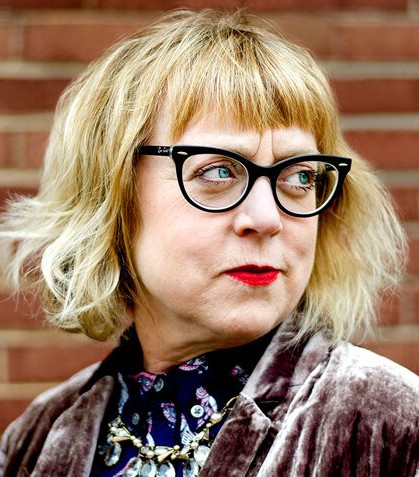
Karen Swallow Prior
In her book The Evangelical Imagination: How Stories, Images, and Metaphors Created a Culture in Crisis, Karen Swallow Prior admits, “I have often asked myself why fantasy is so popular today, particularly among evangelicals.”
Prior adds: “As someone who is not a fan of fantasy, I want to say, on the one hand, that fantasy is kind of like training wheels for a people who have labored too long under an impoverished social imaginary.”
Regarding her own reading of Pride and Prejudice, Prior noted, “It may be harder to see the transcendence in the mundane, but believe me, eternity is in Lizzie’s scandalously dirty ankles.”
Prior’s language of transcendence in the mundane is similar to Gerwig’s language of the cosmic and the close. Despite Gerwig being a Unitarian Universalist and Prior being a conservative evangelical, they’re both exploring the possibility of an enchanted reality that could provide for some rather interesting conversations, far more nuanced than the typical culture wars we see playing out in society today.
The tension among evangelicals who are reacting so strongly against Gerwig’s Narnia appears to be related to the contradiction between their love for fantasy and their fear of imagination. Narnia utilizes “supposition” in a way that invites readers and viewers to imagine the infinite possibilities of worlds beyond their own, to encounter realities they may not understand, and yet to recognize the same fingerprints of God in those worlds that they recognize in their own.
As Polly asks Digory in Gerwig’s trailer while looking up at the dark door, we could ask, “Is the Religious Right ready to walk through such doors?
The problem, as Digory replies, is that they don’t know what’s on the other side of that door. So here they are with both a curiosity and fear, a desire to wonder at the unknown and a concern they may fall for false idols.
Those are legitimate questions. But the question of imagination extends beyond a movie trailer. What happens when Christians become so invested in defending their leaders and their cultural power that they struggle to imagine alternatives to the worlds those leaders have built? What happens when the same communities that celebrate stories about sacrificial love and the defeat of tyrants excuse abuses of power by leaders who promise to protect them?
When every unfamiliar color or creative possibility gets interpreted through a culture-war lens as an attack on Christ, there comes a point where evangelicals no longer enjoy the beauty of color itself. So while they claim to have been enlightened by God, they actually become disenchanted.
Narnia is not a theological test designed to separate faithful Christians from their enemies. It is an invitation to imagine what we might discover about ourselves when stories, as Lewis put it, “mix the real and the unreal in different ways.” The question shouldn’t be how literally Gerwig interprets Lewis, but how engaging their stories theologically shapes us toward the ethic of loving neighbor as self.

Rick Pidcock
Rick Pidcock is a 2004 graduate of Bob Jones University, with a bachelor of arts degree in Bible. He’s a freelance writer based in South Carolina and a former Clemons Fellow with BNG. He completed a master of arts degree in worship from Northern Seminary. He is a stay-at-home father of five children and is the author of a forthcoming book, Weapons of Worship: How the Songs of Evangelicalism Form the Soundtrack of Extremism. Follow his blog at www.rickpidcock.com.
Related:
Now complementarians are upset about Meryl Streep voicing Aslan | Analysis by Josh Olds
Why Elon Musk thinks Christopher Nolan has ‘desecrated The Odyssey’ | Analysis by Josh Olds
Is Nolans’ Odyssey woke or a worthy warning? | Analysis by Josh Olds