


New research shows religious adherence remains stable in the United States and the nation is not witnessing the “revival” excitedly proclaimed by Christian nationalists.
In a survey released in December, Pew Research Center reported 70% of U.S. adults identified with a religion in 2025, compared to 71% five years ago. Similarly, 62% of respondents identified as Christians in 2025 versus 64% who did so in 2020.
“The surveys show a similar pattern when it comes to how often Americans pray, how important they say religion is in their lives and how often they attend religious services,” researchers explained. “There is some bouncing around from year to year, as is to be expected in survey research. But there is no clear trend of either increasing or decreasing religiousness since 2020.”
The findings deflate the hyperbole coming from the MAGA church and groups like Turning Point USA about a surge in American Christianity. Numerous Fox News reports about the “revival” have been largely based on anecdotal statements from megachurch pastors.
“People are coming to us, and they are saying, ‘I want to know the meaning of life, the purpose. Why am I here?’” Jack Hibbs, pastor of Calvary Chapel Chino Hills, Calif., said in a Sept. 28 Fox News report.
That story and others like it attribute a “15% increase in church attendance,” especially among young people, to the “Charlie Kirk affect,” in reference to the Turning Point USA founder shot and killed earlier that month.
“I think Charlie would look at the rise in church attendance, the spike in Bible sales … and be phenomenally proud and honored at what God is doing across America in this time,” a spokesman for the organization said in a Sept. 30 Fox News article.
But Pew’s polling didn’t confirm those claims or the presence of any other resurgence in faith, including among young people.
“Some media reports have suggested there may be a religious revival taking place among young adults, especially young men, in the U.S. But our recent polls, along with other high-quality surveys we have analyzed, show no clear evidence that this kind of nationwide religious resurgence is under way,” Pew researchers noted.
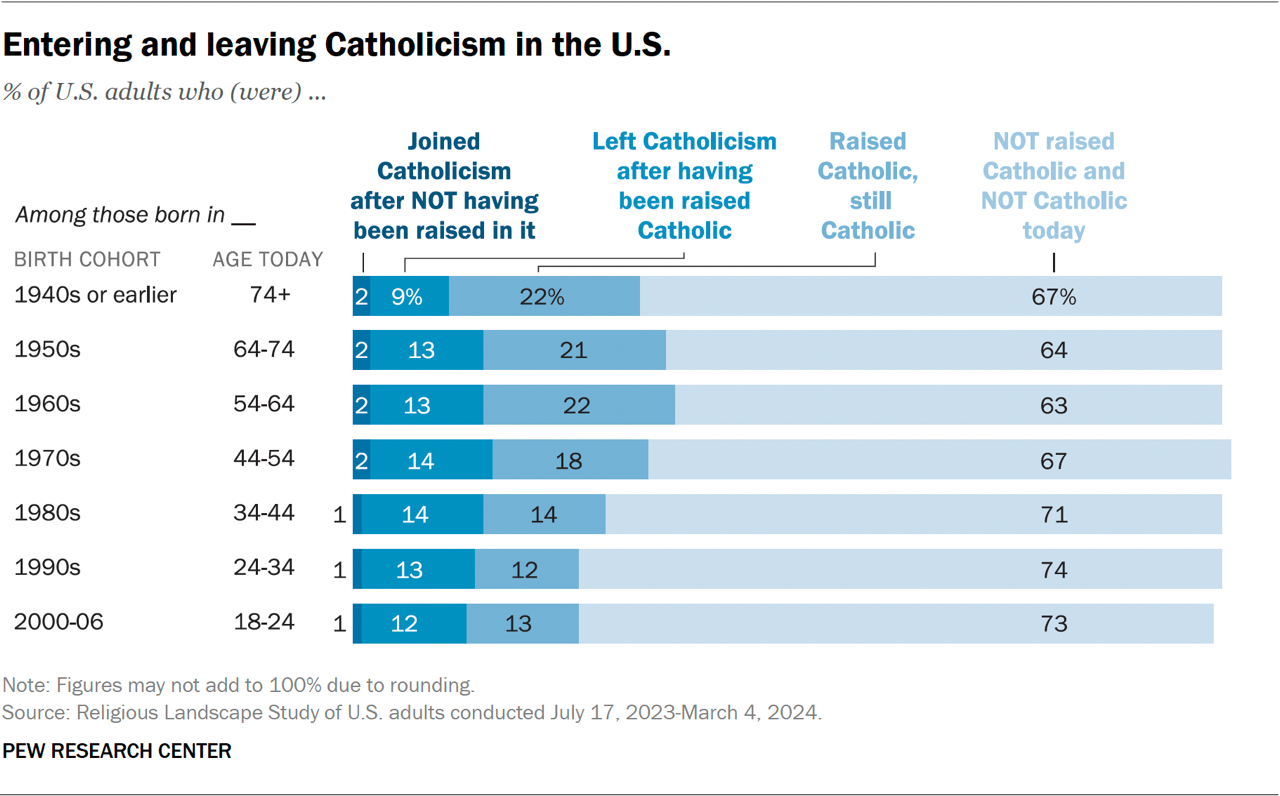
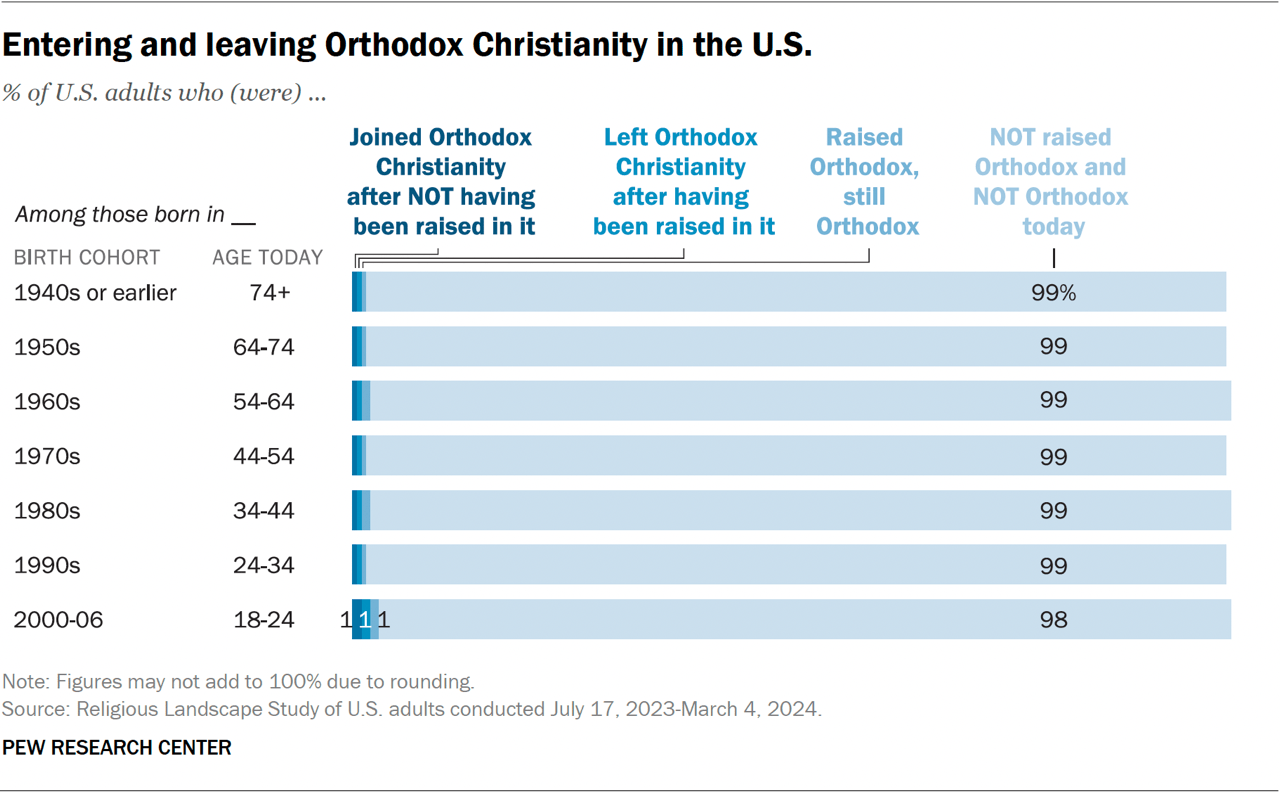
Descriptions of young adults joining traditional forms of Christianity, such as Catholicism and Eastern Orthodoxy, overlook the fact that many more people are leaving at the same time, the Pew report said.
For example, 1% of adults ages 18 to 24 currently identify as Orthodox Christians, but “an equal share of these adults has left Orthodoxy.”
The Catholic Church is seeing an even larger share of young people leaving than joining. According to the survey, 12% of the youngest adults have left Catholicism while only 1% have joined.
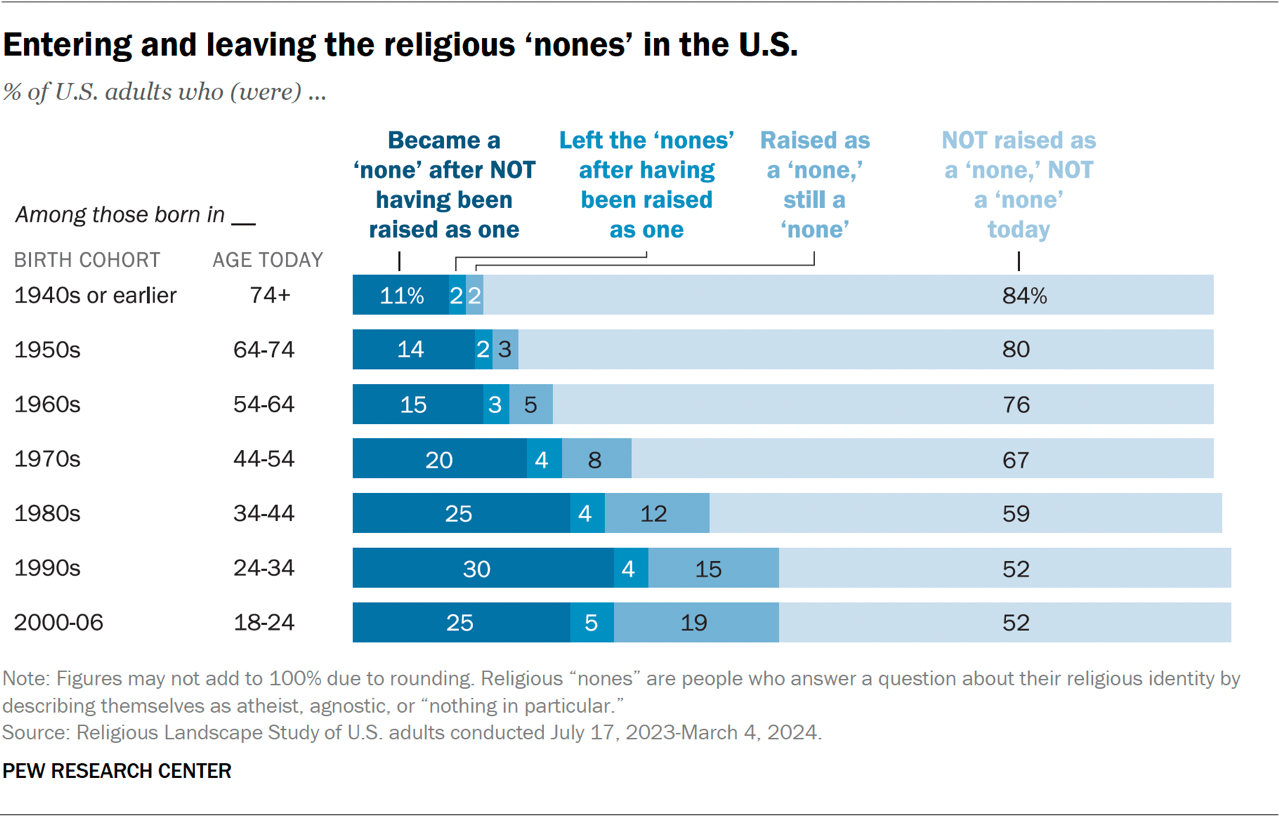
“The big-picture outcome of religious switching is a net loss for Christianity and a gain for the religiously unaffiliated,” Pew said of people who identify as agnostics, atheists or having no religious affiliation.
“Among adults ages 18 to 24, 26% are former Christians. By contrast, 5% are converts to Christianity,” researchers added. “This ratio is reversed for religious ‘nones.’ One-quarter of adults ages 18 to 24 have become ‘nones’ after not having been raised as a ‘none.’ Far fewer young adults have left the ‘nones’ after having been raised as a ‘none’ (5%).”
 One shift Pew identified in the survey is that young men (57%) are nearly as religious as young women (58%). “That’s a notable change from the past, when young women tended to be more religious than young men. It also differs from the pattern seen among older people today: Older women are much more religious than older men.”
But it is not a sign of revival, Pew added. The “narrowing of the gender gap is driven by declining religiousness among American women. It is not a result of increases in the religiousness of men.”
The analysis demonstrates that young adults are about as religious now (55%) as they were in 2020 (57%), and they continue to trail older adults. The percentage of adults ages 61 to 70 who identify with a religion was 80%, compared to 57% among those ages 18 to 30.
The stability identified in religious identity largely held true across activities such as prayer (48% in 2020 to 46% in 2025) and attending religious services (33% to 34%). Those who said religion is important in their lives dropped only 2 percentage points to 43% over that span.
“The recent stability is striking because it comes after a prolonged period of religious decline. For decades, measures of religious belonging, behaving and believing had been dropping nationwide.”
Related article:
Now Christian nationalists claim we’re having a revival | Analysis by Rick Pidcock