


One year after Charlie Kirk’s death, I am increasingly concerned that parts of the American church have forgotten the difference between mourning and canonization.
We have a word for remembering those who have died: Mourning. We have a word for those who die because of their witness to Christ: Martyr. These are not the same thing.
Martyrdom comes from the Greek word for “witness” — the martyr’s death testifies to something beyond the martyr, to Christ, to a kin-dom that refused to bow before the kingdoms of this world.
Kirk did not spend his public life as a pastor, missionary or theologian. He was one of the most successful conservative political organizers of his generation, building Turning Point USA into an enormously influential organization whose public ministry, if we want to call it that, intertwined Christian faith with opposition to abortion and LGBTQ rights, attacks on diversity initiatives and a vision of America shaped heavily by white Christian nationalism.
“Those beliefs do not make his murder acceptable. But his murder does not make those beliefs holy.”
Those beliefs do not make his murder acceptable. But his murder does not make those beliefs holy. That is the distinction I fear we are losing.
Once we call Kirk a Christian martyr, we are no longer merely grieving a Christian man — we begin sanctifying the cause attached to his life. Politics becomes witness. Theology becomes gospel. Criticism of the movement starts to sound like criticism of the faith.
All this matters this week as we mark the one-year anniversary of Kirk’s death at Utah Valley University. An alleged shooter is in jail and charged with his murder, but conspiracies still swirl about what really happened Sept. 10 last year.
Whatever I think of Kirk’s politics or the movement he built, I cannot celebrate his murder. Political violence is evil from the right and evil from the left. It is evil when the person bleeding shares our politics and evil when they have spent years saying things we find dehumanizing.
The language of Christian witness has surrounded Kirk’s memory almost from the moment he died. At his memorial service last year, political leaders, MAGA activists and Christian speakers repeatedly described him as a martyr, while worship music, Scripture and partisan politics shared the same stage.
I am a Black Baptist preacher. So when Christians start talking about martyrs, I remember the blood the American church already has seen. Four little Black girls getting ready for worship at Sixteenth Street Baptist Church when a bomb ripped through it. Medgar Evers collapsing outside his home. Martin Luther King Jr., a Baptist preacher shot on the balcony of the Lorraine Motel after years of telling America that racism, poverty and militarism were moral and theological crises. Nine Black Christians who welcomed a stranger into Bible study at Mother Emanuel AME Church, prayed with him, opened Scripture with him and were murdered by him. Generations of Black bodies hanging from trees while white Christians sometimes watched, sometimes participated, and too often went to church the following Sunday.
The American church never has lacked blood. It often has lacked the moral imagination to know whose blood should trouble us.
While white evangelical Christians elevated Kirk as a martyr, many Black pastors pushed back. Howard-John Wesley of Alfred Street Baptist Church offered perhaps the clearest theological sentence of the moment: “How you die does not redeem how you lived.”
“Christian compassion does not require historical or theological amnesia.”
Wesley was not celebrating Kirk’s murder. Neither were the Black pastors who rejected the violence while refusing to rewrite Kirk’s life. Their point was harder than that: Christian compassion does not require historical or theological amnesia. We can grieve a man’s death and tell the truth about his life at the same time. Grace never requires lying.
A harder question: Why was the American evangelical imagination so ready for Kirk to become a martyr, when Christians of color and queer Christians have spent generations begging the church to treat violence against our communities as a theological concern? One death does not cancel another — grief is not a competition. I do not need Christians to care less about Charlie Kirk. I need us to ask why we have so often cared less about everybody else. Where was this urgency for the Black church after Charleston? Where was this compassion when Kirk demonized our LGBTQ siblings?
That history is likely why many Black Christians recoiled when Kirk was placed alongside King almost immediately after his death. King was not murdered merely because he was a Christian who happened to be politically active — his witness drove him toward the oppressed, into streets, jails, boycotts and eventually Memphis. King’s blood did not make his message Christian. His witness came first.
There is a danger on the other side too. As some Christians canonize Kirk, others have mocked his death — this anniversary has already produced reports of a Kirk “lookalike contest” and social media posts joking about his killing. That is not justice, and Christians should reject it as clearly as we reject the sanctification of his politics.
Kirk was not merely a symbol of MAGA, an extension of the current administration, or an avatar for whatever Americans loved or hated about the country. He was a person, one who left behind a wife and two children. I pray we can hold that humanity without surrendering discernment.
That is why I keep coming back to the church. Political organizations will do what political organizations do — Turning Point USA, a political organization, will preserve its founder’s memory, and a widow will remember her husband. But the church is supposed to be different. It does not gather around the memory of political power; it gathers around a table, and at the center of that table is already a broken body — broken not to make Rome great again, not to preserve a nation, not to win an election, but for the life and hope of the world.
The church already has a martyr at the center of its faith. His name is Jesus.
And the strange thing about Jesus is that the closer we get to him, the harder it becomes to turn his death into permission to hate our enemies. Jesus tells Peter to put away the sword. He heals the servant who came to arrest him. He dies with no campaign to avenge him. And he restores the dignity of the woman at the well.
If remembering Charlie Kirk makes Christians more committed to Jesus, more committed to truth, more committed to loving neighbors and enemies, more committed to protecting humankind — including the lives of immigrants, queer people, Black people, trans people, and people whose theology makes us furious — then something holy can come from remembering him. But if remembering him simply makes us more angry, more homophobic, more racist, more MAGA, more convinced our political opponents are enemies of God, then whatever is happening in our sanctuaries is not revival. It is political formation dressed in a robe and stole.
Charlie Kirk was murdered. That was evil. But one year later, the church has another responsibility: Tell the truth about Charlie. Christians should be careful whenever the flag begins to look like an altar and a political leader begins to look like a saint. The church does not need another martyr manufactured in America’s image.
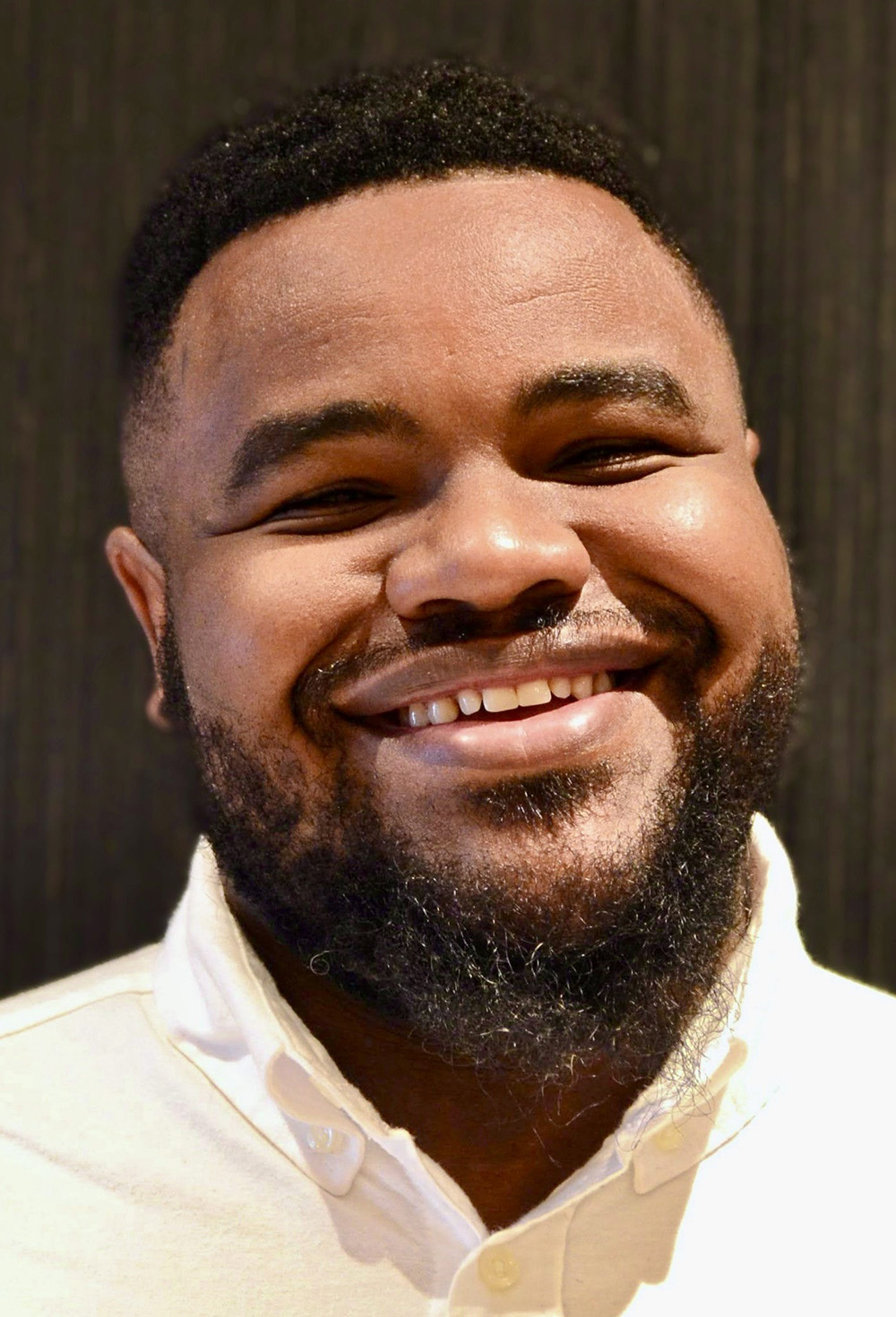
Braxton Wade
Braxton Wade is a Clemons Fellow with BNG. He is a graduate of the University of Richmond and Chicago Theological Seminary and lives in Richmond, Va. He is currently a Ph.D. student at Yale Divinity School.
Related:
Was Charlie Kirk a martyr? | Analysis by Rodney Kennedy
Charlie Kirk was no King | Opinion by Joel Bowman
The morning after an assassination | Opinion by Mark Wingfield
How Charlie Kirk went from college dropout to Trump influencer | Analysis by Mara Richards Bim