


When I saw the recent headlines of 5-year-old Liam Conejo Ramos being reunited with his father after being held in a Texas detention facility for more than a week, I softened at the sight of the blue bunny hat. And I hoped that, nestled in his father’s arms, maybe, just maybe, they’d both be on a path toward sustained freedom and safety.
Liam’s ordeal made me think about my 16-year-old cousin and, while much older, how fragile her safety is in this country. I think about what she’s hearing or seeing online. If she’s breathing easily. And most importantly, I think about her hope and how she’ll continue loving and constructing herself amid a world set on deconstructing Black bodies.
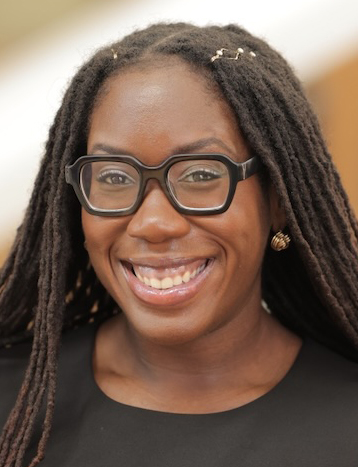
Adia R. Louden
Against a political, technological and tumultuous backdrop of headlines, ICE raids and shootings, child abductions, misinformation and legislative theater, Black and brown children are inevitably watching and learning this country doesn’t love them enough to keep them whole.
It is especially necessary today for parents and families to teach and salute Black children’s self-concept, self-love and self-esteem. Surrounded by national stress, turmoil and uncertainty, Black youth must learn and sustain how to hold on to themselves as the world continuously shows them how easy it is to be kidnapped and maybe released. To be ignored, assaulted and forgotten. To be — let go.
This is especially true when a breadth of research continues to document lower personal and collective self-esteem among Black adolescents due to race-related stress. As a result, Black children face a higher risk of depression, substance use and anxiety.
No more.
Establishing self-love and wellness ecosystems for Black children is not an optional luxury. It’s radical, urgent and necessary for surviving in this country.
“In 2024, the suicide rate among Black adolescents increased faster than that of any other racial group.”
Data show the suicide rate among Black adolescents is increasing faster than that of any other racial group. This means while an administration and modern-day slave catchers are hyper-focused on making tenderness scarce, we must become abundant and intentional architects of our children’s mental health and inner worlds. We must teach a heart not to be a house built on a shaky foundation but a home.
What does this look like in practice?
For parents and families, start by truth-telling. Name the scary, courageous things, both in your life and theirs. This can be apologizing when you’re wrong, admitting what you’re scared of in this moment or naming something they might have overlooked but did extremely well. This also can be naming culture, naming traditions or naming history. Whatever the “truth” looks like for you, leading with it creates a scaffold, an armor. And that armor will go on to eventually become a habit, their truth, their story.
Next, consider sharing affirmations and techniques that help with self-determination and grounding. Research shows emotion-centered strategies, along with mechanisms focused on identity framing, help youth cope with stress and racialized experiences.
Now more than ever, Black children need to know about their minds, their hearts and their bodies. Teach who it belongs to — them and never the state, government or police. Teach that they’re brilliant and they matter —always and forever. Show them how to place their hands over their hearts, be still and breathe.
“Consider yourself as a part of a collective shield. Love is not an individual pursuit.”
The world may be on fire, but our children still can create and have an internal sanctuary set ablaze with embodied confidence, liberation and safety.
Finally, for those outside the family unit, consider yourself as a part of a collective shield. Love is not an individual pursuit. As bell hooks said, it is a deliberate action and commitment to nurturing growth, both for oneself and others.
Therefore, for the sake of Black children, now is not the time to lean back. It is a time to call and lean in. This means more frequent discussions, letters, meetings and check-ins. Show up as practical support and protection for Black children. Show up as vessels for decompression and comprehensive safety.
This is how we love our Black children. How we feel in front of them. How we let them know they’re tended to, named, held and enough.
Courts can order a release after federal and political failure. Laws can be illegally litigated and created. Funding can be poured into the very systems that violate Black and brown bodies. But the work of keeping a Black child whole, especially during national strain and precarity, requires intimacy and immediacy. It necessitates a curriculum where we study accountability, emotional regulation and community. It means we look at a child in our life and say, with extreme honesty, “You belong here.”
Today we need to induce more love — a love Black children can carry inside, in classrooms, in playgrounds, online and in every space they’re in, no matter the headline.
Adia R. Louden is a fifth-year Ph.D. student in maternal and child health at the University of North Carolina at Chapel Hill and a Public Voices Fellow of The OpEd Project in partnership with the National Black Child Development Institute.