


Philadelphia never has been a city known for backing down from a fight.
This is the city of Joe Frazier, Bernard Hopkins, Wilt Chamberlain, Kobe Bryant and Benjamin Franklin. It is the city where some of the most important documents in American history were debated, drafted and defended. It is the city where millions visit Independence Hall and the Liberty Bell to better understand the American experiment.
Even a fictional boxer named Rocky Balboa receives daily visitors from around the globe because Philadelphia celebrates perseverance, struggle and triumph.
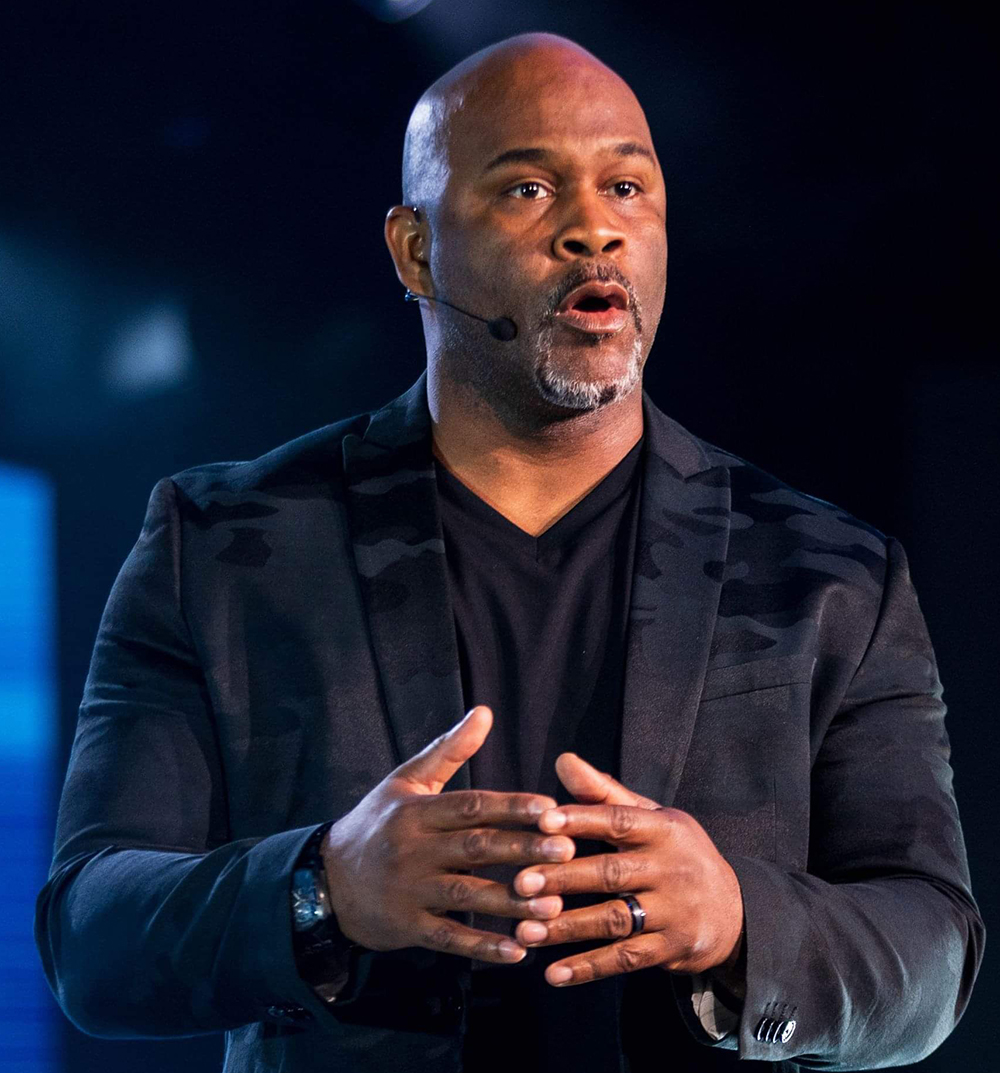
Edmond W. Davis
That same spirit is why Mayor Cherelle Parker has become one of the loudest voices opposing what many critics describe as the latest attempt to sanitize American history.
Recently, the Trump administration completed its replacement of educational panels at the President’s House site near Independence Hall, the location where George Washington lived while Philadelphia served as the nation’s capital. The original exhibit, installed in 2010, highlighted the lives of nine enslaved Africans held by Washington during his time in Philadelphia. Critics argue the newly installed panels shift attention away from those enslaved individuals and place greater emphasis on Washington’s accomplishments.
Mayor Parker did not mince words.
She condemned the move as “shameful” and criticized the federal government for replacing the panels “under the cover of darkness.” According to Parker, the fight is not simply about signage. It is about whether Americans are willing to tell the truth about their own history.
As a Philadelphia native and social historian, I understand exactly why this issue matters.
History is not supposed to make us comfortable. History is supposed to make us honest.
The nine enslaved Americans memorialized at the site are Moll, Christopher Sheels, Richmond, Giles, Austin, Paris, Joe, Hercules, and Ona Judge. Their stories reveal one of the great contradictions in American history: a nation founded on liberty while simultaneously tolerating human bondage.
“Freedom and truth always travel together.”
Acknowledging that contradiction does not weaken America. It strengthens America. The Bible reminds us: “And ye shall know the truth, and the truth shall make you free.”
Freedom and truth always travel together.
The challenge facing Philadelphia today is not unique. Across the country, debates continue over how slavery, segregation, Indigenous displacement and civil rights struggles should be taught and remembered. The controversy surrounding the President’s House is part of a broader national conversation about public memory and historical interpretation. President Trump’s 2025 executive order directed federal agencies to remove or revise materials that, in the administration’s view, unfairly disparage historical American figures and institutions.
Supporters argue these changes provide broader context and celebrate American achievements. Critics argue they diminish painful but essential historical truths. Regardless of one’s political position, one fact remains undeniable: History cannot be fully understood if uncomfortable chapters are removed from the story.
This reminds me of a scene from the film 2012, when priceless artifacts were quietly removed and relocated for preservation while the world focused elsewhere. Today, many historians and preservation advocates worry that something similar is happening — not with paintings or statues, but with historical memory itself.
“History cannot be fully understood if uncomfortable chapters are removed from the story.”
Philadelphia’s struggle also echoes a longer American debate.
For decades, organizations such as the United Daughters of the Confederacy played significant roles in funding and promoting monuments, memorials and public commemorations honoring Confederate leaders throughout the South. Historians have documented how many of these monuments were erected decades after the Civil War and became central symbols in battles over public memory. The debate over what should be commemorated, removed or reinterpreted continues today.

The Committee of Five (Adams, Livingston, Sherman, Jefferson and Franklin) present their draft of the Declaration of Independence to the Second Continental Congress in Philadelphia on June 28, 1776, as depicted in John Trumbull’s 1818 portrait. (Wikipedia/Common Domain)
Yet Philadelphia is different. Philadelphia is the birthplace of American democracy. The Declaration of Independence was debated here. The Constitution was crafted here. The first peaceful transfer of presidential power took shape here. And now, 250 years after America’s founding, Philadelphia finds itself defending another foundational principle: historical truth.
The Book of Proverbs teaches: “The lip of truth shall be established forever: but a lying tongue is but for a moment.”
Truth has endurance. Revisionism may have a season, but truth has a longer shelf life.
Mayor Parker’s comments reflected that conviction when she insisted telling the full story of slavery does not diminish America’s greatness. Instead, it demonstrates the nation’s willingness to confront its imperfections and continue striving toward its ideals.
That is a lesson worth remembering. America’s Founders were extraordinary. They also were imperfect. Those realities can coexist.
The Apostle Paul wrote: “Wherefore putting away lying, speak every man truth with his neighbor.”
“The call to truth applies not only to individuals but to nations.”
The call to truth applies not only to individuals but to nations. A mature nation does not fear its history. A mature nation studies it. A confident nation acknowledges both its victories and its failures. Philadelphia understands this better than most places because Philadelphia always has been a city of fighters. Joe Frazier fought. Bernard Hopkins fought. The Founders fought. The abolitionists fought. The Civil Rights activists fought. Human rights activists fought.
And today, Philadelphians are once again fighting — not over whether America should be celebrated, but over whether America should be remembered honestly. The battle over the President’s House is not simply about a collection of display panels. It is about who gets to tell the American story.
And in the birthplace of liberty, many residents are making one thing clear: You may replace the signs but you cannot erase the truth.
Edmond W. Davis is a social historian, journalist, professor and documentary host. He is founder of the National HBCU Black Wall Street Career Fest. A native of Philadelphia, he lives with his wife and son in the Little Rock, Ark., area. Davis is committed to cultural empowerment and educational equity through storytelling and civic engagement.
Related:
May 13, 1985: Philadelphia’s Fire Still Burns | Opinion by Edmond Davis
The Trump administration is using the arts to rewrite history | Analysis by Mara Richards Bim