


America lost more than a labor leader today. We lost a moral giant, a fearless organizer and one of the most influential Latina women of the 20th and 21st centuries.
Dolores Clara Fernández Huerta died at her Bakersfield, Calif., home at age 96, leaving behind a legacy that cannot be measured by monuments, medals or political proclamations alone.
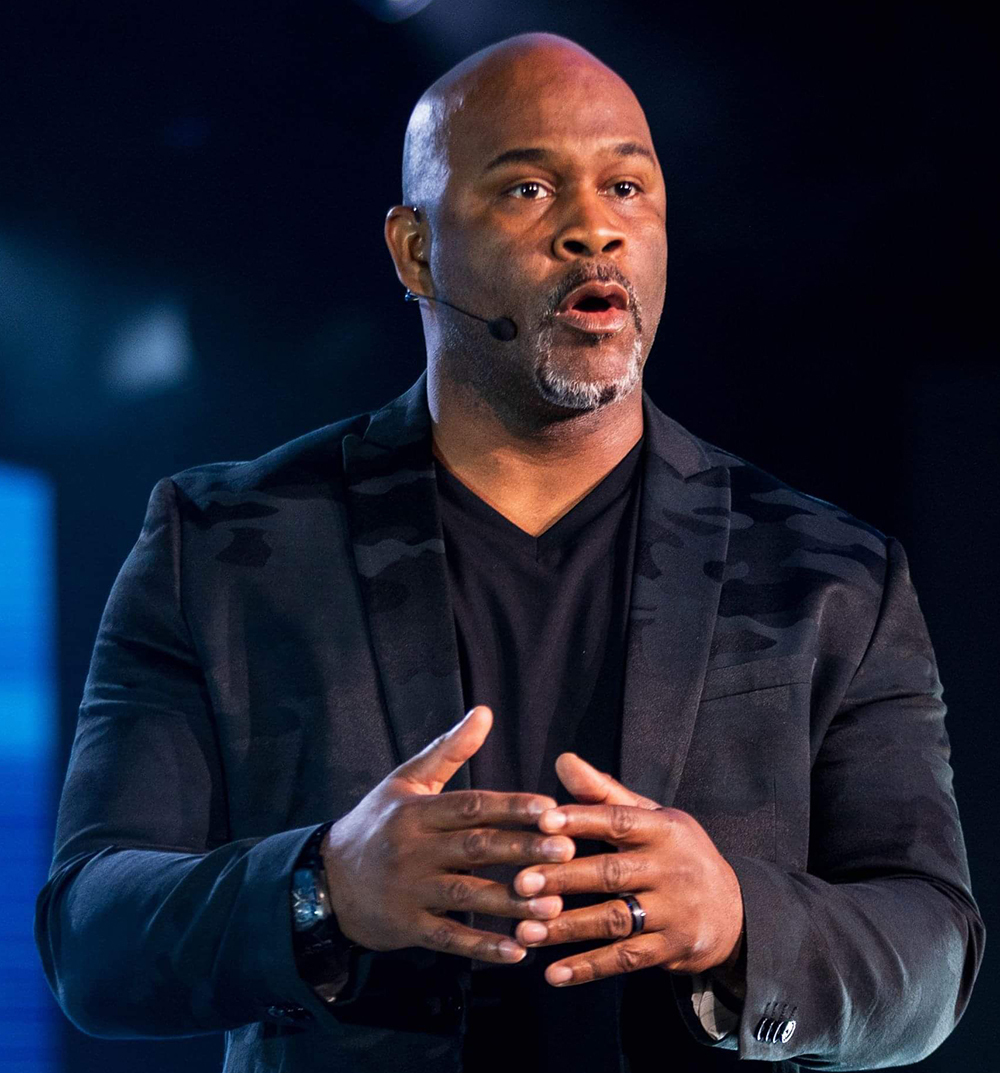
Edmond W. Davis
To understand her historical significance, consider this: Dolores Huerta was, in many respects, the Chicana counterpart to Martin Luther King Jr. Both challenged institutional injustice through nonviolent activism, economic pressure, grassroots organization and an extraordinary belief in ordinary people.
Yet Huerta never was simply someone else’s equivalent. She was an American original.
Born April 10, 1930, in Dawson, N.M., and raised in Stockton, Calif., Huerta learned early that human dignity was not determined by wealth, ethnicity, gender or immigration status. Her father, a miner and union activist, introduced her to organized labor. Her compassionate mother demonstrated how service, generosity and concern for struggling families could transform communities.
“Rather than merely teaching around poverty, she decided to confront the conditions producing it.”
That foundation became her life’s calling. After earning her teaching credential, Huerta encountered children arriving at school hungry and without proper clothing. Rather than merely teaching around poverty, she decided to confront the conditions producing it.
She understood that education without economic dignity leaves too many children struggling before the school day even begins. In 1962, alongside César Chávez and fellow organizers, Huerta established the National Farm Workers Association, which eventually became part of the United Farm Workers. It was the year of the Cuban Missile Crisis, one year before King’s historic 1963 March on Washington.
History was changing, and Huerta was helping change it.

Dolores Huerta, labor activist and co-founder of the United Farm Workers of America, speaks during an segment filmed for the CBS program ’60 Minutes’, ca.1975. (Photo by Cathy Murphy/Getty Images)
The 1965 Delano grape strike began with Filipino farmworkers led by Larry Itliong. Huerta and her colleagues joined that struggle, helping build a powerful interracial labor movement. She organized national boycotts, negotiated contracts, demanded fair wages and challenged hazardous working conditions.
By 1970, the movement had secured historic grape-industry contracts. In 1975, California enacted landmark legislation protecting agricultural workers’ collective-bargaining rights.
This was not symbolic activism. It produced measurable institutional change.

In 1970, Ethel Kennedy joins in prayer for Cesar Chavez outside the Monterey County Jail. Chavez, United Farm Workers Union leader, was jailed for violating a court injunction prohibiting the lettuce boycott. At left is Dolores Huerta, UFWOC vice president; Larry Itliong, UFW co-leader; and Kennedy, who marched to the rally through Salinas with hundreds of Mexican field workers before attending the Mass and visiting Chavez in jail. (Getty Images)
Her influence reached Los Angeles, where she stood alongside Sen. Robert F. Kennedy during his California presidential primary victory celebration on June 4, 1968, shortly before his assassination.
Like King, Huerta understood the relationship between political participation and economic justice.
And she continued despite tremendous personal sacrifices. Arrested repeatedly during peaceful demonstrations, she suffered serious injuries when San Francisco police struck her during a 1988 protest, breaking ribs and severely damaging her spleen.
Yet she refused to surrender.
In 2026, Huerta also courageously disclosed that Chávez had sexually assaulted her decades earlier. Her account revealed painful contradictions within a movement devoted to human dignity. We must honor her truth without allowing the misconduct she described to diminish her independent contributions. Her testimony reinforces another essential lesson: There can be no meaningful liberation while women are expected to endure abuse or remain silent.
“There can be no meaningful liberation while women are expected to endure abuse or remain silent.”
From her work with the Community Service Organization to the Agricultural Workers Association and the Dolores Huerta Foundation, she connected labor rights with voter registration, immigrant protections, children’s welfare and women’s political leadership. Perhaps no three words better capture her philosophy than “¡Sí, se puede!” — “Yes, it can be done!”
I remember hearing Barack Obama’s “Yes We Can” message during his 2007–2008 presidential campaign. Like millions of Americans, I recognized its motivational power. What many did not understand was that Huerta had popularized its Spanish-language predecessor decades earlier.
In 2012, President Obama awarded her the Presidential Medal of Freedom, America’s highest civilian honor, acknowledging the extraordinary influence of her life’s work.
As a social historian, I find her relationship to biblical principles particularly profound. Micah 6:8 calls humanity to act justly, love mercy and walk humbly with God. Huerta’s public service reflected those moral responsibilities. Proverbs 31:8–9 instructs believers to speak for people whose voices are ignored and defend the rights of the poor and needy. Huerta made that principle a lifelong mission. And Galatians 6:9 encourages us not to grow weary in doing good. Few public figures demonstrated that perseverance more consistently across nine decades of life.
Today, her name graces schools, public spaces, murals and the Dolores Huerta Apartments, a supportive-housing development in South Los Angeles. In downtown Los Angeles, the AIDS Healthcare Foundation has invited public Día de los Muertos ofrendas at her mural through Nov. 2. Her legacy also belongs in the digital storytelling of Los Angeles, including cultural platforms such as L.A. in a Minute and Brown N Proud, where local histories and cultural identity can reach new generations.
But statues, photographs, social media tributes and presidential honors mean little unless we continue the work. What good is remembering a champion of working families while overlooking the workers who harvest our food? What good is celebrating women’s empowerment while denying women protection, opportunity and dignity?
Dolores Huerta demonstrated that meaningful change does not require extraordinary wealth or political office. It requires courage, compassion, organization and consistency. She reminded America that justice does not arrive simply because we desire it. People must organize to achieve it.
Her work belongs alongside the greatest American civil rights traditions, from the Black freedom struggle to the Chicano movement and beyond. Those who attempt to suppress justice may cut down its flowers, but they cannot permanently prevent the arrival of spring.
Rest in love, Dolores Huerta. Your voice may now be silent, but your influence will continue speaking through generations yet unborn.
¡Sí, se puede!
Edmond W. Davis is a social historian, journalist, professor and documentary host. He is founder of the National HBCU Black Wall Street Career Fest. A native of Philadelphia, he lives with his wife and son in the Little Rock, Ark., area. Davis is committed to cultural empowerment and educational equity through storytelling and civic engagement.