

By Bob Allen
In an interview March 30 on national television, the Southern Baptist Convention’s top expert on public policy denounced corporate boycott threats over Indiana’s new religious freedom law as “a confluence of sexual libertarianism and crony capitalism” attempting to bully the state.
Asked by MSBNC Hardball host Chris Matthews what he meant by “sexual libertarianism,” the head of the SBC’s Ethics and Religious Liberty Commission explained.
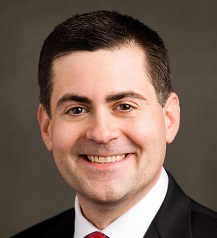 “The idea that sexual freedom trumps everything else, and that it ought to be able to pave over the consciences of anyone else,” Moore said. “That’s what we’re seeing all over the country right now. That’s the reason why we have these numerous disputes and debates in which religious liberty — that once was an issue we could all pretty much agree on in American life — has become a culture-war issue in ways that I think are going to be damaging for everyone.”
Indiana Gov. Mike Pence signed the Religious Freedom Restoration Act into law March 26. The bill, modeled after a federal law passed by Congress in 1993, prevents the government from “substantially” burdening a person’s religious exercise unless there is a “compelling governmental interest” and requires that interest must be advanced by using the “least restrictive means.”
The Indiana version defines “person” as including churches, religious societies and corporations, language not in the original RFRA but now entitled to its protection under last summer’s Supreme Court ruling in Hobby Lobby’s religious objection to providing employee insurance coverage for birth control mandated by Obamacare.
The governor signed the bill in a private ceremony closed to the press. The governor’s office did not release a list of who was invited, but photos posted online after the event showed him surrounded by religious leaders and three social activists who have been leaders in the opposition to same-sex marriage in Indiana.
Groups including Apple and Indiana-based organizations such as the NCAA, Angie’s List and the Christian Church (Disciples of Christ) voiced concern about the new law opening the door for discrimination against gays and lesbians based on religious belief.
Moore, who just finished a two-day summit gathering on seeking racial reconciliation within the nation’s second-largest faith group behind Roman Catholics, complained in a March 30 commentary about conversation he described as “the most uninformed and ignorant I’ve seen in years.”
“Many of those leading the discussion of religious freedom have little or no understanding of what motivates religious people,” Moore wrote. “When secularized or nominally religious people don’t understand religious motivation, then they are going to assume that, behind a concern for religious exercise, is some sinister agenda: usually one involving power or money.”
That is particularly problematic, he said, when “joined with a zealotry that can only be called religious: for the stamping out of all dissent against the sexual revolution.”
“The sexual revolutionaries are, by all accounts, winning the public debate in American life on matters of sexual freedom, right down to the redefinition of marriage and family,” Moore wrote. “But that’s not enough. Many of them want not only to win, but to stamp out dissent with all the relish of a Massachusetts Bay Puritan.”
Moore’s former boss, Southern Baptist Theological Seminary President Albert Mohler, shared similar thoughts in a March 31 podcast.
“Those who are largely in control of the messaging in our culture now believe that the sexual revolution is far more important than the issue of religious liberty,” Mohler said.
“Amazingly enough, given what’s going on in the world, where even those same people say they are very concerned about religious liberty elsewhere, when it comes to the United States, when it comes specifically to the state of Indiana, they’re quite ready to say the religious liberty issue is going to have to take the back seat to the erotic liberty issue — to the sexuality issue, to the new moral revolution, and to the legalization of same-sex marriage.”
Moore said on MSNBC that he believes that public accommodations should be open to everyone “in most cases,” but not “when you have someone who is using his or her creative gifts or expressive gifts for a viewpoint that that person’s conscience can’t agree with.”
“I don’t want the government to force a Jewish musician to have to sing ‘Stand Up for Jesus’ at my revival meeting just because she’s in the public marketplace,” Moore said. “So we have to have a balancing act when it comes to respecting conscience and respecting religious convictions along with other issues of the common good. This bill is not the sort of radical move that some people are acting like.”
Brent Walker, executive director of the Baptist Joint Committee for Religious Liberty, a group that led the broad coalition that helped secure passage of the federal Religious Freedom Restoration Act signed into law by President Clinton, says he stands by the carefully crafted balance respecting both individual freedom and the common good hammered out in 1993, but even small departures from that language in state versions can be problematic.
“The problem comes when proponents of state legislation want to change the language of their bills to promote their own policy agendas or to disadvantage that of their political opponents,” Walker said in a column in the February issue of Report from the Capital.
“In our view, it is perfectly permissible for states to pass religious freedom laws if they mirror the delicate balance achieved by the federal act,” Walker wrote. “We say ‘no’ to attempts on the part of some to tilt that balance in their favor.”
Gov. Pence said March 31 that after a tough week defending the measure, he has concluded it is necessary to amend the legislation to make it clear that it does not give businesses the right to deny services to anyone.