


On Oct. 21, U.S. special envoy Steve Witkoff sat across from Russian President Vladimir Putin in St. Petersburg after Russia released 74-year-old American teacher Stephen Hubbard, whom the United States had designated as wrongfully detained. Witkoff thanked Putin and then uttered an extraordinary description: “You are a humanitarian also, sir.”
Hubbard’s freedom absolutely should be celebrated. An American came home. But releasing one man whom your government imprisoned does not erase the record of the government that imprisoned him. It does not resurrect Ukrainian children. It does not undo Bucha. It does not remove an International Criminal Court arrest warrant. It does not heal civilians tortured in Russian-controlled detention facilities. It does not return deported Ukrainian children to their families. It does not restore destroyed apartment buildings, hospitals, schools or power systems.
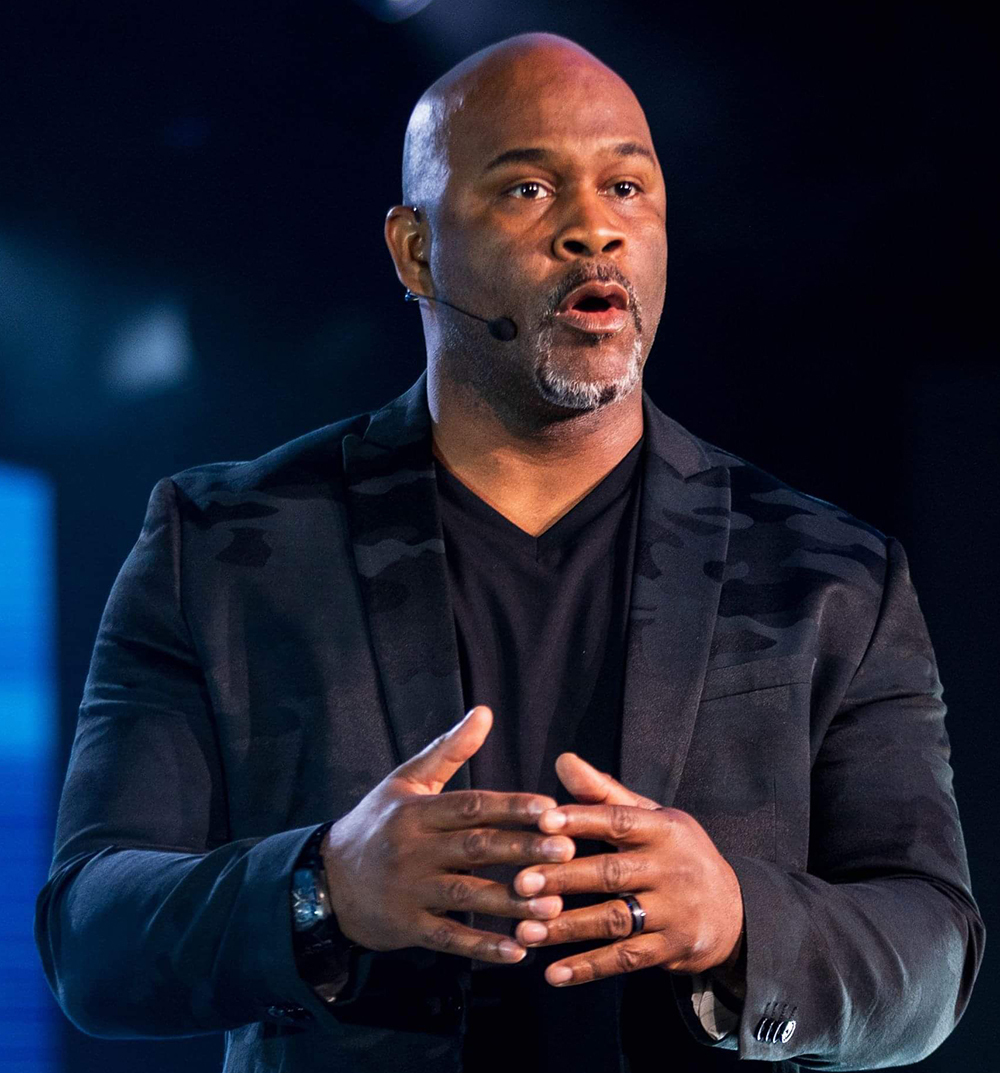
Edmond W. Davis
Calling Vladimir Putin a humanitarian while Russia’s invasion continues is not merely bad word choice. It risks rewriting history while the history is still happening.
As a social historian, I believe we must judge leaders not by ceremonies, photo opportunities or individual acts of diplomacy but by the sustained consequences of their power.
Jesus taught, “By their fruits ye shall know them.”
What are the fruits?
The International Criminal Court issued a warrant for Putin after judges found reasonable grounds to believe he bears individual criminal responsibility for the alleged unlawful deportation and transfer of Ukrainian children. The United Nations has documented thousands upon thousands of civilian deaths and injuries since Russia’s full-scale invasion began. By September 2026 alone, civilian casualties for the first nine months of the year had risen to 2,570 killed and 15,211 injured, 59% higher than during the same period in 2025, according to the U.N.
U.N. investigators documented civilian bodies in Bucha with bound hands, bullet wounds and other signs consistent with summary execution. Human Rights Watch documented executions, enforced disappearances and torture committed during Russia’s occupation of the city.
A September 2026 U.N. report documented 1,004 cases of conflict-related sexual violence since February 2022, and 89% of the documented cases were attributed to Russian authorities, including members of the military, prison service and security service.
That is not humanitarianism. That is what I would call anti-humanitarian power.
Putin and the shadow of Stalin
Historical comparisons never should be made carelessly. Vladimir Putin is not Joseph Stalin reincarnated, and 21st-century Russia is not identical to Stalin’s Soviet Union. But the parallels warrant discussion: Centralized authoritarian power, suppression of political opposition, state propaganda, punishment of dissent, imprisonment of critics, control of information, militarized nationalism, the elevation of state objectives above individual life.
Freedom House’s 2026 assessment classifies Russia as “Not Free,” describing manipulated elections, suppression of genuine political opposition, controlled national media and nearly 1,900 people deprived of liberty in connection with political speech or activity by the end of 2025.
“We should be extremely cautious when diplomacy moves from negotiation into moral rehabilitation.”
Human Rights Watch reported in 2026 that Russian authorities were blocking enormous amounts of online information, targeting independent journalism, restricting VPNs and intensifying legal punishment of critics.
So when an American representative tells this leader, “You are a humanitarian,” history demands that somebody ask: Humanitarian according to what record?
Isaiah 5:20 warns, “Woe unto them that call evil good, and good evil.”
We should be extremely cautious when diplomacy moves from negotiation into moral rehabilitation.

A man walks through an underground passage past a kiosk selling magazines with covers depicting Russia’s President Vladimir Putin and US President Donald Trump in Warsaw on February 25. (Photo by Sergei GAPON / AFP) (Photo by SERGEI GAPON/AFP via Getty Images)
Then there is Donald Trump
The Trump-Putin relationship has generated controversy for a decade. Accuracy requires saying what the evidence proves and what it does not.
Russia interfered in the 2016 election. According to The Hill, the bipartisan Senate Intelligence Committee confirmed an aggressive Russian influence campaign. It also found that Paul Manafort’s position around the Trump campaign created opportunities for Russian intelligence services. Yet Republican Chairman Marco Rubio emphasized that the committee found no evidence that Trump or his campaign colluded with the Russian government to interfere in the election.
That distinction matters. There is no publicly established proof that Trump is a Russian intelligence agent. There is, however, a long and unusual public record of Trump praising Putin, questioning or minimizing Russian misconduct, clashing with NATO allies, pressuring Ukraine, easing Russian economic restrictions, criticizing Ukrainian attacks on Russian energy facilities, and pursuing agreements that Moscow openly welcomes.
Reuters has documented that history, including Trump’s longstanding descriptions of Putin as a “strong” and “smart” leader. In October 2026 alone, Trump told Ukraine to stop striking Russian diesel infrastructure, supported major Russian diesel shipments, waived Russian sanctions that had bipartisan congressional backing, publicly called for Ukraine to choose a new president and said Russia had been “fine on Ukraine” even as Russian attacks continued.
Those decisions have drawn criticism not merely from Democrats but from Republicans, including Sens. Thom Tillis and John Cornyn, and other lawmakers concerned that Washington is rewarding Moscow while pressuring Kyiv.
That bipartisan criticism matters. This is bigger than party politics.
The historical test
Proverbs 31:8–9 commands: “Open thy mouth for the dumb, … plead the cause of the poor and needy.”
“Negotiating with an authoritarian leader does not require sanitizing his record.”
The victims of war are not diplomatic abstractions. They are mothers. Children. Teachers. Prisoners. Families. People who happened to live where tanks entered their neighborhoods. America should pursue peace. America should negotiate prisoner releases. America should talk even with enemies when talking can stop bloodshed. But negotiating with an authoritarian leader does not require sanitizing his record.
A humanitarian saves civilians. A humanitarian does not preside over a state credibly accused of deporting children. A humanitarian does not need thousands of political prisoners. A humanitarian record is not built upon Bucha, censorship, political repression, systematic torture allegations and four-and-a-half years of invasion.
Stephen Hubbard coming home is good. Peace negotiations are good. But history must not be exchanged for flattery.
Vladimir Putin may be a negotiating partner. He may be a head of state. He may even perform an individual humanitarian act. But judged by the documented historical record of the government he leads, calling him simply “a humanitarian” turns the meaning of the word upside down. And history will remember who was willing to say so.
Edmond W. Davis is a social historian, journalist, professor and documentary host. He is founder of the National HBCU Black Wall Street Career Fest. A native of Philadelphia, he lives with his wife and son in the Little Rock, Ark., area. Davis is committed to cultural empowerment and educational equity through storytelling and civic engagement.