



Imagine, for a moment, that you have two sick children at home, and you’ve just received a pre-authorization denial for an MRI scheduled for next week. Frantically, you call the insurance company, only to be met by an automated phone tree. All you want is to speak to a human being.
Most people never think about the human beings inside the insurance system until they are angry, scared or desperate. I know because, for more than a decade, I was the voice on the other side of the phone.
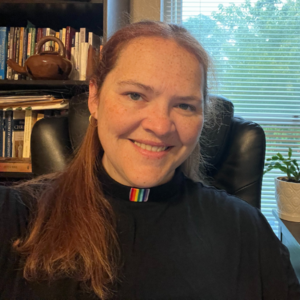
Heather Malkawi
I worked for a major health insurance company, beginning in customer service helping people understand their benefits. Later, I reviewed and processed claims before eventually becoming an underwriter for Medicare Supplement policies. It was a career I entered because I genuinely wanted to help people.
Working in the insurance industry taught me my role mattered, no matter how much people yelled at me, because I was dealing with three of the most important parts of people’s lives: their family, their finances and their health.
Fear often came through the phone as anger. People were not simply calling about paperwork or policy numbers. They were calling because their child needed treatment, because they were terrified of medical bills or because they felt trapped inside a system they did not understand.
Over time, I realized many consumers do not distinguish between “the insurance company” and the people working inside it. Frontline employees often become the face of decisions they did not create, carrying the emotional weight of a system much larger than themselves.
One afternoon, I answered a call from a woman who was furious that she was contacting the insurance company for the fifth time regarding a procedure that already had been denied twice. Before I could finish my greeting, she shouted, “Why won’t you people talk to each other? My doctor says they’re waiting on you, and you say you’re waiting on them!”
Once I understood the situation, I conference-called both the authorization department and the doctor’s office to get everyone communicating directly. By the end of the day, the authorization was approved.
The company later recognized the interaction as a “Moment of Magic” after the customer wrote a letter of appreciation to company executives. But it was not magic. It was simply human behavior: Listening, showing compassion, taking the extra step.
It was not magic. It was simply human behavior: Listening, showing compassion, taking the extra step.
Having worked in the trenches of the insurance industry during the rollout of the Affordable Care Act, I left the industry 10 years later with far more empathy than I entered it with: compassion for people desperately trying to navigate health care, empathy for workers trying to help within systems they did not design, and a deeper understanding that behind every policy number, claim and medical record is a human being trying to protect themselves and the people they love.
Most faith traditions recognize this truth. Compassion, mercy and care for the vulnerable are central teachings across religions. In Christianity, Jesus’ ministry repeatedly centers healing and restoration. In Judaism, visiting and comforting the sick (Bikkur Cholim) is considered a sacred responsibility. In Buddhism, compassion toward suffering is foundational. In Islam, caring for the sick and vulnerable is deeply connected to mercy and justice.
This week, Muslims around the world are celebrating Eid al-Adha, also known as the Festival of Sacrifice. The holiday coincides with the culmination of Hajj, when millions gather in Mecca for sacred rituals and prayer. Within Islam, health and life itself are understood as blessings from God, and care for others is viewed as a communal responsibility.
Across many faith traditions, health care is not seen solely as a financial or political issue. It is a moral one. At its core, health care is about human dignity, compassion and our shared responsibility to care for one another with humanity and grace.
Heather Malkawi serves as a public policy advocate with Texas Impact. She is a graduate of Austin Presbyterian Theological Seminary with a master of divinity degree and earned a bachelor of arts degree in sociology from the University of Michigan. She is a candidate for fellowshipping with the Unitarian Universalist Association and a Live Oak Unitarian Universalist church member in Cedar Park, Texas.