


AI-enhanced perfection, whether by fashion magazines or Hollywood, is perpetuating unattainable standards for what it means to be a person, but this new model isn’t new. For generations, marginalized people have been subject to the myth of the perfect victim.
In the realm of abortion, this perfect victim is often a married parent or an unconsenting minor whose life is at risk. Only then will their story be publicized, their names preserved on our tongues. While these experiences are necessary to highlight because they emphasize the brutality of a post-Roe reality, they require pregnant people to be passive beings subject to suffering, not autonomous individuals capable of making their own decisions.
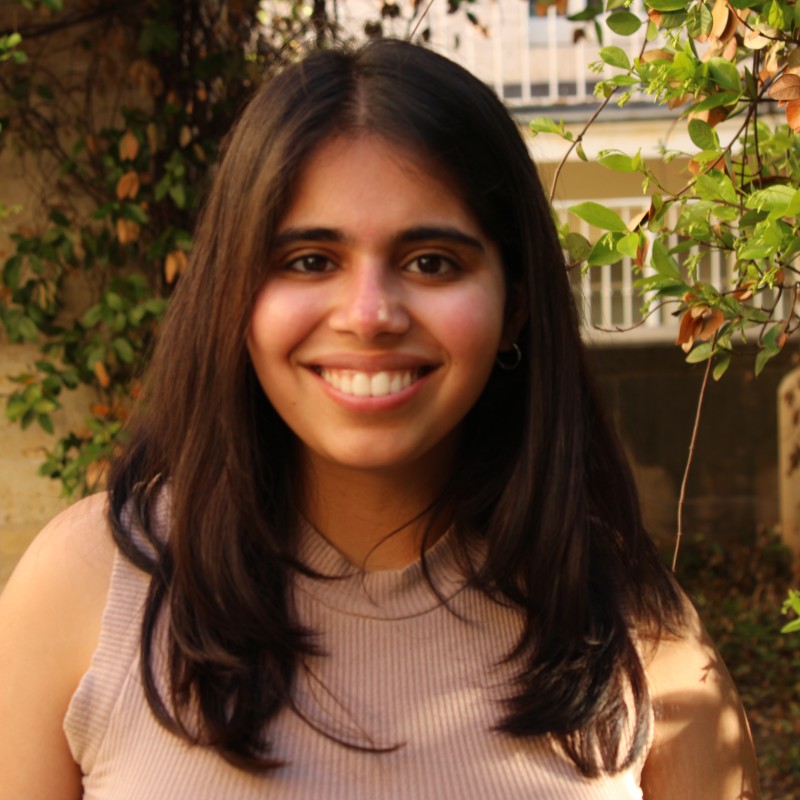
Farah Merchant
Mohammed El-Kurd’s new book, Perfect Victims: and the Politics of Appeal, emphasizes that victimhood “grants the moral authority of those in power.” Sympathy is only offered to the powerless, and anyone who seizes autonomy can’t and doesn’t receive concern.
Sorting people into those who deserve and don’t deserve reproductive care is dangerous. It sets the precedent that people shouldn’t be allowed to determine the course of their lives. When we only share the stories of violence and subjugation, we exempt people from the current policies of our government, but we let policies — like the ban on abortion, delay in medical care for miscarriages, removal of Medicare coverage for reproductive care — stand.
“Sorting people into those who deserve and don’t deserve reproductive care is dangerous.”
We need to imagine a reality where people are not dying from senseless and preventable deaths. There should not be an asterisk beside “People should have the authority to make their own decisions.” This phrase should stand on its own, especially in a country that touts freedom, democracy and self-will.
Eight percent of women who currently identify as pro-life say they have had an abortion. I’m sharing this stat to emphasize these decisions require nuance. In this country, the number of legal abortions always has been in flux, rising in the 1980s and early ’90s before steadily declining, but even this trend isn’t consistent.
While the number of abortions was 36% lower in 2021 than in 1991, there was a 5% increase in 2021 from 2020. The factors are numerous: Economic instability, rising health crisis, growing political turmoil, expanded telehealth access, increased availability of lower-cost medication, changes in state policy, issues with partners, and a growing and necessary focus on online schooling for children. We cannot peg a decision to one circumstance.
Our society has engineered a class of citizens who lack agency over their own bodies. And this is being celebrated instead of feared by some. We cannot reserve our sympathy for the martyred. When our stories aim to appeal to the masses, we often disregard the breadth of people’s lives and reduce them to arguments pointed toward some person, policy or devastation.
We need to expand the narratives we share to include nuanced experiences of people seeking reproductive care. Our bodies and decisions aren’t singular. Policies can’t transform, and empathy can’t be fostered if we don’t holistically understand the impetus for an abortion.
My mother had an abortion in 2008, eight years after I was born and five years after a near-fatal miscarriage. When my mother went to the clinic, she was healthy, holding my father’s hand while people fell at her feet, weeping and screaming. She didn’t know how to explain her decision — the potential long-term complications, her previous experiences with pregnancy. She assessed her life and my father’s life as working-class parents with a child in elementary school. It was both complicated and increasingly simple; her history had triggered this decision, and it was hers to make.
Today, in Texas, she wouldn’t have that choice, and she’d have to deal with the risks when they arose, if they emerged.
Her story never would make it to the news, and if it did, it would be weaponized against her, against the choices women make. How could she negate this fetus for the family she had? When I interviewed my mother, I was so desperate for her to name all the issues she avoided enduring. Her story, in my eyes, could only be shared if she were immune to having autonomy over her actions. We cannot flatten the realities of the people we’re aiming to uplift. Because then we’re only working to create exemptions–not change.
Farah Merchant is a fellow of the OpEd Project with the National Latina Institute for Reproductive Justice and the Every Page Foundation.