

These days, I can’t get this Gospel text out of my head:
Now in Jerusalem by the Sheep Gate there is a pool, called in Hebrew Beth-zatha, which has five porticoes. In these lay many ill, blind, lame, and paralyzed people. One man was there who had been ill for 38 years. When Jesus saw him lying there and knew that he had been there a long time, he said to him, “Do you want to be made well?” The ill man answered him, “Sir, I have no one to put me into the pool when the water is stirred up, and while I am making my way someone else steps down ahead of me.” Jesus said to him, “Stand up, take your mat and walk.” At once the man was made well, and he took up his mat and began to walk.
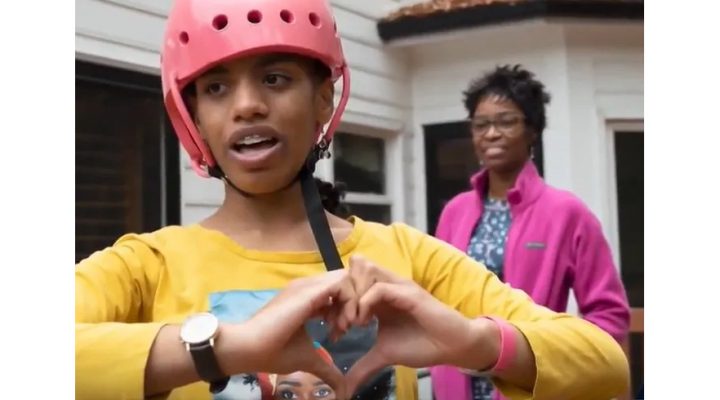
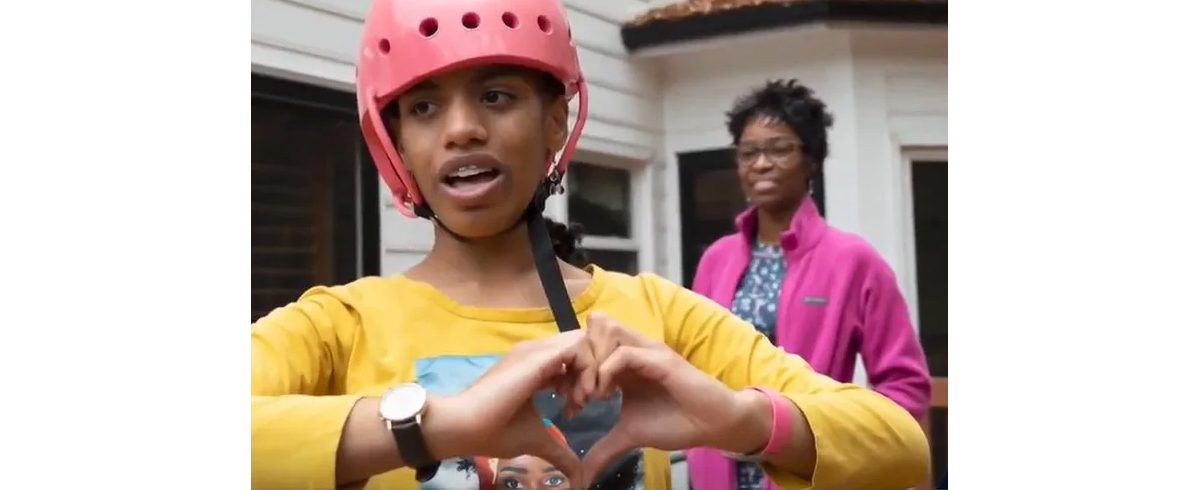
That story from John 5:1-9 has haunted me since March 9, 2023, when I joined an audience of several hundred people in the ACE Theater Complex at the North Carolina School of the Arts for the premiere of “Unmet: North Carolina’s Two Developmental Disability Crises,” a documentary focusing on families of adult children with intellectual or developmental disabilities.
The two crises include:
- That more than 15,000 disabled individuals are on a waiting list for a North Carolina Innovations Waiver that would fund in-home and community services, enabling them to avoid institutionalization.
- That low salary funding makes finding in-home caregivers difficult if not impossible.
Limited funding for the waiver program by the North Carolina Legislature has left some people on the waiting list for upward of 20 years. Further, disabled North Carolinians featured in the film have aged out of other publicly funded programs, and their families cannot afford extensive caregiver assistance.
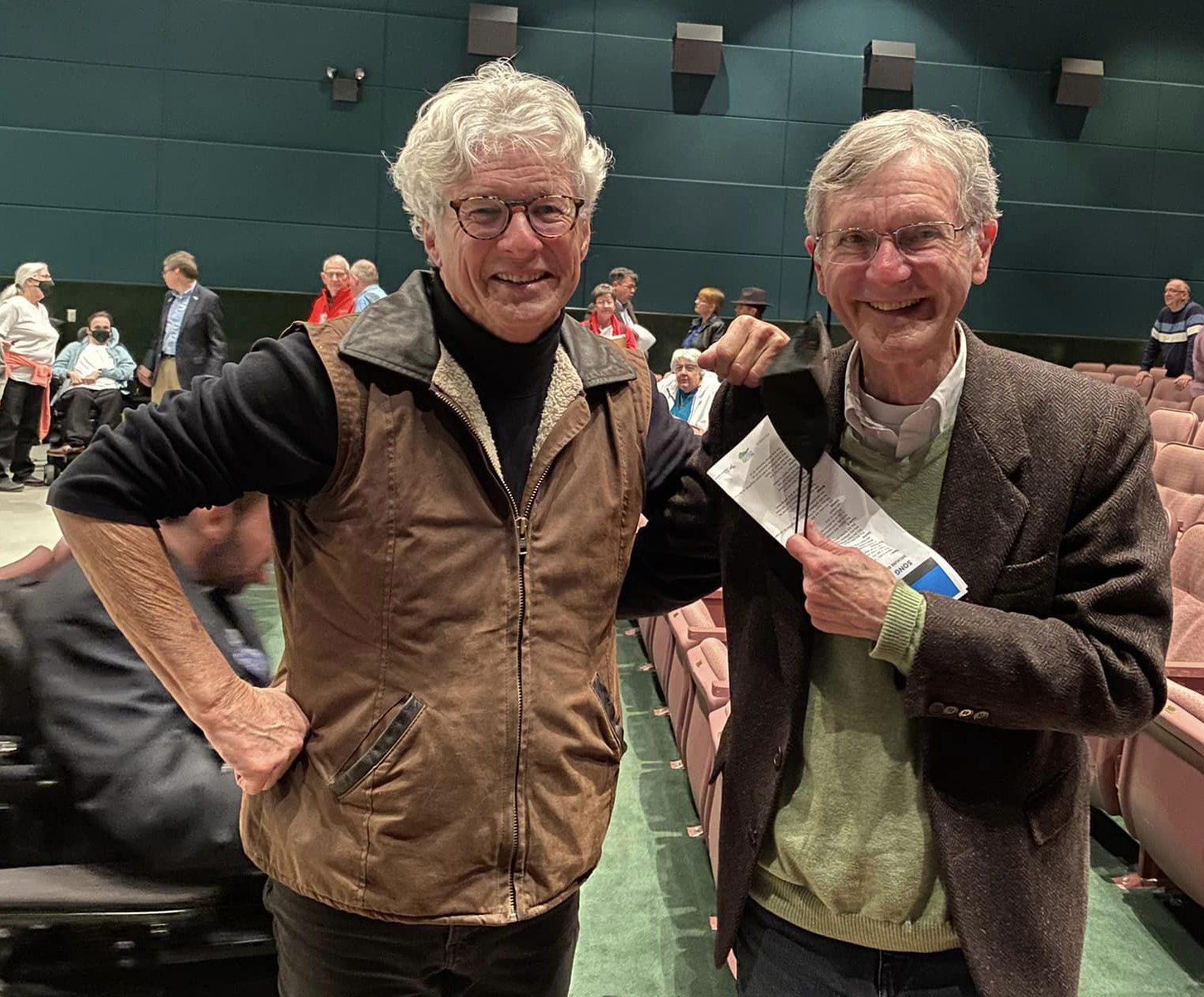
Bill Leonard with with the film’s producer, photojournalist Robin Rayne.
While one of those individuals received the Innovations Waiver, his male caregiver, who affirms love and admiration for his client, acknowledges personal difficulties in making ends meet given the low hourly wages (set by the Legislature).
Those not yet admitted to the waiver program have significant physical and intellectual disabilities. Caring for them requires substantial energy, sensitivity and personal responsibility; their parents are senior citizens, ever concerned for their children’s future.
A substantial number of the film’s viewing audience was seniors, each of us apprehensive about the future of our sons and daughters when we are no longer in the world, a reality that ultimately confronts every such family.
And our family is no exception. Our daughter, Stephanie, a person with a variety of special needs, turns 48 in April and has lived with us since birth. Candyce and I are in our mid-70s, with reasonably good health, but live with the knowledge we are one MRI away from disaster.
Recently, we shared a Zoom conversation with dear friends in Massachusetts who are our age and also have a daughter with special needs. Our parallel lives mean we often finish each other’s sentences when we compare our situations and the uncertainties of our daughters’ future. Together, we spoke about their gifts and skills, struggles and fragilities, along with their implicit and explicit terror that we will not always be here to offer love and care.
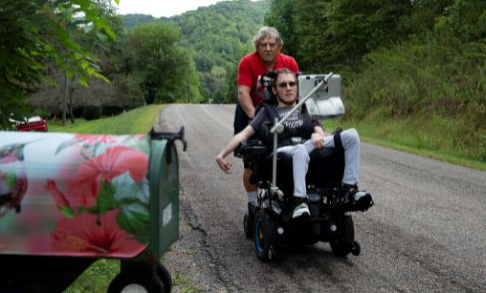 Our two families are but a tiny case study in the thousands of families with “unmet” needs as daughters and sons, mothers and fathers grow older. Here in Winston-Salem, Bill Donohue and Deb Woolard, parents of a son with DownSyndrome, founded the NC Waiver Action Team, to lobby for legislative extension of benefits for those on the ever-expanding waiting list. Interviewed prior to the premiere, Bill was asked what “takeaways” he hoped Unmet would produce.
He responded: “At one level, I want them to be outraged, I want them to be aware. I want them to be curious. I want them to be motivated to share it with their churches and their Scout groups and their neighbors. I want them to be indignant about the Legislature’s inactivity. Mostly I want them to be effective citizens and address everybody in our community as full-fledged fully throated, fully expressed people in our communities.”
He noted: “We have 800 waiting in our county alone. And we hadn’t gotten a waiver in five years. So those 800 became 820, 830.”
“We ask for justice and compassion, advocacy and activism.”
In the midst of this uncertain future, families related to disabled persons do not ask for sympathy, worse yet, pity. We ask for justice and compassion, advocacy and activism in response to gaps in support provided by legislatures and other entities for long-term response.
And what of churches? At this moment in time, innumerable American congregations across the denominational/theological spectrum are at their weakest fiscal and organizational juncture in years. Many are internally divided by “wars” over culture and doctrine. Are they too weak or distracted to assist the disabled?
 The issues raised by Unmet took me back to the first article I ever wrote about our daughter. Titled “Handicaps and Wholeness,” it appeared in The Christian Century, March 14, 1984.
It begins with this interrogative:
“Daddy, am I handicapped?” our 8-year-old daughter inquired one day recently. “Who said you were?” I asked, defenses rising. “’The kids,” she replied, “at church.”
They were right. She is a multiply handicapped child, and she was bound to hear that word applied to herself sooner or later. Perhaps it was better to hear it at church than somewhere else. Yet I wonder what the children or adults who readily recognize handicaps in our daughter and other people will do next. Is there really a place in the body of Christ for those with physical and mental deficiencies? As the parent of an autistic teenager recently told me, “If I could find one Sunday school, Protestant or Catholic, that would accept my child, I’d go there.”
In 2023, I no longer use the word “handicapped” to describe Stephanie’s situation, preferring instead the term “person with special needs,” or “intellectually and developmentally disabled.” Always I am struck by the ways in which Jesus of Nazareth identified with and responded to such people in his own world.
As I wrote in 1984, Jesus frequently validates his messianic calling through his response to those outside the “normal” or “respectable” framework of life. When the Baptizer inquired, “Are you the one or should we wait for another?” Jesus replied, “Tell John what you hear and see: the blind recover their sight, the lame walk, the lepers are clean, the deaf hear, the dead are raised, … (and) the poor are hearing the good news.”
In 2023, I am haunted by Jesus and the man at the “pool of Beth-zatha” who had been waiting 38 years for someone to help him into its healing waters. Reread the text above and note that it has no verse 4, which was added to later manuscripts to explain why the disabled thronged that pool. The KJV translates it beautifully: “For an angel went down at a certain season into the pool and troubled the water: whosoever then first after the troubling of the water stepped in was made whole of whatsoever disease he had.”
“Healing can come even without a cure.”
In John’s Gospel, Jesus responds to the man’s disability and “he picked up his mat and began to walk,” apparently fully cured. Not so for those who carry that diagnosis in our world. If Jesus’ gospel means anything in 2023, then we are the ones who must respond to the people who “have no one to” help them toward a healing quality of life in long-term safety and protection. We are the ones who must “trouble the water,” to provide healing through community services, vocational training, attentive caregivers, and a secure place to live when parents can no longer do so. Healing can come even without a cure.
Many are still waiting for that kind of sustaining care. Might we and our churches find ways to “trouble the water” in response to those with special needs here and now? Surely, we can do that; indeed, we must. At the very least, we can vote for people who will actualize such care for those whose needs remain “unmet.”
That’s water well worth troubling. And when the healing comes, surely, Jesus will be pleased.
Bill Leonard is founding dean and the James and Marilyn Dunn professor of Baptist studies and church history emeritus at Wake Forest University School of Divinity in Winston-Salem, N.C. He is the author or editor of 25 books. A native Texan, he lives in Winston-Salem with his wife, Candyce, and their daughter, Stephanie.
Related articles:
How the male-centered image of God marginalizes women and disabled persons | Opinion by Mallory Challis
When will disability become a personal issue for you? | Analysis by Mallory Challis