


America did not simply vote Tuesday night. America issued a warning, delivered a reckoning and reminded the political establishment that democracy still has a pulse.
What began as a midterm election became something far greater: an extraordinary rejection of political arrogance, economic hardship, racial division, misogyny and an administration whose leadership too often confuses loyalty to one man with loyalty to the Constitution.
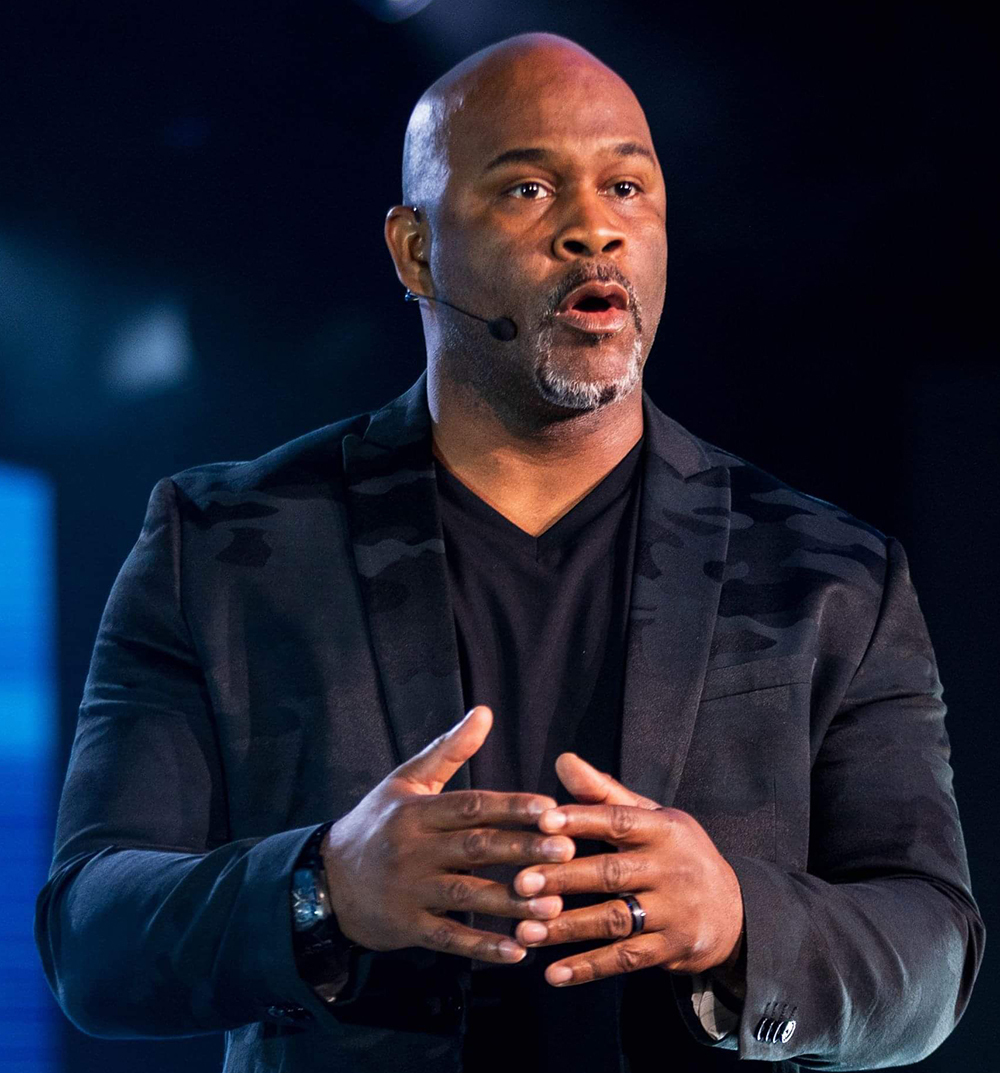
Edmond W. Davis
Call it a blue wave. Call it a blue tsunami. As a Christian, I might even call it a Holy Ghost wave — not because God belongs to the Democratic Party, but because the biblical principle of accountability applies to every earthly power.
Galatians 6:7 warns: “Whatsoever a man soweth, that shall he also reap.”
For two years, President Donald Trump and much of the Republican establishment has sown political division, embraced retribution, defended controversial immigration crackdowns, attacked diversity initiatives and promised a golden age while millions of Americans continued struggling to afford ordinary life. Tuesday night, voters presented the bill.
According to Associated Press election reporting, Democrats broke through in Republican strongholds as public dissatisfaction with Trump’s leadership and the cost of living reshaped the political map. This was not merely left versus right.
It was, for millions of voters, right versus wrong — and a demand for a government that puts people before political personalities.
Georgia: A Black woman makes history
The American story of the night belongs to Keisha Lance Bottoms, the former Atlanta mayor elected Georgia’s governor. Bottoms becomes the first Black woman elected governor of any American state, Georgia’s first female governor.
She is a former Atlanta mayor who accomplished what generations of Black women in Southern politics were told was impossible.

Keisha Lance Bottoms speaks onstage during her election night watch party at the Atlanta Marriott Marquis on November 3, 2026 in Atlanta. (Photo by Megan Varner/Getty Images)
But Bottoms did not arrive at this moment alone. She stands on the shoulders of Stacey Abrams, whose organizing and voting-rights efforts helped transform Georgia’s political infrastructure. She also stands in a long tradition of Black women who organized communities, registered voters, staffed campaigns and defended democracy long before they were offered a seat at the table.
Martin Luther King Jr. understood that political power is not simply given to the marginalized. It must be organized, demanded and exercised. Bottoms represents more than a Democratic victory. Her election challenges generations of political exclusion and demonstrates what becomes possible when opportunity begins catching up with ability.
Florida’s Byron Donalds: Biggest Republican victory
And here lies one of the great ironies of Election Night. The Republican Party’s most historically significant gubernatorial victory came through Byron Donalds, an African American conservative elected Florida’s first Black governor and the nation’s first elected Black Republican governor.
Regardless of ideological differences, Donalds and his family deserve congratulations for an effective campaign and a remarkable achievement. Think about that: On a night when racial division was central to the national political debate, a Black man delivered one of the GOP’s most important victories in the South.

Byron Donalds speaks at a campaign event at The Barn in Sanford, two days before the November 3 midterm election. . (Photo by Paul Hennessy/SOPA Images/LightRocket via Getty Images)
His victory proves that political history does not belong exclusively to Democrats. But representation alone cannot substitute for accountability. Donalds, like every governor, must be judged by how effectively he serves all his constituents.
The Latino Effect: Texas sends Washington a warning
Texas delivered another seismic political breakthrough. Democrat Gina Hinojosa defeated Republican Gov. Greg Abbott, becoming the state’s first Latina elected governor. Meanwhile, Democrat James Talarico prevailed over Trump-backed Ken Paxton in a Senate contest that challenged decades of Republican dominance.
Texas was not for sale. Not to billionaires, not to political celebrities, and not to a party expecting demographic loyalty without delivering economic security. A Pew Research Center survey released Oct. 16 found Trump’s approval among Latino registered voters at just 24%. Economic worries and concerns over immigration enforcement were prominent.

Gina Hinojosa speaks during her election night watch party at Assembly Hall on November 3, 2026 in Austin, Texas. (Photo by Joel Angel Juarez/Getty Images)
Not every Latino voter rejected Republicans. But the political direction was unmistakable: Neither party can take Latino Americans for granted.
The Black women’s reckoning and historic new leadership
Black women have endured disproportionate economic insecurity, public-sector disruption and attacks on diversity programs. Recent Washington Post reporting on federal workforce reductions documented especially heavy consequences for Black workers.
But political adversity does not extinguish political power.
Georgia’s Bottoms represents a historic breakthrough, while Illinois’ Juliana Stratton adds another Black woman to the Senate. Across the country, women and candidates of color demonstrated that America’s future cannot be confined to yesterday’s political hierarchy.
This was not about marginalizing white men. It was about widening the circle of leadership so America looks more like America.
We also witnessed victories by women, including South Carolina Democrat Annie Andrews, whose defeat of Trump-backed Darline Graham broke a Republican Senate winning streak dating back nearly three decades.
These are not symbolic footnotes. They are foundational changes in political representation.
Hakeem Jeffries and the American comeback
Democrats’ House breakthrough also placed Hakeem Jeffries on the path to becoming the first Black speaker of the United States House of Representatives.
That distinction will become official only if the new House elects him speaker in January.
The importance reaches beyond race. A Democratic House means congressional oversight, committee investigations, spending negotiations and constitutional checks on presidential power.
Jeffries’ election-night message centered on affordability, accountability, health care, education and restoring Congress as a place that serves ordinary Americans.
The message for Democrats is equally important: Winning an election is not the same as governing effectively.
Iowa delivers: Democrats win control of US Senate
As if Tuesday night’s political earthquake could not become more dramatic, Iowa delivered another major development.

Joshua Turek celebrates his victory during a midterm election night party at Iowa Historical Building and Museum in Des Moines, Iowa on November 3, 2026. (Photo by Kamil Krzaczynski / AFP via Getty Images)
Democrat Josh Turek defeated Republican Ashley Hinson, flipping the U.S. Senate seat vacated by retiring Republican Senator Joni Ernst.
That victory was part of a stunning national Democratic breakthrough. With victories across several traditionally Republican states, Democrats secured control of the Senate, marking a major shift in the balance of congressional power.
Iowa’s results were especially significant. Turek, a former Paralympic gold medalist and state representative, showed that Democratic gains extended beyond major metropolitan areas and traditional blue states.
From Iowa to Texas, Kansas, South Carolina, North Carolina and Ohio, Democrats made historic gains, raising serious questions about the Republican Party’s national political direction.
The consequences are substantial. Senate control gives Democrats the ability to shape committee leadership, conduct oversight, influence federal spending and legislation, and exercise considerable power over presidential appointments and judicial confirmations.
For President Trump, the remaining two years of his presidency will unfold under significantly different congressional conditions.
The lesson from Iowa is that voters in rural and traditionally conservative communities can also challenge established political expectations when economic insecurity and dissatisfaction with national leadership become central issues.
This was no longer simply a blue wave. It was a fundamental shift in the balance of American political power.
Why MAGA lost
Americans were promised prosperity. Instead, many encountered higher living expenses, political turmoil and Washington officials seemingly insulated from everyday suffering.
The reasons behind Democratic gains were numerous: Affordability concerns, tariffs, the Iran war and energy prices, immigration enforcement, declining trust in leadership, controversies surrounding federal workforce reductions, and voter frustration with Republican resistance to checking the president.
Associated Press election analysis identified economic anxiety as a central driver of the Democratic resurgence.
The Republican establishment cannot escape responsibility by pretending Trump was absent from the ballot. His policies were on the ballot. His political endorsements were on the ballot. And the willingness of Republican officeholders to challenge — or excuse — his conduct was on the ballot.
White evangelical leaders who helped normalize Trump’s political movement should confront an uncomfortable moral question: When does partisan loyalty become an obstacle to Christian witness?
A red, white and blue moment
Despite the sweeping Democratic gains, Republicans were not wiped off the electoral map. Donalds won Florida, and the GOP retained other important offices. That matters because democracy requires more than one viable political party.
But Republicans now face an existential question: Will they continue following Trump’s political instincts or will they rediscover an independent governing identity?
Democrats face their own test. They must avoid becoming the same disconnected political elite voters just rebuked. Americans need affordable groceries, health care, housing, reliable employment, safe communities and dignified retirement — not another round of political theater.
America has not been miraculously healed overnight. Our country remains deeply divided. Racism, misogyny, political extremism and economic inequality will not disappear because ballots were counted.
But something meaningful happened Tuesday.
Voters challenged concentrated political power. History-making candidates shattered barriers. Democrats won control of the United States Senate. And Americans demonstrated that no president, political party, billionaire or ideological movement possesses permanent ownership of this republic.
The swamp has not disappeared. But the voters opened the floodgates.
This was more than a blue moment or a red moment. This was a red, white and blue moment because American democracy won.
Edmond W. Davis is a social historian, journalist, professor and documentary host. He is founder of the National HBCU Black Wall Street Career Fest. A native of Philadelphia, he lives with his wife and son in the Little Rock, Ark., area. Davis is committed to cultural empowerment and educational equity through storytelling and civic engagement.