


As we approach the 50th anniversary of Alex Haley’s novel Roots, we are not merely commemorating a book and a subsequent television event, we are revisiting a cultural earthquake.
 Before the bright lights of Hollywood casting calls in 1976 — before ABC executives gambled on eight consecutive nights of prime-time history that aired in 1977 — there was a quiet, almost sacred journey. A decade prior, Alex Haley walked through libraries, archives and villages across continents. He stood in the British Museum pondering the Rosetta Stone. He sifted through slave ship manifests. He traveled to Juffure in the Gambia and listened to a griot recount the lineage of Kunta Kinte.
He connected fragments that were social, cultural, biological, emotional and psychological, stitching together what slavery had attempted to erase.
But the phenomenon that reshaped America was not simply the book. It was the television series.
In January 1977, America gathered around box-shaped television sets and witnessed something unprecedented. Over eight consecutive nights, Black and white families watched the capture of Kunta Kinte, portrayed powerfully by a teenage LeVar Burton and later by John Amos. They witnessed Kizzy’s separation, Chicken George’s resilience and generations navigating enslavement, Civil War and Reconstruction.

LeVar Burton in “Roots” (IMDB)
LeVar Burton, then an unknown, became a cultural icon overnight. His portrayal of young Kunta Kinte was not spectacle — it was intimate humanity. Burton would later host Reading Rainbow and star in Star Trek: The Next Generation, but it was Roots that gave him his first platform and shaped his lifelong devotion to literacy and storytelling.
John Amos, already known as the father on Good Times, brought gravitas and righteous defiance to adult Kunta Kinte. His performance elevated him from sitcom familiarity to dramatic authority.
Leslie Uggams, as Kizzy, embodied the psychological trauma of family separation with such dignity that she became permanently etched into the generational memory of enslavement.
Louis Gossett Jr., Ben Vereen, Moses Gunn, Richard Roundtree, Roxie Roker and Cicely Tyson delivered ensemble power rarely seen on American network television. Tyson, already revered for The Autobiography of Miss Jane Pittman, deepened her legacy as a matriarchal vessel of moral memory.
Even beloved white television figures such as Robert Reed, Ralph Waite, Lorne Greene and Ed Asner were cast against type as enslavers and morally compromised figures. That creative decision unsettled audiences. It stripped away comfort. It forced viewers to confront history without caricature.

Screenshot
Before Roots, Black life on television often was confined to comedy, token appearances or sanitized narratives. After Roots, the cultural imagination expanded. The series did not merely entertain — it demanded introspection. It asked America to wrestle with its own contradictions.
Psalm 68:6 reminds us, “God setteth the solitary in families.” For millions of African Americans, Roots was a spiritual and historical re-gathering. It restored ancestral dignity. It affirmed that our story did not begin with bondage, but with lineage.
The miniseries aired in the wake of the Civil Rights Movement. Black History Month had only recently expanded from a week to a month. African American studies programs were still emerging. Yet no academic lecture, no policy speech, no textbook had reached across racial, generational and political lines as powerfully as this television event.
Roots did what academic texts alone could not: It made history personal.
Viewers did not simply learn about slavery; they felt it. They experienced the rupture of Kizzy being sold away. They felt Chicken George’s determination. They witnessed post-emancipation hostility that mirrored the racial tensions of 1970s America.

Madge Sinclair in Roots (1977)
The genealogy movement that followed — the explosion of family tracing, DNA research and archival exploration — owes much to Roots. Library attendance surged. National Archives inquiries multiplied. The word “roots” itself evolved in the American vocabulary.
Jeremiah 6:16 instructs us, “Stand ye in the ways, and see, and ask for the old paths.” Roots compelled America to ask for the old paths. It required a nation to look backward in order to move forward.
Yes, historical debates have surrounded Haley’s research methodology. Questions emerged regarding interpretation and literary borrowing. Yet the cultural impact of the television series remains undiminished. It was not a documentary; it was a dramatized remembrance. And remembrance, even when imperfect, possesses transformative power.

Olivia Cole, Leslie Uggams, and Ben Vereen in Roots (1977)
The boxier screens of 1970s television created intimacy. Close-ups captured trembling lips, tear-filled eyes and clenched fists. There was little spectacle — only conversation, confrontation and confession.
In its awkward moments, it felt authentic. In its simplicity, it felt urgent.
And it changed careers permanently. Burton became synonymous with ancestral pride. Uggams embodied generational endurance. Gossett and Vereen solidified legacies that transcended genre.

Louis Gossett Jr. and John Amos in Roots (1977)
For Black actors, it shattered ceilings. For white audiences, it shattered illusions.
Proverbs 22:1 reminds us, “A good name is rather to be chosen than great riches.” In Roots, reclaiming names — Kunta Kinte, Kizzy, Chicken George — was a reclamation of dignity itself.
As grand marshal of the 2026 African American History Month Celebration Parade, I reflect on Roots not with nostalgia, but with instruction. It teaches that memory is resistance. That storytelling is power. That television, when courageous, can become ministry.
Fifty years later, screens are larger, images sharper and attention spans shorter. Yet the essential questions remain unchanged: Who are we? Where did we come from? What stories sustain us?
Roots dared to answer. And in doing so, it shook apart a nation and helped bring it together.
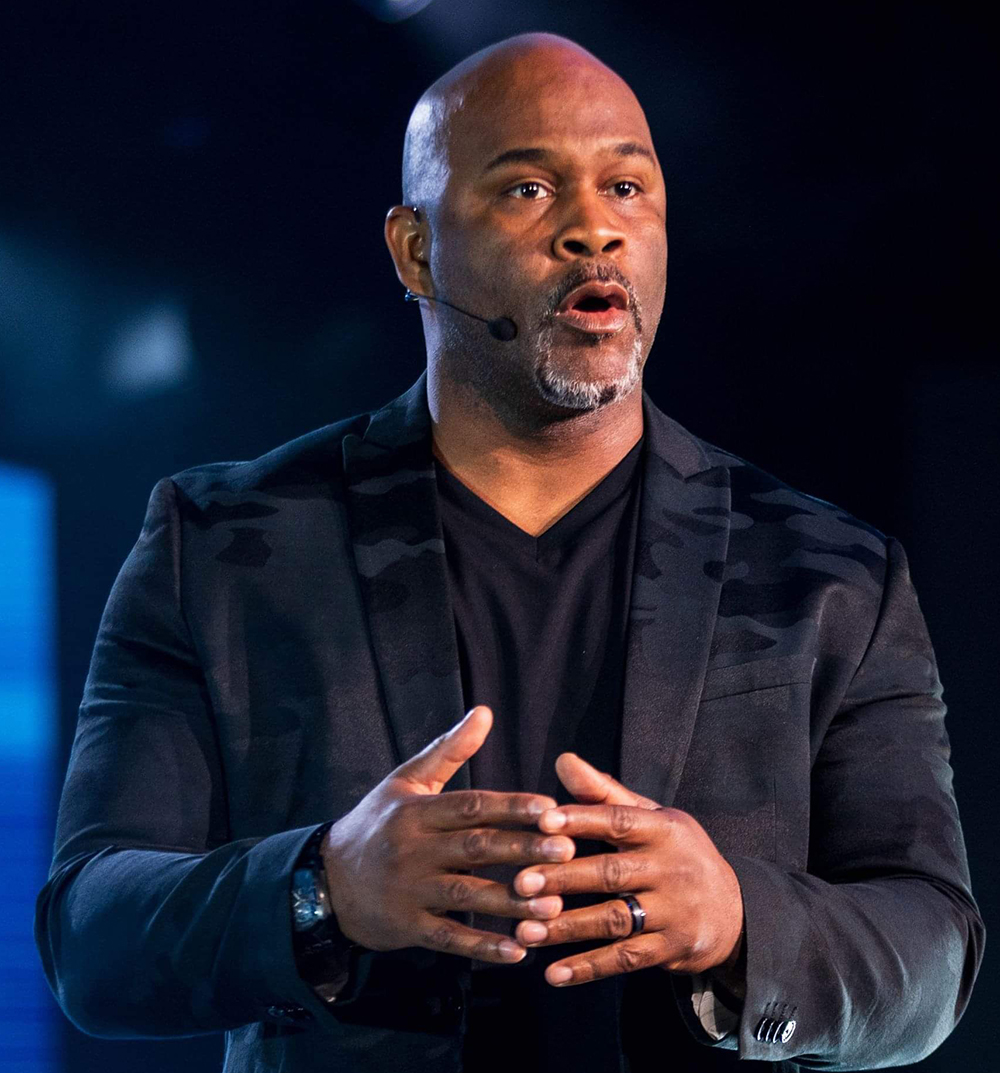
Edmond W. Davis
Edmond W. Davis is an American social historian, international speaker and Amazon No. 1 bestselling author. He is a global authority on the Tuskegee Airmen and serves as the founder of the National HBCU Black Wall Street Career Fest. A native of Philadelphia and current resident of Little Rock, Davis is committed to cultural empowerment and educational equity through storytelling and civic engagement. He was a grand marshal at the 38th Annual African American History Month Celebration Parade.