


Democracy often is discussed in the language of elections, institutions, constitutions and public policy. Scripture begins elsewhere. Before it concerns itself with governments, it concerns itself with people. Before it addresses systems, it forms character.
That is why Proverbs 4 remains remarkably relevant to our public life. It reminds us that no society can become healthier than the people who sustain it.
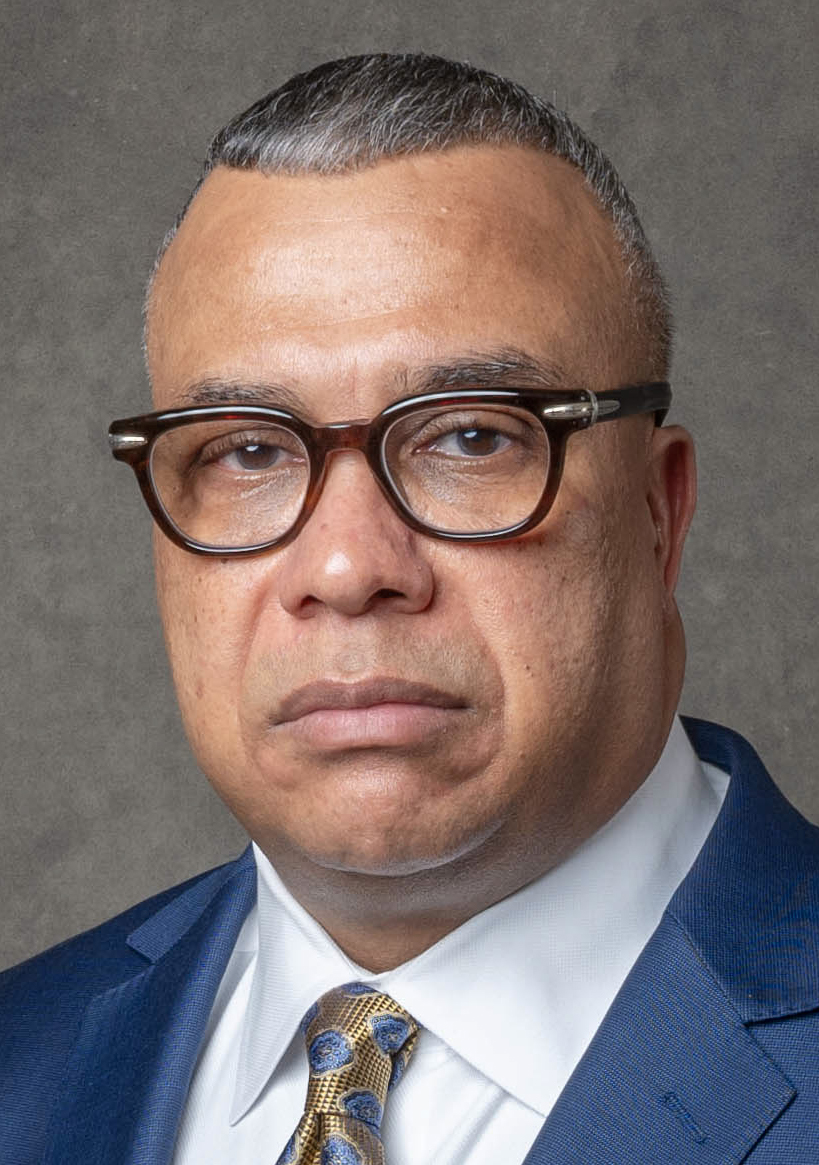
Paris Lee Smith Sr.
The father’s instruction is deceptively simple: “Let your eyes look straight ahead; fix your gaze directly before you. Give careful thought to the paths for your feet and be steadfast in all your ways” (Proverbs 4:25–27).
At first glance, these words seem to offer practical guidance for personal conduct. Yet they also reveal something deeper. Biblical wisdom is not merely about making better decisions. It is about learning to see faithfully.
That distinction matters.
Before justice becomes public policy, it must first become moral perception. Before communities defend human dignity, they must learn to recognize it. Scripture consistently teaches that what captures our attention ultimately shapes our lives. The prophets repeatedly called Israel to notice the poor, the widow, the orphan and the stranger — not because God had forgotten them, but because God’s people had. The crisis was not merely disobedience. It was distorted attention.
Perhaps the greatest challenge facing democratic life today is not merely polarization but distraction. We are surrounded by voices competing for our attention, rewarding outrage over wisdom and reaction over discernment. In this environment, Christians are tempted to believe louder arguments will heal our public life.
“Before we speak faithfully, we must first learn to see faithfully.”
Proverbs offers another way. Wisdom teaches that before we speak faithfully, we must first learn to see faithfully.
This is one of the church’s most important public callings.
The church is not merely a place where beliefs are affirmed. It is a community where attention is formed. Week after week, Scripture redirects our gaze toward what the world often overlooks.
Worship teaches us to recognize that every person bears the image of God.
Confession teaches us to examine our own hearts before condemning our neighbors.
Communion reminds us that reconciliation is not an abstract ideal, but the shared life of people gathered at Christ’s table.
These practices are not escapes from public life. They prepare us for it.
Healthy democracies require more than informed citizens; they require morally attentive people. Laws can restrain injustice, but they cannot create compassion. Policies can protect rights, but they cannot cultivate humility. Institutions can preserve order, yet they cannot form a conscience.
“Laws can restrain injustice, but they cannot create compassion.”
These are gifts entrusted, in part, to families, congregations and communities of faith. The church’s vocation is not to control democracy but to help form the kind of disciples whose character strengthens every sphere of public life they inhabit.
This is why Proverbs remains profoundly political without ever becoming partisan. It refuses to begin with power. It begins with wisdom. It assumes that public renewal is inseparable from personal formation. A society does not flourish simply because it has strong institutions. It flourishes because those institutions are sustained by people whose vision has been shaped by truth, whose judgment has been disciplined by wisdom and whose love of neighbor refuses to be secondary to personal ambition.
As followers of Christ, our first calling is not to win every public argument. It is to become the kind of people who recognize justice before it makes the headlines, defend human dignity before it becomes politically convenient and embody the kingdom of God in the communities where we live, worship and serve.
Proverbs invites us to keep our eyes fixed on the path ahead. The church must help the world recover that vision. Let us become congregations that train attention before demanding action, cultivate wisdom before seeking influence and form disciples whose public witness reflects Christ’s justice, mercy and faithfulness.
When the people of God learn to see faithfully, they are better prepared to serve faithfully — and communities shaped by faithful servants become places where both democracy and human flourishing are strengthened.
Paris Lee Smith Sr. is a public theologian, pastor and scholar-practitioner whose work explores leadership, institutional crisis, democracy, emotional exhaustion and Black prophetic traditions. He is the founder of Justice Scholars Society.