


When King Charles III stood before the United States Capitol and praised the Magna Carta, he presented it as a sacred foundation of liberty — one of the great ancestors of the American Bill of Rights, constitutional democracy and the rule of law shared between the United Kingdom and the United States.
He was correct — but only partially.
Because the Magna Carta was not written for everyone.
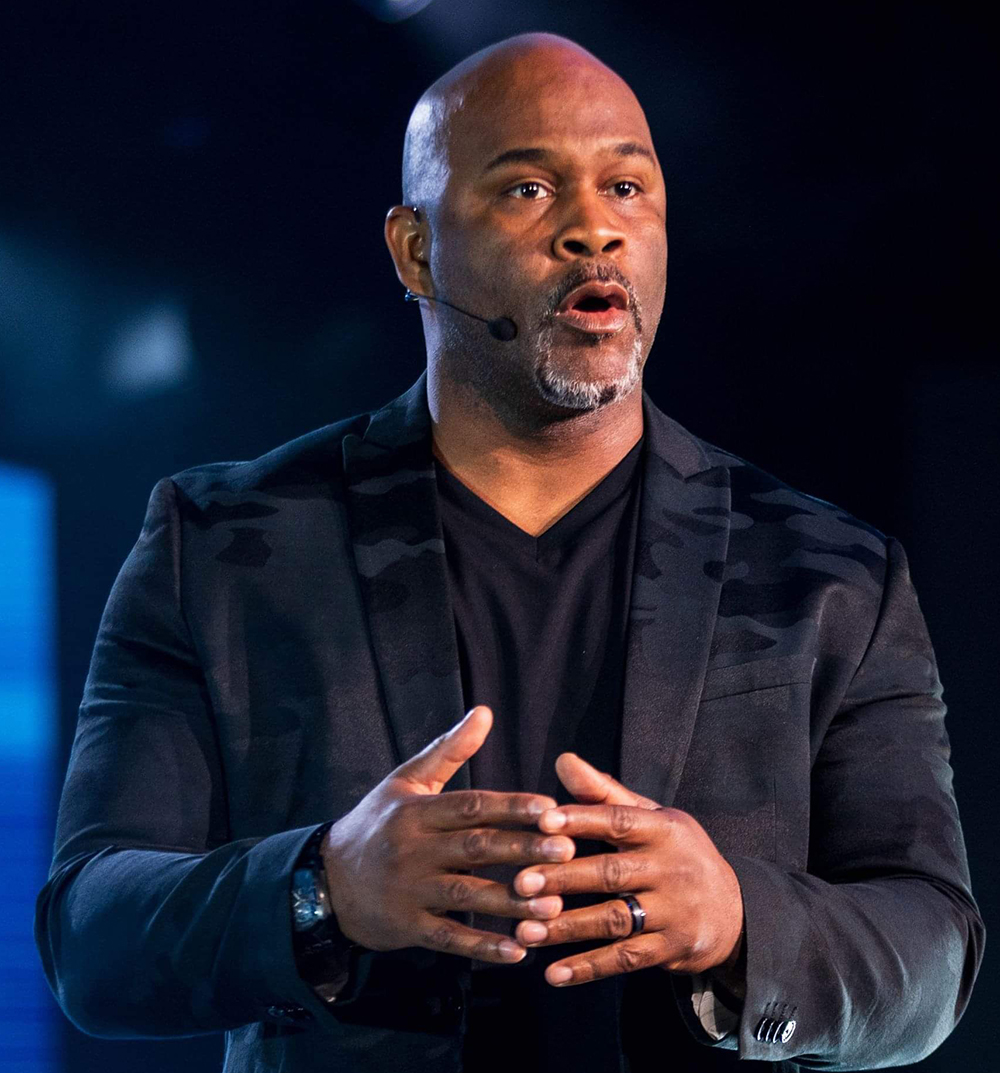
Edmond W. Davis
It was written in 1215 by wealthy white male landowners — barons — who wanted protection from King John of England’s abuse of power. It was not a universal declaration of human rights. It did not include African Americans, women, the poor, Indigenous people, colonized people or anyone who would later be considered outside the privileged circle of power.
In modern language, it was not written for anyone who was not a WASP — White Anglo-Saxon Protestant males. That truth matters. King Charles called the Magna Carta a forerunner of freedom. Yet the famous clause that people celebrate most says: “No free man shall be seized or imprisoned … except by the lawful judgment of his peers and by the law of the land.”
The key phrase is “free man.”
Who counted as a free man in 1215? Certainly not Black people anywhere in or near the vicinity of the UK. Certainly not women. Certainly not the poor. Certainly not the enslaved Africans who would later be shipped across the Atlantic while both Britain and America preached liberty with one hand and profited from bondage with the other.
For readers who want to examine the original English translation for themselves, the full text of the Magna Carta may be read through the UK National Archives.
History deserves due process.
If the Magna Carta is the grandfather of Western democracy, then Black people were denied the inheritance for centuries. America borrowed the language of liberty while building an economy on slavery, unpaid labor, abuse, torture and the worst human experience in history. Britain exported the philosophy of justice while financing its empire through colonization and extraction. The same nations celebrating the rule of law often denied Black people the legal right to be recognized as fully human.
The Magna Carta may have inspired the United States Constitution and the United States Bill of Rights, but Black Americans had to fight through slavery, Reconstruction, Jim Crow, lynching, voter suppression and mass incarceration just to force those promises to apply to them.
King Charles also referenced 9/11 and the defense of democracy, and rightly so. But where was the reflection on domestic terrorism against Black Americans, women, Latinos, Asians or the LGBTQ community? Where was the mention of slavery, segregation, redlining, medical exploitation or the Supreme Court decision in Dred Scott v. Sandford that declared Black people had no rights white men were bound to respect?
“History should not only remember the towers that fell. It must also remember the backs upon which empires were built.”
History should not only remember the towers that fell. It must also remember the backs upon which empires were built. African Americans were and always have been the first AI before technology and software. King Charles spoke of protecting North Americans and Europeans, of preserving alliances, prosperity and democratic values. I listened carefully.
But what about South Americans? Africans? Asians? The Caribbean? The Arabian Peninsula?
Are they outside the moral imagination of empire?
That is the problem with the mythology of the Magna Carta. It is presented as universal while historically functioning as selective privilege.

Magna Carta (Wikimedia Commons photo)

Even his closing words deserve reflection: “God bless the United States and God bless the United Kingdom.”
But not God bless the world.
That may sound ceremonial, but spiritually it raises a serious question: Is that Christian, or is that nationalism dressed in church clothes?
Scripture teaches something larger.
Matthew 5:44 says, “Love your enemies, bless them that curse you, do good to them that hate you.”
Galatians 3:28 reminds us, “There is neither Jew nor Greek … for ye are all one in Christ Jesus.”
And Genesis 12:3 declares, “All peoples on earth will be blessed through you.”
God is not the private property of two powerful nations. Christianity is global, not tribal.
If the crown wishes to celebrate the Magna Carta, then it must also acknowledge its limits. If it praises liberty, it must name those excluded from it. If it invokes democracy, it must confront empire. If it blesses nations, it should remember humanity.
Because the Magna Carta never was the finish line of freedom.
For African Americans, for women, for the poor and for everyone history pushed outside the gates of power, it was only the beginning of a very long argument. An argument still being made today.
The real question is not whether the Magna Carta shaped democracy. It did. The real question is this: Who was included in its promise — and who had to fight just to be recognized as human at all?
Edmond W. Davis is an American social historian, international speaker and Amazon No. 1 bestselling author. He is a global authority on the Tuskegee Airmen and serves as the founder of the National HBCU Black Wall Street Career Fest. A native of Philadelphia and current resident of Little Rock, Davis is committed to cultural empowerment and educational equity through storytelling and civic engagement.