


Twenty-five years ago, America was attacked.
On September 11, 2001, nearly 3,000 people were killed after al-Qaeda terrorists hijacked four commercial airplanes, striking the World Trade Center, the Pentagon and a field near Shanksville, Pa.
America awakened the next morning wounded, angry, frightened — and remarkably determined to stand together. Keep in mind this was a world before Facebook and LeBron James. There was no iPhone yet.
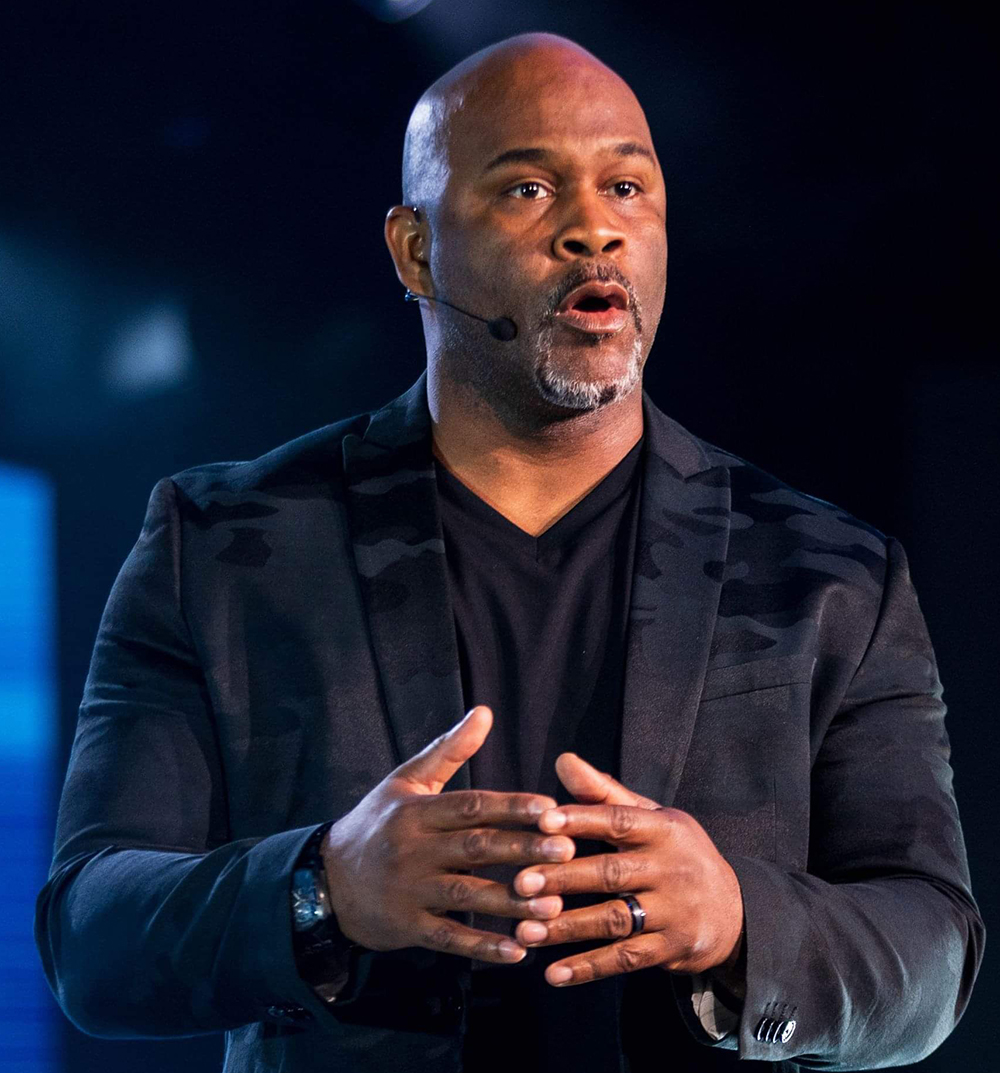
Edmond W. Davis
For a brief moment, we remembered what the first word in our nation’s name meant: United.
We were not MAGA America. We were not red America or blue America. We were not consumed by whether our neighbor was Republican or Democrat. We were the United States of America.
That distinction matters as we approach September 11, 2026.
President Donald Trump is scheduled to commemorate the 25th anniversary at the Pentagon, while Vice President JD Vance is expected to attend the ceremony in New York. The Pentagon, however, should not become a campaign rally, and September 11 should not become another opportunity to attack the “radical left,” litigate political grievances, promote MAGA or discuss Donald Trump.
In my view, Trump should not be given a campaign-style microphone on September 11.
Not because a president should be erased from a national commemoration, but because 9/11 belongs to America — not to any politician.
History provides numbers that our political memories sometimes erase.
After 9/11, public trust in the federal government surged. Pew Research Center found 60% of Americans said they trusted the government most or nearly all the time in October 2001 — roughly twice the percentage recorded earlier that year.
Something else remarkable happened. In March 2001, 45% of Americans expressed favorable opinions of Muslim Americans. By November—after 9/11—that number had increased to 59%.
President George W. Bush visited an Islamic center six days after the attacks and publicly warned Americans against blaming Islam and Muslim Americans for terrorism. That was leadership appropriate to a frightened country: Identify the enemy without manufacturing another enemy at home.

President George W. Bush delivers a statement as he stands with Muslim religious leaders during a visit to the Islamic Center of Washington, Monday, Sept. 16, 2001. (AP Photo/Doug Mills)
The unity was far from perfect. FBI statistics cited by Pew show reported anti-Muslim hate-crime incidents exploding from 28 in 2000 to 481 in 2001. Yet America was simultaneously struggling with the question of whether fear would overpower its ideals.
Twenty-five years later, we should be asking that question again.
The firefighters running upstairs while others escaped downstairs did not stop to ask whether the person beside them was Republican or Democrat. Neither did the nurses, physicians, police officers, construction workers, teachers, military personnel, airline workers or ordinary citizens who responded.
“America was struggling with the question of whether fear would overpower its ideals.”
Black Americans served. White Americans served. Latinos served. Asian Americans served. Muslim Americans served. Immigrants served. Women and men served.
Americans entered the armed forces and were eventually deployed across Afghanistan, Iraq and elsewhere during a generation of warfare that transformed American foreign policy and cost thousands of American military lives. Today, fewer than 1% of Americans serve in the military, according to recent Associated Press reporting examining America’s growing military-civilian divide. Those veterans deserve more than applause once a year. They deserve health care, employment opportunities, mental health resources, housing and a country that remembers what was asked of them.
September 11 was not simply a military attack. It was an economic attack. Wall Street closed. Airlines were grounded. Tourism collapsed. Businesses suffered. Workers lost jobs. Insurance losses mounted. Entire industries faced uncertainty.
Yet America rebuilt.
Today our economic challenges are different, but Americans again face anxiety about prices, employment, housing, government spending and America’s place in an unstable world. And politically, we are profoundly divided. That is precisely why September 11 should not be surrendered to partisan warfare.
This is chess, not checkers.
Every speech matters. Every symbol matters. Every decision about who gets the microphone matters. ICE has no place at the 9/11 memorial table. September 11 should not become a referendum on immigration enforcement. Immigrants should not be transformed into stand-ins for terrorists. Muslim Americans should not be treated as permanently suspicious citizens. Latino families should not become political props.
Twenty-five years after 9/11, Pew reports 51% of Americans now say Islam is more likely than other religions to encourage violence, compared with only 25% in March 2002. That should trouble us. The lesson of September 11 cannot become: Fear everyone who looks different.
“America is strongest when Americans refuse to allow terrorism to destroy their democratic character.”
The lesson should be: America is strongest when Americans refuse to allow terrorism to destroy their democratic character.
Remember 2001 — not 1901.
There is an irony surrounding the phrase “Make America Great Again.” How far back is “again”? If we are going backward, I don’t want 1901.
I don’t want an America of legalized segregation, disenfranchisement, lynching, exclusion and second-class citizenship. I don’t want the 1950s or early 1960s, when millions of Americans were still fighting simply to exercise rights supposedly guaranteed by their Constitution.
If we must look backward for inspiration this September, look back to the better instincts America demonstrated after September 11, 2001.
Not its fear. Not its mistakes. Its unity. Its volunteerism. Its service. Its willingness — however imperfectly — to say an attack on Americans required Americans to stand together.
Scripture establishes a demanding standard: “Blessed are the peacemakers: for they shall be called the children of God.”
And Christ issued another warning that sounds remarkably relevant in 2026: “And if a house be divided against itself, that house cannot stand.”
We cannot repeatedly invoke God while practicing division. We cannot preach Christianity while celebrating cruelty. We cannot honor Americans who died together while politically separating Americans who are still living.
Twenty-five years after September 11, America has another decision to make.
We can use this anniversary to remember what terrorism attempted to destroy, or we can allow political tribalism to finish the job.
Let the families speak. Let the bells ring. Read every name. Honor the firefighters. Honor the police officers. Honor the passengers. Honor the military personnel. Honor the workers. Honor teachers. Honor dishwashers and construction workers. Honor the immigrants and citizens who helped rebuild this country.
And remember the two words that mattered after the smoke cleared: United States.
What made America great after 9/11 wasn’t MAGA. It was us.
Edmond W. Davis is a social historian, journalist, professor and documentary host. He is founder of the National HBCU Black Wall Street Career Fest. A native of Philadelphia, he lives with his wife and son in the Little Rock, Ark., area. Davis is committed to cultural empowerment and educational equity through storytelling and civic engagement.
Related:
I was there on 9/11 | Analysis by Mara Richards Bim
The fight behind the 9/11 vow to ‘Never Forget’ | Opinion by Christina Stanton