


America may be entering one of the strangest intersections of warfare, technology, politics, masculinity and religion in modern history.
On Sept. 30, Defense Secretary Pete Hegseth announced the Pentagon will establish an Office of Religious Affairs reporting directly to him. In the same “State of the Force” address, he announced and discussed sweeping changes involving autonomous warfare, drones, military leadership and the culture of the armed forces.
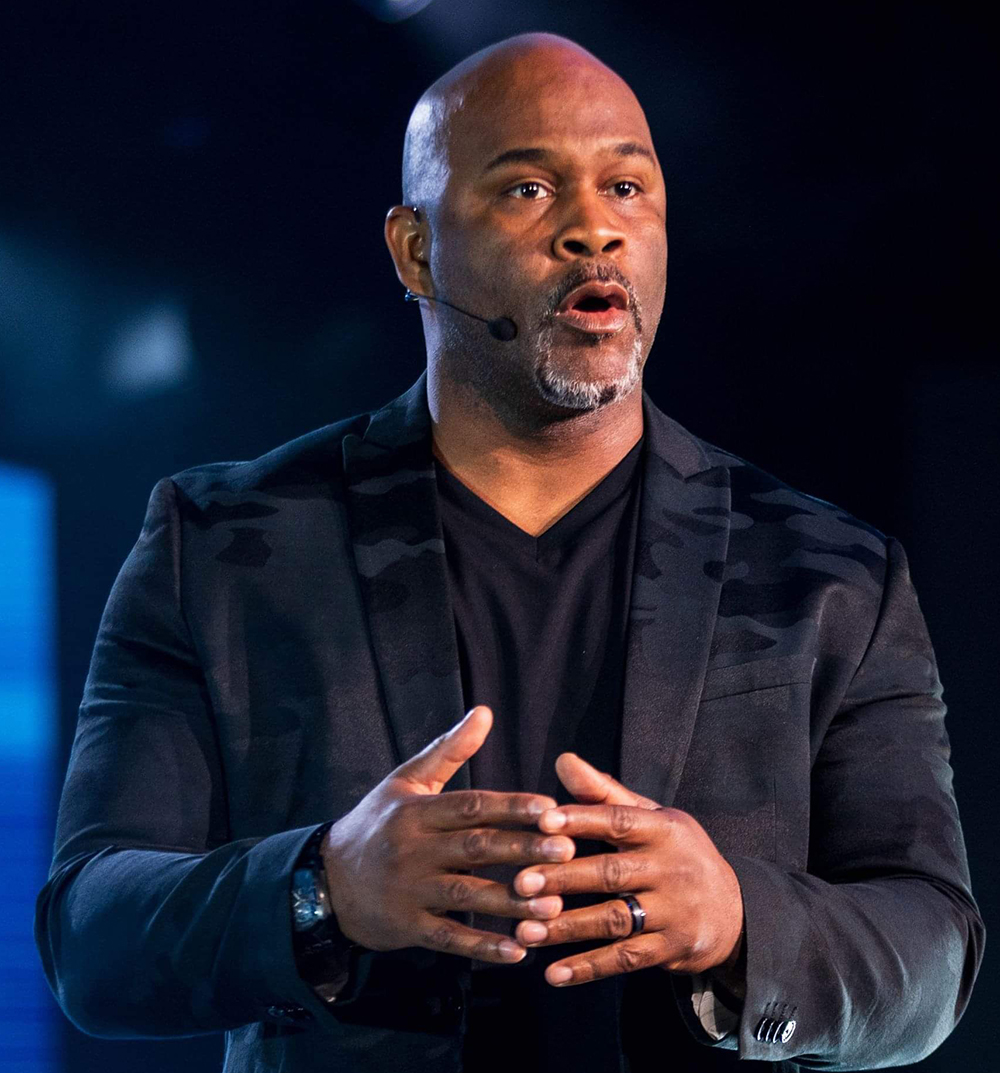
Edmond W. Davis
The United States is seven months into war with Iran, while the military has killed more than 200 people in strikes on alleged drug-trafficking vessels in Latin America.
Hegseth declared, “God is good. Evil is not. And America’s military must understand the difference.”
As a Christian, my question is simple: If we are bringing God more explicitly into the Pentagon, are we prepared to bring Jesus into the conversation too? Because invoking God before battle is much easier than applying Christ’s teachings before pulling a trigger.
“Invoking God before battle is much easier than applying Christ’s teachings before pulling a trigger.”
Jesus taught in Matthew 5:9, “Blessed are the peacemakers.” Matthew 5:44 commands believers to love their enemies and pray for those who persecute them. Matthew 26:52 records Jesus warning that those who take up the sword will perish by the sword.
Those Scriptures do not resolve every question of national defense. Christianity has debated just-war theology for centuries. But they certainly demand something deeper than wrapping military power in Christian vocabulary.
And that raises another question: What exactly is the message?
Strip away the slogans and ask what Americans have heard repeatedly from Hegseth’s Pentagon. Stricter physical standards. Clean-shaven faces. Reviews involving women in ground-combat formations. Screening for testosterone deficiency among male personnel. Cuts among senior generals and admirals.
Physical readiness unquestionably matters in warfare. But when strength becomes almost synonymous with masculinity, testosterone, muscle, grooming and appearance, another question emerges: Are we strengthening warriors or creating an aesthetic of what somebody thinks a warrior is supposed to look like?
I say this as a happily married straight man who has no insecurity about saying hypermasculine imagery can become performative. Different observers can even read such imagery differently — including as homoerotic — without that saying anything whatsoever about an individual’s sexual orientation. That is precisely why policy should be judged by military necessity, effectiveness and constitutional principles rather than somebody’s preferred image of masculinity.
“Are we strengthening warriors or creating an aesthetic of what somebody thinks a warrior is supposed to look like?”
America does not need a casting call for 300. Pete, this is not ancient Greece. We are not Spartans. And, for the record, Spartans had beards.
When government leaders use explicitly religious and moral language, their own histories inevitably become part of the public conversation.
Hegseth has been married three times before age 50. His first marriage, to Meredith Schwarz, lasted from 2004 until 2009. His second, to Samantha Deering, ran from 2010 until 2017. That means his first two marriages lasted roughly five and seven years — an average of about six years. He married Jennifer Rauchet in 2019. Reporting during his confirmation process also documented Hegseth’s acknowledgment of past infidelity and his assertion that he subsequently experienced personal and spiritual change. That is not presented to ridicule marriage. Quite the opposite.
I sincerely wish Hegseth a long, successful and godly marriage. Christians believe in redemption, forgiveness, and transformation, and so should American military-led personnel.
But therein lies the point: If grace, complexity, and second chances apply to political leaders, shouldn’t humility accompany lectures about the moral condition of everybody else?
The issue is not whether a divorced person can talk about God. Of course he can. The issue is whether the government should confuse one man’s cultural preferences about masculinity, religion and military identity with Christianity itself.
The Pentagon already possesses extensive religious infrastructure. Military chaplains serve Christians, Muslims, Jews, Buddhists, adherents of other traditions and service members without religious affiliation.
“What problem does the new Office of Religious Affairs solve that existing military chaplaincy and religious-accommodation systems cannot?”
What problem does the new Office of Religious Affairs solve that existing military chaplaincy and religious-accommodation systems cannot?
My notes from remarks by Arizona Sen. Ruben Gallego, a Marine combat veteran who served in Iraq, capture an important distinction: Prayer can have enormous meaning to troops facing combat, death, and grief. But access to faith is different from converting religion into political branding or military strategy.
There is nothing inherently unconstitutional about government accommodating religious practice. Federal institutions have done so for generations. The government did not just discover religion through Hegseth on Sept. 30.
Americans deserve transparency about where pastoral consultation ends and government policy begins.
If the Office of Religious Affairs is to be genuinely about religious liberty, then it must protect the Muslim soldier, Jewish sailor, Christian Marine, atheist airman and every other conscience with equal seriousness. That is the American military ethos.
If Hegseth wants Christianity included in conversations about military morality, then Christians should be willing to apply the whole message — not merely the muscular portions. Protect innocent life. Tell the truth about war. Require credible evidence before lethal force. Seek peace before escalation. Care for wounded troops and veterans. Respect prisoners. Reject vengeance. Protect every conscience. Demand accountability when civilians die. And never confuse Christianity with partisan branding.
Scripture is not a blank check for government violence. A military can employ chaplains, hold prayer breakfasts, quote Scripture and speak beautifully about God. The harder question comes after the prayer ends and the missiles begin flying.
Are we following Pete Hegseth — or are Christians following the Spirit and teachings of Jesus Christ?
Perhaps that is the contradiction at the center of this new Department of Confusion: autonomous drones beside religious affairs, testosterone screening beside biblical language, fewer generals beside a widening global battlefield, ancient warrior imagery inside a 21st-century constitutional democracy.
Strength matters. Discipline matters. Lethality matters when national defense requires it. But so do wisdom, restraint, judgment, mercy and truth. If America truly wants God inside the Pentagon, then justice, accountability and humility must be allowed through the same door.
Edmond W. Davis is a social historian, journalist, professor and documentary host. He is founder of the National HBCU Black Wall Street Career Fest. A native of Philadelphia, he lives with his wife and son in the Little Rock, Ark., area. Davis is committed to cultural empowerment and educational equity through storytelling and civic engagement.
Related: