


In response to growing revelations of sexual abuse, many women have written #metoo on social media. But there is a perplexing silence among Latinas. There is too much evidence to suggest that this lack of voices means that sexual abuse is absent in the Hispanic community. Perhaps in a communal culture such as the Hispanic one, it makes sense that we move forward right now with a #wetoo, until we are ready to say individually #metoo.
#nosotras también (#wetoo)
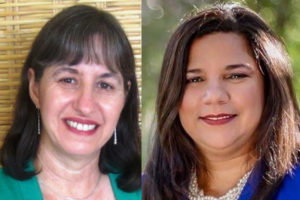
Si bien aplaudo el valor de las muchas mujeres que han escrito #metoo en las redes sociales, me he quedado perpleja por el silencio casi absoluto de parte de las latinas. He vivido lo suficiente como para afirmar que esta falta de voces o reconocimientos no significa que el abuso sexual esté ausente en la comunidad latina.
When I become pope of the Protestant church

Recently, I dreamed I was named pope of the Protestant church, and given sweeping powers to instigate any changes/adjustments/new expectations that I chose. When I awakened from my fantasy, I jotted down some of my plans.
Navigating the church’s engagement with the digital world

One of the ways our society has vastly changed in just the last 15 years has been the creation of an alternative world, a digital world, and we’ve been trying to assess its impact on relationships and institutions ever since we realized it wasn’t going away.
Liminal existence for Myanmar’s Rohingya refugees
Pope Francis is visiting Myanmar, where Christians are only about 4 percent to 5 percent of the approximately 55 million people who live there. He hopes to draw attention to the plight of hundreds of thousands of Rohingya who are being driven out of the Rakhine State into Bangladesh, where they live the liminal reality of refugees.
Letters to the Editor

The latest from our readers: Sex abuse victims not safe in Baptistland | Christa Brown, Denver
U.S. society is getting meaner. Who are we becoming?
We’re harder and more calloused and just downright meaner, in music and sports and in national and international policies, in politics in general and our approach to one another in specific.
One simple way to tell real persecution from persecution complex (and why we have to get this right)

There is one simple and relatively reliable way to distinguish real persecution or marginalization: personal examples.
If a person can provide multiple, real life, personal examples of how they or their community have fallen victim to abuse, harassment or exclusion, based on who they are and with little recourse and choice, then it’s likely the real deal. If generalities are all a person can give in response, or if they return to a few isolated incidents that are not systemic, then it is likely manufactured (and likely stoked by certain media outlets).
News alert: God speaks through donkeys, burning bushes, rocks — and women ministers

There will always be daring churches like First Baptist of Jefferson City who will not be afraid to live into God’s vision of the full partnership of women and men in ministry. Yet I still fear the perpetuation of the belief in women’s second-class status.
Letters to the Editor
The latest from our readers: • Roy Moore election would legitimize guilt for everyone except the perpetrator | Susan Glass, Kingsport, Tenn. • Truth is truth, no matter who says it | Philip Brown, Macon, Ga. • Why not more letters? | Kirby D. Smith, Chesterfield, Va.
Letters to the Editor
The latest from our readers • Stand up for Christianity in the face of evangelicalism’s mess | David Hicks, Shanghai, China
Letters to the Editor
The latest from our readers • The wedding cake case is not religious discrimination | Stan Hastey, West Palm Beach. Fla.