

George was raised in a Christian community whose extreme theology and abuse of religious power resulted in spiritual trauma that’s taken years of recovery for the Dallas resident.
“I’m over 90 percent there,” says the 40-something whose first name has been changed to protect his identity.
George says his recovery began in the early 2000s and has included a mix of Christian and secular counseling and the discovery of Facebook groups for those who have suffered religious abuse.
“Will I ever be 100 percent normal? That’s a pipe dream,” he says. “You never fully escape it.”
That’s the reality for victims of cults, congregations, denominations and other religious organizations that abuse power to control their members, says Kathryn Keller, a Dallas psychologist who specializes in treating spiritual and religious abuse and in the closely related fields of PTSD and childhood trauma.

Kathryn Keller
Religious and spiritual abuse are “pretty much the same thing” and include the exertion of theological, often patriarchal power to control adherents physically, emotionally and/or spiritually, says Keller, who is a member of Wilshire Baptist Church in Dallas.
Religious trauma is the resultant response people have to religious or spiritual abuse, and may include deep shame and self-loathing. Experiences of sexual abuse and domestic violence often are involved, she says.
Physical ailments and depression are common as victims often repress trauma in order to cope with it.
“In these environments they are not allowed to ask questions or to challenge authority,” Keller says. “So, a lot of them manifest their symptoms through their GI (gastrointestinal) tracts, through depression, nightmares, hypervigilance and hyper-awareness of their surroundings.”
When harmed sexually or by other forms of violence, victims often feel pressured to forgive their perpetrators. Shame results when they are unable to do so.
“They think they are horrible people because that’s tied to the theology,” Keller says. “You’ll find that in churches that place super focus on language like ‘I’m a sinner’ and ‘I’m a wretch.’”
Keller notes that purity culture also can play a part in spiritual trauma when shame is weaponized to pressure sex-abuse victims into keeping quiet, Keller said.
Purity culture began in the 1990s as an evangelical effort to promote teen abstinence until marriage. But it has become synonymous with extreme forms of abstinence and control in which people are encouraged to deny their bodies to remain “pure.” Guilt and shame often accompany even the slightest failures.
Churches and religious movements with powerful patriarchies function similarly, Keller says. They often tap into purity values and narrow biblical worldviews to dominate females and even some males.
“In patriarchy there is a power differential with men being above women,” Keller explains. “It sets up a situation for the person in the power-down position to be abused.”
Men can also be victims of systems in which they perpetuate the abuse of power. Males who escape these communities often need counseling to deal with the resulting guilt.
“It’s really daunting when they realize they were a victim of this system and a perpetrator of it,” she says. “The whole system is an abusive system.”
One of the key pressures power-abusing religious groups apply is in attempting to keep members from leaving.
“It’s fear-driven,” Keller says. “They say, ‘if you leave, you’re going to hell.’ That’s terrible.”
Keller says religious abuse clients often come initially seeking relief from other issues, such as domestic violence, PTSD and dysfunctional relationships.
“The dynamics of abuse and power and unhealthy relationships” go hand-in-hand, she says.
Keller had her own brush with patriarchal, controlling faith.
After growing up in a progressive Baptist home, she later joined a church she described as “a little fundamentalist and a little charismatic, as well.”
She eventually left the church, but the experience helped shape her therapeutic practice and later the research for her doctorate in psychology.
“They say research is me-search, right? The more I studied, the more I realized that does resonate with me.”
Her specialization has helped people face and accept their pasts.
“I focused on spiritual abuse because people get stymied in their journey,” she said. “Therapy gives them a chance to continue that journey.”
However, it can be lonely. The therapeutic treatment of spiritual or religious abuse is an emerging field but still not widely practiced, Keller says.
“There are a lot of well-meaning, kind therapists who just don’t get it.”
But even with the right approach, clients aren’t healed of religious trauma, Keller adds.
“It’s hard to say what ‘healed’ is,” she says. “It’s better to talk about religious abuse like recovery from addiction.”
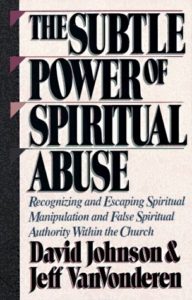
One of the books that helped her understand the issue is “The Subtle Power of Spiritual Abuse,” by David Johnson and Jeff VonVonderen.
Keller described a client who was doing well until visiting a dentist where praise-and-worship music was being played, triggering memories of a toxic church experience.
“They had a traumatic reaction,” she says.
Instead, the goal is to help clients process their experiences in order to reach increasing levels of functionality.
Keller says her job is to help clients put language to her clients’ experiences of spiritual trauma and to familiarize them with the power dynamics of fear and control.
It’s an often a heart-breaking experience for the client, but also an empowering one.
“Once you understand those dynamics in purity culture and the power and the shame, you look back and say, ‘no wonder that made me feel bad.’”