

By Ken Camp
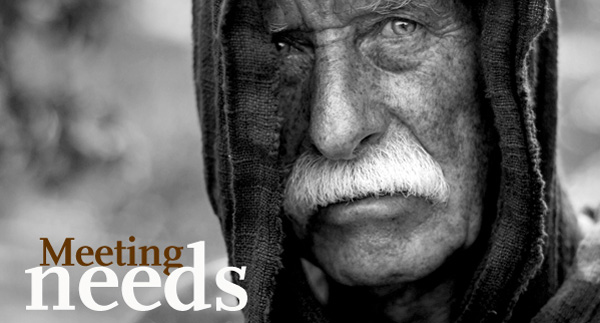 Chronic poverty, hunger and homelessness can leave even the most committed Christian feeling overwhelmed and defeated.
“After you finish providing one set of meals, more hungry people are in line right behind them. And there’s more after them. It’s such a big, systemic issue that you could spend your entire life just feeding ‘the next person in line’ because the line is endless,” said Sarah Cunningham, author of The Well-Balanced World Changer.
“You begin to realize that even though you are pouring out all your energy and spending all your resources, you’re barely making a dent in the overall scheme of things. And that can be discouraging.”
Cunningham recommends keeping the example of Jesus in mind.
“I often take on too much, as if the weight of the world — the complete transformation of all those in my sphere — rests on me. But even Jesus, the one being who really did come to save the world, didn’t run himself ragged trying to unearth and solve every problem,” she said.
Cunningham suggests Christians see themselves as lighthouses that provide a fixed beacon in the darkness, providing light and hope.
“Instead of following the needy through their emotional or dramatic cycles when you have the chance, stand firm, so that whenever their cycle passes you, they see the light. And whenever they get into trouble, it helps them find their way back,” she said.
 “And then one day, if they decide they want to live more in the light themselves, well, good news! You haven’t exhausted yourself chasing them around, and you still have some energy left to serve them well.”
Christians who serve among the poor also must battle cynicism when confronted with people who abuse the good will of loving people, said Joshua Hearne, a Cooperative Baptist Fellowship missionary in Danville, Va. He and his wife, Jessica, live and work with Grace and Main, an “incarnational ministry” among the poor.
“On the hard days, I have to remind myself that the world already has plenty of cynics and doesn’t need another one,” Hearne confessed.
“Are there those who might abuse the good will of congregations and communities? Most certainly,” he said. “But if our priority is avoiding being taken advantage of, then we’ve missed the point of the Sermon on the Mount. After all, Jesus doesn’t call us to be in control of our world and the people in it but to love them.”
“Hospitality and love demand that we make less of ourselves and make room in our lives for others,” Hearne said. “Are they going to hurt us? Most certainly. But when they do, they’ve opened the door for us to offer a kind of love for which the world has no answer.”
Cunningham agrees Christians cannot control others, but she emphasizes the importance of demonstrating some degree of self-care.
“I think rather than focusing on other people’s choices, we should put our energy into guarding our own health and our own reactions, because we can’t control the outcome of other people’s lives. We can’t override their free will and drive their body for them,” she said.
Cunningham recommends setting realistic expectations, working at a realistic pace and asking for help when needed.
“When we take good care of ourselves, we help ourselves remain objective enough to realize that we are not the Savior in this narrative, and we retain the ability to surrender our expectations for them to a God who can use any circumstance to draw them near,” she said.
Boundaries need to be set, but they should be determined in dialogue with the people to whom ministry is offered, Hearne stressed.
“Boundaries are essential to our work and are established — not imposed — through a series of relationships and conversations,” he said. Many of the people the Hearnes welcome into their home suffer from “social poverty” and isolation as much as economic poverty, he added.
“The boundaries we set are less about protecting ourselves from them than they are about working together to provide healing for social poverty,” he said. “Those who suffer from social poverty sometimes need help in learning how to relate in ways that produce love and preserve dignity.”