


The death of Sen. Lindsey Graham closes a remarkable chapter in American political history.
For more than 20 years, Graham was one of the most influential voices in Washington. He was a military veteran, a respected member of the Senate, a major figure in foreign policy and a trusted adviser to Republican presidents. He possessed something many elected officials never achieve: Real power.
Yet the defining debate surrounding Graham’s legacy likely will center on a simple question: How should history judge a leader who publicly warned America about Donald Trump, then became one of Trump’s strongest allies?
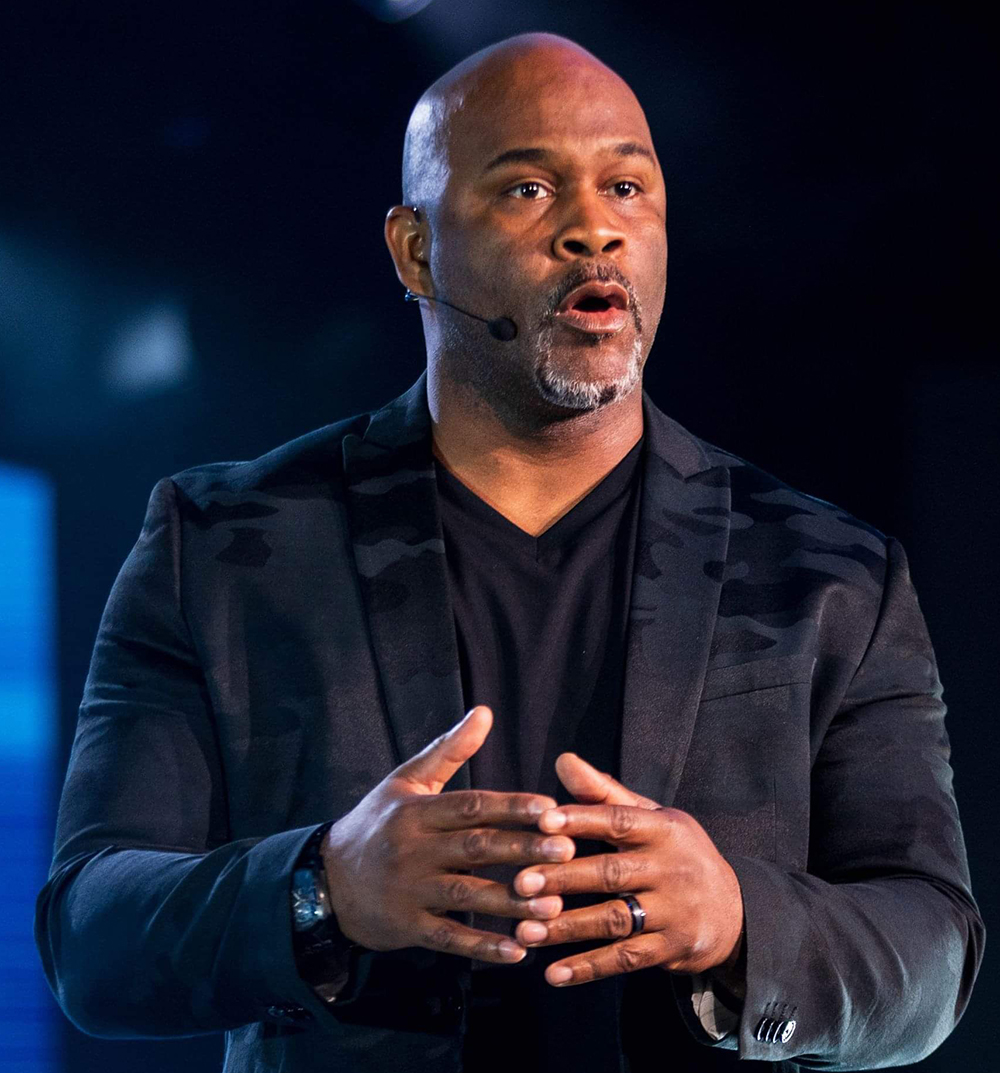
Edmond W. Davis
That question is not rooted in rumor or partisan talking points. It is rooted in Graham’s own public statements.
During the 2016 Republican presidential primary, Graham repeatedly warned that Trump represented a danger to the Republican Party. He described Trump as a “demagogue” and suggested a Trump nomination could damage conservatism for a generation. Like many establishment Republicans, Graham expressed concerns about Trump’s temperament, leadership style and fitness for office.
Yet following Trump’s election, Graham emerged as one of the president’s closest allies in the United States Senate.
For supporters, that evolution demonstrated political maturity and an understanding that elections have consequences. They argue Graham chose to work with the elected president to advance conservative goals rather than remain trapped in political disagreements.
For critics, however, the transformation symbolized something larger: The willingness of political leaders to set aside previously stated convictions in exchange for influence and access.
History will determine which interpretation proves more persuasive.
“To whom much is given, much will be required.”
The Bible reminds us in Luke 12:48: “To whom much is given, much will be required.”
Public officials occupy positions of extraordinary trust. Their decisions affect not only legislation but also public confidence in institutions.
Several major moments will shape historical evaluations of Graham’s career.
First, Graham became a leading advocate for the confirmation of conservative federal judges, including multiple United States Supreme Court justices. Supporters view this as one of the most significant accomplishments of modern conservatism.
Second, he defended many of Trump’s policies and positions during periods of intense national controversy, including both impeachment proceedings and disputes surrounding the 2020 presidential election.
Third, Graham remained one of the administration’s most vocal supporters on foreign policy and military matters. His influence extended across issues involving national security, military spending and America’s role in global affairs.
These actions secured Graham’s standing within the modern Republican movement.
Yet they also generated significant criticism.
“Whether Graham contributed to that polarization remains a matter of political debate.”
Many Americans viewed the Trump years as a period of rising political hostility, declining trust in institutions and increasing polarization. Critics argue that leaders who possessed credibility and influence had a responsibility to lower tensions rather than reinforce them.
Whether Graham contributed to that polarization remains a matter of political debate, but it is a question historians undoubtedly will examine.
The issue is not whether Graham accomplished important things. He did. The issue is whether those accomplishments came at a cost.
Scripture addresses this tension in Mark 8:36: “For what shall it profit a man, if he shall gain the whole world, and lose his own soul?”
The verse speaks to a broader principle. Leadership often involves difficult choices between conviction and expediency, principle and practicality, independence and influence.
Every public servant faces those moments.
Graham’s critics believe he chose influence.
His supporters believe he chose effectiveness.
Both perspectives will become part of the historical record.
One area where Graham deserves recognition is his willingness to engage in bipartisan relationships earlier in his career. He worked alongside Republicans and Democrats on immigration, military affairs and national security issues. Many observers viewed him as part of a generation of lawmakers who still believed political opponents could be partners in governance.
Yet by the end of his career, he was more closely identified with partisan battles than bipartisan solutions.
That transformation mirrors the broader story of American politics over the last decade.
“In many ways, Lindsey Graham’s legacy is America’s legacy.”
In many ways, Lindsey Graham’s legacy is America’s legacy. His career reflects the nation’s increasing polarization, the growing importance of political personalities and the declining influence of traditional political institutions.
The Bible offers one final reminder in Galatians 6:7: “A man reaps what he sows.”
History eventually weighs every leader’s contributions, mistakes, victories and failures. It does not render perfect judgments. But it does render lasting ones.
As the media, political leaders and citizens reflect on Graham’s life, the challenge is not to canonize him or condemn him. The challenge is to tell the truth. He was neither a villain nor a saint.
He was a consequential political figure whose decisions helped shape the direction of the Republican Party and, by extension, the nation itself.
His supporters will remember his service, military background, judicial influence and commitment to conservative causes.
His critics will remember his evolution from Trump critic to Trump ally and question whether he abandoned principles he once publicly defended.
Both perspectives deserve consideration.
The ultimate verdict will not come from television commentators, social media posts, political donors or partisan activists. It will come from history.
And history has a way of asking difficult questions long after the applause has faded.
May God grant comfort to Sen. Graham’s family, friends, colleagues and the people of South Carolina. And may future generations learn from both the strengths and the shortcomings of those entrusted with public power.
Edmond W. Davis is an American social historian, international speaker and Amazon No. 1 bestselling author. He is a global authority on the Tuskegee Airmen and serves as the founder of the National HBCU Black Wall Street Career Fest. A native of Philadelphia and current resident of Little Rock, Davis is committed to cultural empowerment and educational equity through storytelling and civic engagement.