

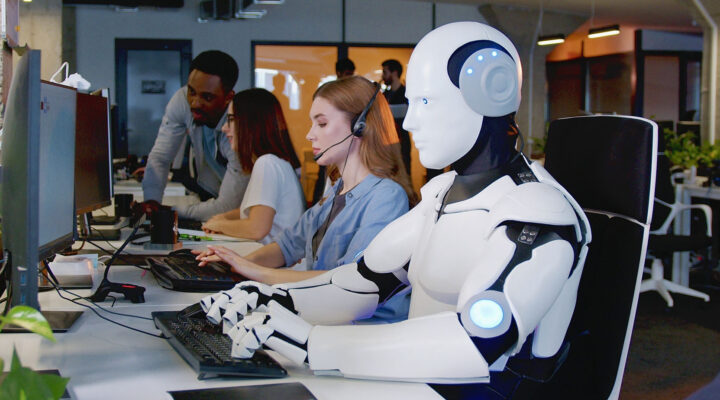
In the aftermath of Pope Leo XIV’s encyclical letter Magifica Humanitas, human resource professionals are gearing up for a previously unexplored scenario — religious accommodations to avoid using artificial intelligence tools in the workplace.
Pope Leo’s letter cautions humanity about the potential for AI to undermine human dignity. Citing his predecessor’s encyclical letter, Rerum Novarum, he stresses protecting the dignity of work and of workers is at the forefront of the church’s teachings, recognizing “persons have a fundamental value that takes precedence over capital and profit.”

Ema Sol
As a result, the HR field now is anticipating an influx of religious objections to workplace AI use that might be inspired by the pope’s letter. For me, as a people operations manager, this sparked the question: “What is the role of human resources as workplaces navigate the increasing cultural, ethical and religious impacts of AI?”
Leo’s letter quickly became viral in popular culture, indicating a profound public anxiety about AI’s domination of society. This anxiety will impact many fields in many ways: I believe human resources plays a pivotal role in how AI will shape our workplaces and our work lives.
For human resource leaders in particular, the concern for potential accommodations requests to avoid AI, signals a deeper calling for the HR field during this moment in history. Rather than a simple reactive compliance exercise, HR leaders and other managers must deeply explore their employees’ resistance to AI to ensure its adoption does not jeopardize the rights and needs of workers.
“Leo’s letter explains AI expansion is driven by a technocratic mindset.”
Leo’s letter should resonate with any HR coordinator, recruiter, generalist, business partner, director or chief executive who understands the intrinsic value of the humans carrying out the work. The letter explains AI expansion is driven by a technocratic mindset, which threatens to measure the innate worth of a person by metrics of efficiency and profit.
Human resource leaders have the power, responsibility and experience to balance that mindset with more human-centered mandates. We write the employee handbook policies, the codes of ethics, the standard operating procedures. By steering organizational policies and procedures, we lay the foundation for shaping workplace culture, protecting the company’s interests legally and ensuring fair, consistent treatment of all employees.
Years ago, as a student, and now as an HR professional, I learned to value the goals of workplace psychology — enhancing employee well-being and satisfaction, improving organizational effectiveness and building healthy workplace cultures. These goals reflect the fundamental values of any people-centered HR practice. In the age of AI, we can only achieve the third goal, a thriving workplace culture, by ensuring organizations pair their effectiveness goals with the well-being and satisfaction of every worker, whether blue collar or white collar.
HR professionals hold great sway in how organizations develop, adopt and implement systems affecting the employee experience. While we may not be experts in technology, we are experts in people. In turn, we have the authority to determine if tools are contrary to employee well-being.
“We must investigate how AI has affected our workplaces at the individual and group level.”
To best determine how to accommodate our employees, leaders who manage people need to understand employee sentiments and insights on AI across the company, at every level. Whether through questionnaires or interviews, we must investigate how AI has affected our workplaces at the individual and group level. As organizational leaders, understanding the landscape of our workforce and how they’re affected by infrastructural changes is critical.
While I write here about my own field, I see these same questions materializing across many departments and types of workplaces. For all who hold a role in shaping the future of work, Pope Leo’s Magnifica Humanitas serves as a powerful reminder that the integration of AI is not merely a technological hurdle, but a deeply human one.
While we continue to navigate resistance to AI and prepare to explore the intricacies of religious accommodations, we are invited to realign our HR practice with its fundamental principle — ensuring that efficiency does not come at the expense of human dignity.
Ema Sol is co-founder of Future Incubator, a fiscal sponsor serving as the operational partner for youth-centered initiatives. She is a public voices fellow on youth well-being and power with The OpEd Project and Hopelab.
Related:
Pope Leo’s ‘evangelical’ encyclical
Artificial intelligence spells the end of church as we know it
AI is coming for your pastor and your trust