


There are moments when changing a name is simply administrative. This is not one of them.
The U.S. Navy is reportedly considering removing the name of Doris “Dorie” Miller, one of America’s most important World War II heroes, from the future Ford-class aircraft carrier CVN-81. CNN reported Navy officials are considering renaming the carrier, possibly to honor President Donald Trump instead.
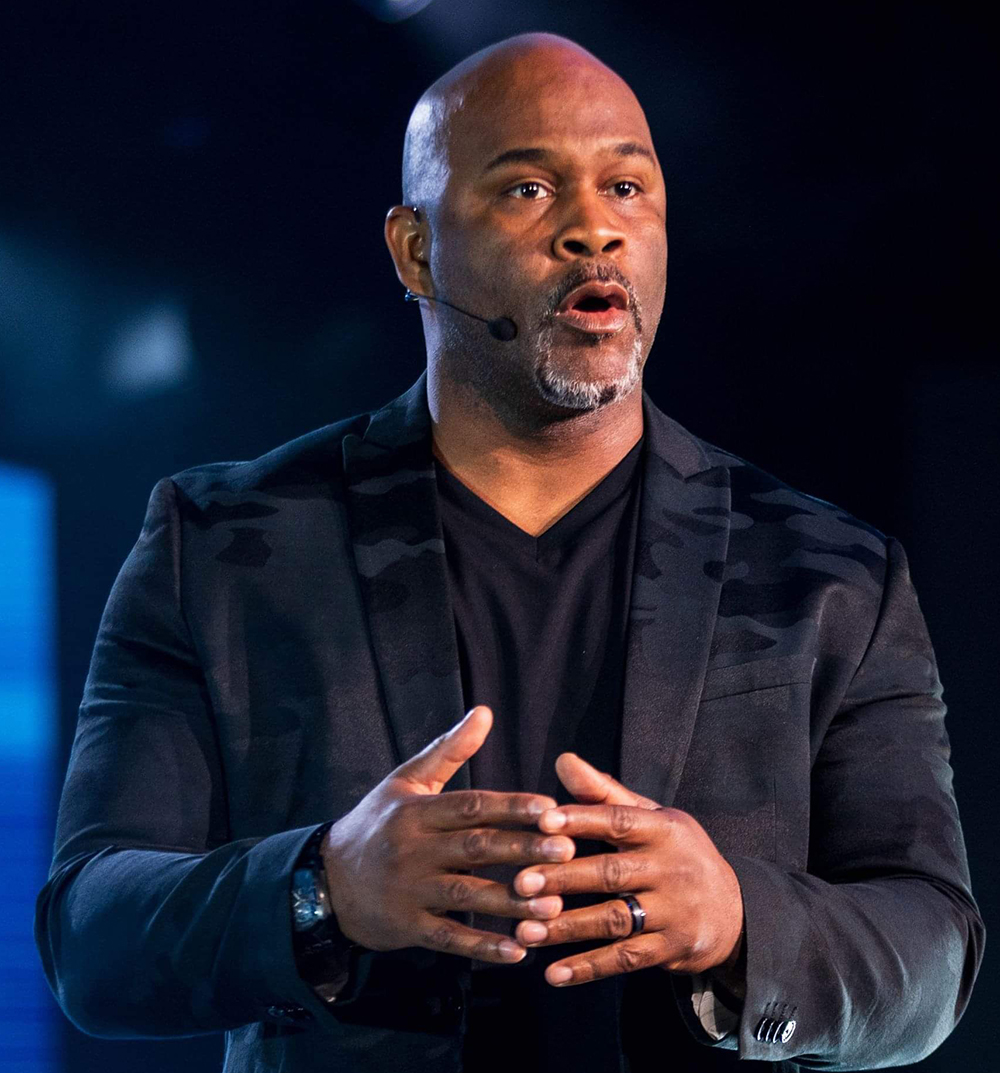
Edmond W. Davis
As of now, the ship has not officially been renamed. But why is this discussion happening at all?
Dorie Miller did not inherit his place in American military history. He earned it under fire.
Miller, born in Waco, Texas, enlisted in the U.S. Navy in 1939. Because the Navy was segregated, opportunities for Black sailors were severely restricted. Miller served as a mess attendant — one of the limited roles then available to Black servicemen.
Then came December 7, 1941.
Japanese forces attacked Pearl Harbor while Miller was serving aboard the USS West Virginia. His assigned battle station was destroyed. Miller helped move wounded sailors and assisted his mortally wounded commanding officer.
Then he did something extraordinary. Miller took control of an antiaircraft machine gun despite having no formal training as a gunner and fired at attacking Japanese aircraft.
Think about that contradiction. America had restricted what this Black sailor could do because of his race. Then America needed him when the bombs started falling.
“America had restricted what this Black sailor could do because of his race. Then America needed him when the bombs started falling.”
Miller did not ask whether the wounded sailors were Black or white. He did not stop to debate whether the nation he was defending had treated him equally. He acted.
For his heroism, Miller became the first African American awarded the Navy Cross, one of America’s highest military decorations.
His story did not end at Pearl Harbor. On Nov. 24, 1943, Miller was serving aboard the escort carrier USS Liscome Bay when it was torpedoed during operations in the Pacific. He was killed in action. He was only 24 years old.

Dorie Miller (Wikipedia)
Here’s what makes today’s controversy especially remarkable: In January 2020 — during Donald Trump’s first administration — the Navy announced that CVN-81 would be named for Doris Miller.
That was historic.
An aircraft carrier, one of the most visible symbols of American military power, would bear the name of a Black enlisted sailor who had once been restricted by the segregated Navy he courageously defended.
Now, six years later, Miller’s name is reportedly being reconsidered — with Trump’s name discussed as a possible replacement.
America deserves an explanation: What changed?
If Miller was worthy of this extraordinary honor under the first Trump administration, why should that honor be reconsidered during the second?
There also has been discussion of naming another vessel for Miller and reviewing whether his actions merit a posthumous Medal of Honor. If Miller deserves the Medal of Honor, award it because his service warrants it.
“A Medal of Honor should not become a consolation prize for taking away an honor America has already bestowed.”
But a Medal of Honor should not become a consolation prize for taking away an honor America has already bestowed.
And naming another potentially less prominent ship for Miller would raise an obvious question: Why move him at all?
This issue should transcend political party.
Should any sitting president — Republican or Democrat — preside over removing a fallen military hero’s name from a vessel so that the president’s own name can replace it?
That would create an uncomfortable precedent.
Presidents have enormous opportunities to be remembered after leaving office. Dorie Miller gave his life at 24. He does not get another opportunity.
Black military history repeatedly demonstrates a painful contradiction: America has needed Black sacrifice even during periods when America refused Black Americans equality.
Dorie Miller served in a segregated Navy.
The Tuskegee Airmen fought fascism overseas while confronting segregation at home.
Black soldiers returned from American wars wearing military uniforms only to encounter discrimination in the country they had defended.
That is why names matter.
This is not about placing a Black name on every military installation. It is about whether America should remove a historically significant honor already bestowed upon a Black war hero without an extraordinary justification.
Against broader debates surrounding Defense Secretary Pete Hegseth, military diversity initiatives and the treatment of historically significant names, the Miller discussion inevitably raises questions about whose history America chooses to preserve.
Not every policy disagreement constitutes racial erasure. But Americans should not pretend historical memory is meaningless either.
Even scripture warns us about honor and self-exaltation.
Proverbs 27:2 warns, “Let another man praise thee, and not thine own mouth.”
Romans 13:7 says, “Render therefore to all their dues … honor to whom honor is due.”
Dorie Miller is due his honor. Not because he was Black. Not because of DEI. Not because America needs another symbolic gesture.
Because he earned it.
Honoring one American president should not require displacing the honor due a selfless servicemember.
There are hundreds of millions of Americans and countless federal buildings, institutions and future military assets. Surely America can honor presidents without taking an aircraft carrier away from a sailor who never came home from World War II.
Miller’s name was written in blood at Pearl Harbor and ultimately sealed by his sacrifice in the Pacific. If America removes that name, historians will ask why.
Leave his name where America put it.
Edmond W. Davis is a social historian, journalist, professor and documentary host. He is founder of the National HBCU Black Wall Street Career Fest. A native of Philadelphia, he lives with his wife and son in the Little Rock, Ark., area. Davis is committed to cultural empowerment and educational equity through storytelling and civic engagement.