


Sometimes theology walks through the front door before we are ready for it. Before we have read the book. Before we called our seminary professor. Before the deacons have formed a committee, the pastor has prepared a sermon series or the church has scheduled a Wednesday night conversation to decide what “we believe.”
Sometimes theology looks like your child. And sometimes your child asks a question you cannot answer with the theology you inherited. “Do I have to pick one or the other?” A question like that changed something for Baptist minister and hospital chaplain Will Brown.
Brown grew up, as many of us did, with a fairly simple understanding of gender. There were boys. There were girls. There were men. There were women. And, frankly, there wasn’t much reason to think beyond that.
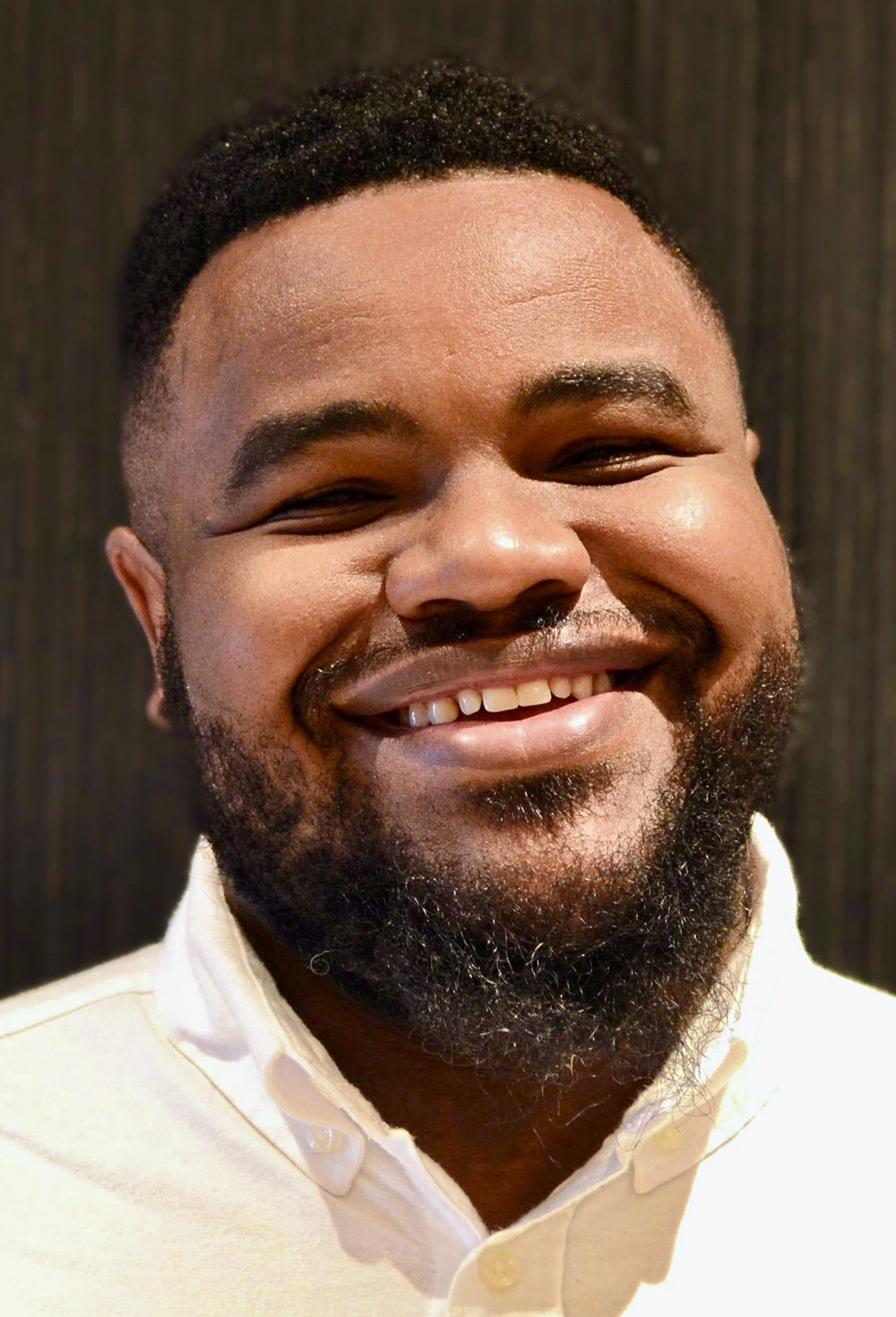
Braxton Wade
“I grew up with a pretty black-and-white view of gender,” Brown told me. “There was male, and there was female, and I just never really even thought about it that much.”
Until he had to.
One of Brown’s children began expressing from an early age that the gender everyone else had assumed for them did not quite fit. Dresses came. Questions came. Eventually different pronouns came. And Brown and his wife did something that sounds simple but, particularly in our current political and religious climate, can be remarkably difficult: They listened to their child. They waited. They learned. They prayed. And somewhere along the way, Brown began asking whether the world — and perhaps God — was a little more expansive than the categories he had been given.
Those questions eventually became No Longer Male and Female: A Biblical Guide for Our Questions about Gender, a book written to help Christians and churches think more faithfully about gender. The title echoes Galatians 3:28, Paul’s declaration that in Christ there is “no longer male and female.”
“It is a book about whether Christians still believe we have something left to learn.”
But after talking with Brown, I’m not convinced this is simply a book about gender. I think it is a book about whether Christians still believe we have something left to learn.
I have been the pastor who was not ready. I remember the first time a young person told me they wanted me to use different pronouns. I was serving in youth ministry and a student and their parents shared that this student had begun transitioning and would be going by a new name, and my immediate response was something along the lines of, “Uh OK.”
But while my mouth said “OK,” my pastoral brain already was running. What are the other students going to say? What are their parents going to say? What happens when we go on the youth trip? Where are they going to sleep? And perhaps more importantly, how do I make sure this child knows the church is not afraid of them and they are beloved?

Will Brown
Eventually, we went on that youth trip. I remember talking with the camp director beforehand and trying to explain that this mattered to me. We needed to figure out how to care for this student. I walked away from that conversation deeply disappointed. Not simply because we disagreed. But rather because we didn’t even know how to have the conversation. Nevertheless, we went, it wasn’t perfect, it was clunky, mistakes were made, but the student left camp knowing they were deeply loved by God and neighbor.
And I wonder how many churches are one teenager, one grandchild, one Sunday school teacher, one deacon, one family away from discovering the exact same thing. We have waited until people become “issues” before deciding to develop a theology capable of loving them. That is part of what Brown wants to interrupt in his book.
“We have waited until people become ‘issues’ before deciding to develop a theology capable of loving them.”
“The hope is that this can start a conversation in the congregation before there is a crisis moment,” he said, “or before there’s an argument or a decision that has to be made.” Before the vote. Before the policy. Before somebody leaves the church. Before somebody decides God never could love them. What if we actually talked to each other first?
Churches love decisions. Baptists love voting. Should we change the bylaws? Should we perform same-sex weddings? Should we ordain LGBTQ Christians? Should we change the bathroom signs? Should we become affirming? Yes or no? Motion. Second. Discussion. Vote. Amen.
But somewhere along the way, we have confused making congregational decisions with making disciples. Those are not the same thing. A church can vote 97% to become welcoming and affirming and still have no idea how to love a transgender teenager. A church can adopt the perfect statement and still have parents sitting silently in a pew wondering whether it is safe to tell anyone about their child. A church can win the vote and completely miss the person.
Brown’s book does not make that argument in so many words, but it is built to resist the same instinct. Each chapter centers on a question, and he does not always answer it. That is intentional. The subtitle describes the book as a biblical guide for our questions — not a biblical answer sheet.
“I’m wary of calling any one series ‘a conversation,’ as if it is a task that we are going to achieve and solve these questions, come up with our position or our answer, and then move on to other things,” he told me. My Lord, isn’t that it. Because that sounds a lot like church. Study it for six weeks. Vote. Put the statement on the website and move on.
But people don’t work like that. Faith doesn’t work like that. And God certainly doesn’t seem to work like that. Sometimes discipleship is not arriving at the answer. Brown reminded me that, “Oftentimes discipleship is learning how to ask and carry the question faithfully.”
“Oftentimes discipleship is learning how to ask and carry the question faithfully.”
Here is where Brown got me. Because I expected a conversation about the gender binary. I did not expect him to expose another binary that those of us who call ourselves progressive Christians have gotten remarkably comfortable with: Us and them. Affirming and nonaffirming. Progressive and conservative. Enlightened and ignorant. Baptists and not that kind of Baptists. The Christians who “get it” and the Christians who don’t. Good guys. Bad guys.
Brown refuses to let us do that.
He grew up in Virginia Baptist churches. He has served Baptist churches. He knows conservative Christians. He knows traditional Christians. He knows people who never have had a serious conversation about gender identity in their lives. And he loves them too.
“My experience of those places has been that they are full of people who are doing the best they can to follow Jesus, to love their neighbors, to do the work of the church in their communities,” he said. Then he said something I underlined about eight times. “I don’t want to buy into this narrative of good guys and bad guys. We make a binary out of our politics and out of our theologies, when the reality is much more complicated.”
Because apparently we can reject one binary while baptizing another. And if I am going to ask someone else to imagine gender with greater complexity, perhaps I should be willing to imagine them with greater complexity too. That does not mean convictions disappear. It does not mean harm doesn’t matter. It certainly does not mean transgender and nonbinary people should be asked to endure abuse while Christians take another decade to decide whether their humanity is up for debate. But it does mean people are more complicated than the theological boxes we put them in.
 Brown pointed me toward Romans 14. There is disagreement in the church — imagine that — and Paul essentially tells them two things. Be convinced of what you believe. And pursue what makes for peace and mutual edification. Both.
“You don’t have to give up your convictions,” Brown emphasized. “And you can work for the good of the whole.” Maybe the church could try that.
Then we got to Scripture. Because eventually every Baptist conversation gets there. What does the Bible say? Well, the Bible does not use the words “nonbinary” or “transgender.” Those categories, as we understand them today, did not exist in the biblical world. But Brown refuses the conclusion that therefore Scripture has nothing to say. He also refuses the opposite conclusion — that the Bible already has neatly answered every question Christians are asking in 2026.
“The Bible doesn’t already answer these questions for us,” he said. “The Bible will help us. And the Spirit of God will lead us. But there’s still work for us to do now.”
There is still work for us to do now. Many faithful Christians hold that Scripture is sufficient, and I would not argue with them. But sufficient is not the same as exhaustive. Scripture never promised to answer every question before we ask it. It promised the Spirit to walk with us while we do. And those of us who call ourselves progressive are not exempt from the temptation to go looking for the verse that ends the discernment early.
But Brown sees something more interesting happening inside Scripture itself. Take eunuchs. No, eunuchs are not the biblical equivalent of transgender or nonbinary people. Brown is careful not to make that claim. But they do complicate gender in the ancient world. And look at the movement. Deuteronomy 23 restricts. Isaiah 56 imagines something wider. Jesus, in Matthew 19, speaks about eunuchs with surprising complexity. And then Acts 8 gives us an Ethiopian eunuch asking Philip a question that still preaches: “What is to prevent me from being baptized?”
What is to prevent me? Maybe that question has been following the church around for 2,000 years. What is to prevent me from belonging? What is to prevent me from being baptized? What is to prevent me from believing this gospel is good news for me too? And perhaps the church’s task is not always to explain why the boundary exists. Sometimes our task is to notice when the Spirit has already crossed it.
Of course, there is a reason churches avoid these conversations. They are hard. People get angry. People threaten to leave. People stop giving. Pastors get emails. Deacons get phone calls. And so we tell ourselves we are “keeping the peace.” But peace for whom?
That is the central question Brown forces churches to confront. “We worry sometimes about whether this conversation will offend people that are in the pews or whether it will cause tension or discomfort among established members of our congregation,” he said.
Fair enough. But then he asks us to consider the people who suffer because we refuse to talk. The people ostracized from faith communities. The people who have been told there is no place for them in God’s story. Or worse, that if there is a place for them, they are the villain.
“The church has done a lot of harm to a lot of real people who are in our communities,” Brown said. “And it might be worth some discomfort and some difficult conversations for the sake of loving our neighbors.”
“Somebody always pays for our silence.”
There it is. Somebody always pays for our silence. And too often the people paying the bill are the people with the least power in the room. The transgender person may not attend your church. But their mother might. Their grandfather might. Their teacher might. And somewhere in your sanctuary this Sunday may be a child quietly wondering whether they can tell you who they are and still be loved. Our silence is already saying something to them.
Toward the end of our conversation, I found myself thinking less about gender and more about parenting. Brown is careful when talking about his children. He wants to tell his story without taking theirs from them. They are still growing. Still discovering. Still becoming. Their stories belong to them.
But he said something about the experience that stopped me: “This was not a tragedy that our family has experienced. This is the gift of who our children are.”
The gift. Not the problem. Not the controversy. Not the issue the church needs to solve. The gift. And maybe this is where Brown’s book became theological for me in a way I wasn’t expecting. Because I kept hearing in his parenting an echo of the God I have spent my life trying to preach. A God who knows us before we know ourselves. A God who is not threatened by our questions. A God who sees the parts of us other people do not understand and somehow keeps saying, mine. Beloved. Image of God.
Maybe faithful Christian parenting looks something like that. Maybe faithful church looks something like that too. Not having every answer. Not pretending every question is easy. Not abandoning conviction. But making enough room for people to encounter God while all of us are still becoming.
I ended where I often end these conversations. I asked Brown where he is finding hope. There is plenty of reason not to have any. Transgender people have become political targets. Churches are fighting. Families are divided. Our public life seems increasingly incapable of nuance, curiosity or grace. But Brown didn’t give me a grand answer.
“I’m finding hope in churches that are continuing to be the church anyway,” he said. Church people who love his children even when they do not completely understand them. People who keep showing up. People who keep trying. People who mess up and keep going.
And maybe that is enough for today. That the Spirit is still moving. That Scripture is still speaking. That the church is still becoming. That our neighbors are still worth knowing. That our children are still gifts. And that none of us has wandered so far outside the categories we inherited that the love of God cannot find us there. Perhaps that is what discipleship has always been. Following Jesus far enough to discover that God’s table was bigger than we thought. And then pulling out another chair.
Braxton Wade is a Clemons Fellow with BNG. He is a graduate of the University of Richmond and Chicago Theological Seminary and lives in Richmond, Va. He is currently a Ph.D. student at Yale Divinity School.
Related:
What should stand in the way of transgender inclusion? | Analysis by Josh Olds
The gift of a transgender child
Medical professionals address myths and misconceptions about transgender kids