

Growing up in West Texas in the home of a silent Marine, I have spent a lifetime wondering about the nature of courage.
My ruminations eventually led me to speak out on behalf of my sons in middle school, forcing a confrontation with a predator I knew was responsible for the suicides of two young men. At that time, the school district superintendent was a deacon in our congregation.
In my home, courage never was discussed. My father was a doer, not a talker or a lecturer. It wasn’t until I began working with veterans in 2014 that the issue resurfaced. Many of these men reflected on what they perceived as their own lack of courage. I listened, but at first I did not fully understand. To me, these veterans — most of whom had seen intense conflict and returned home — were awe-inspiring.

Michael Chancellor
My own experience with physical danger was limited. I was shot at only once, as a teenager, by another youth who had a gun he didn’t need. I was walking in a field with a friend when two cousins fired a .22 caliber rifle in our direction. I heard the bullet whistle past my head. In that moment, it happened too fast to feel fear; I felt only anger as I yelled at them and later told my parents.
Years later, veterans would sit in my office and question their own bravery. It was only after reading two books by E.B. Sledge and his son, Henry Sledge, that I began to understand the doubt and uncertainty inherent in courage.
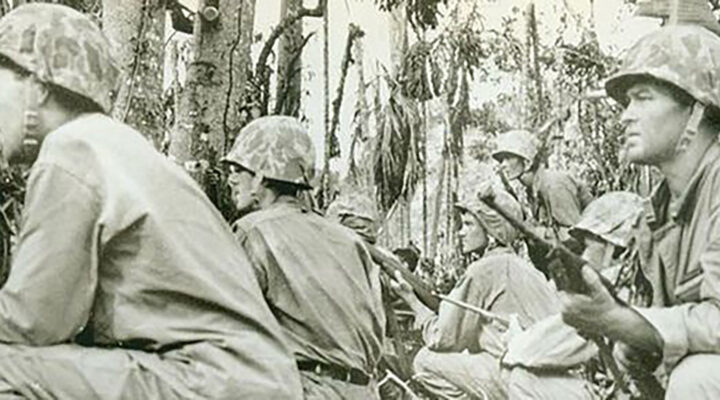
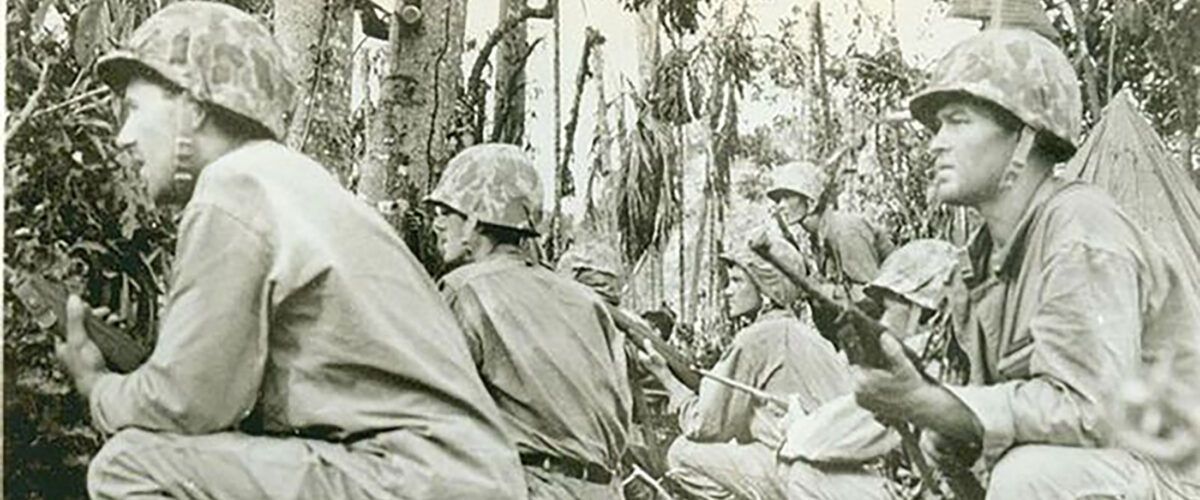
E.B. Sledge enlisted in the Marines and, rather than pursuing Officer Candidate School, chose the infantry. His journey mirrored my father’s service at Peleliu and Okinawa. Those experiences were horrific. Beyond the physical danger, these soldiers faced an agonizing uncertainty about their prospects of survival, struggling to find courage in the heat of the moment.
Sledge, nicknamed “Sledgehammer,” and his regiment did not just battle an entrenched enemy; they fought an inner war against the unknown, wondering if their luck and their resolve would hold out. A man of faith, Sledge carried a military-issued New Testament, using it both for its intended purpose and as a journal to record the daily lives of his comrades. Reading his accounts resonated deeply with the “inner world” of the soldiers who came to me for counseling.
We call them the “Greatest Generation” — ordinary people who stepped up to secure a better world. Yet today, it appears courage is in short supply. Our current leadership seems more like a “ship of fools” taking on water, with no one willing to bail it out.
Brené Brown offers a definition of courage I find essential: “Courage is choosing to show up with your whole heart, even when you cannot control the outcome.”
Two ideas stand out here.
“Courage is never a guarantee of success; it is an act of vulnerability in the face of uncertainty.”
First, there is the act of showing up. I saw this when students across the nation walked out of their schools, without permission, to stand in solidarity with their neighbors against the tyranny of ICE. Perhaps they will be our next “Greatest Generation.” They are certainly off to a good start.
Second, showing up wholeheartedly makes the difference. The shifting sands of courage remind us we never can be sure of the outcome, yet we remain present. I always enjoyed the teenagers in the churches I served because they didn’t understand the phrase, “You can’t do that here.”
I remember a band formed by the youth at my last church. They saw an opportunity to use their musical gifts to enrich worship and recruited their friends to fill the gaps. God spared us from disaster because they never found a drummer, but every other section was represented: woodwinds, brass and even a university violinist. They were magnificent. They demonstrated courage because they acted despite the risk of failure.
Courage is never a guarantee of success; it is an act of vulnerability in the face of uncertainty.
This is what is missing in our society today. My Baptist roots were forged in the fires of dissent; the early Baptists never were a “sanctioned” church. They and their ancestors were people of immense courage who showed up with whole hearts, uncertain of what their faith would cost them.
Today, that courage is tragically rare. Pulpits remain silent about the travesties facing our faith and our legacy as a people blessed with democracy. We are a people of “No Kings” — no authoritarians and no pretenders.
Let us honor the legacy of our parents and the soldiers who risked everything to keep us safe and free by rediscovering the courage to show up.
Michael Chancellor served 33 years as pastor of four Baptist churches in Texas, six years as a mental health manager in a maximum-security Texas prison before becoming a therapist in private practice in Round Rock, Texas. He now lives in Taylor, Texas.