


The White House is often called “The People’s House.” It is supposed to symbolize public service, sacrifice and stewardship. Yet for many Americans, a troubling question now hangs over Washington: Has the presidency become the most profitable business venture in America?
Recent financial disclosures and public reports surrounding President Donald Trump’s second administration have reignited concerns about presidential profiteering on a scale never before witnessed in modern American history. The issue is not whether a president is wealthy before taking office. America has elected wealthy presidents before. The issue is whether occupying the presidency has become a mechanism for expanding personal wealth, family fortunes and private business interests while holding the nation’s highest public office.
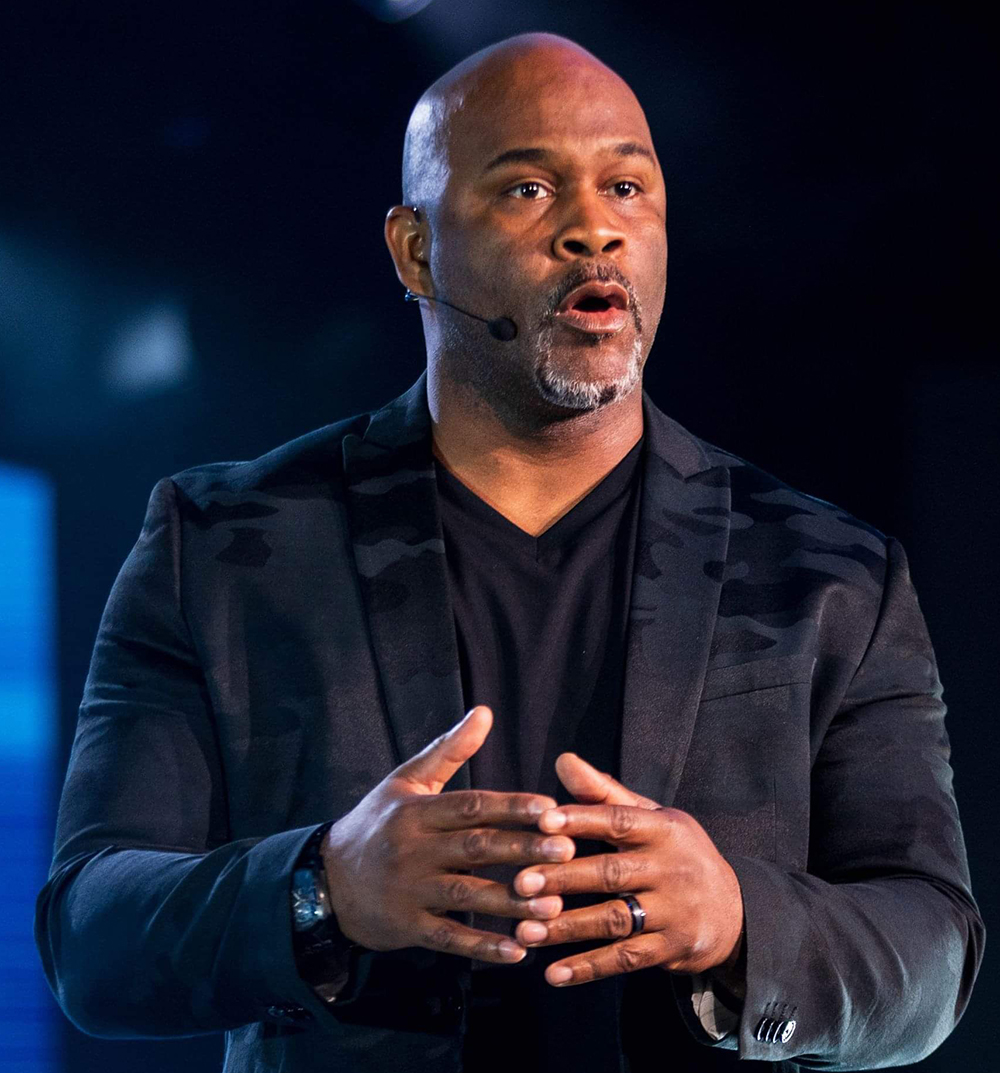
Edmond W. Davis
According to publicly reported financial disclosures, Trump’s 2025 income exceeded $2.2 billion, compared with about $622 million before returning to office. Much of that growth has been linked to cryptocurrency ventures, licensing agreements, resort revenues, royalties, settlements and business activities involving members of the Trump family.
Whether one supports Trump politically is beside the point. Americans should be asking a deeper constitutional and ethical question: Should any president be able to dramatically increase personal wealth while exercising the powers of the presidency?
“Should any president be able to dramatically increase personal wealth while exercising the powers of the presidency?”
History offers a useful comparison.
Presidents such as George Washington, Abraham Lincoln, Theodore Roosevelt and John F. Kennedy entered office with varying degrees of wealth and influence. Some left office richer because of book sales, speaking engagements or investments made after their presidencies. Yet none experienced anything resembling a multi-billion-dollar expansion of wealth while actively serving as president.
That distinction matters.
America’s Founders feared concentrated power. They worried that public office could become a pathway to private enrichment. The Constitution’s Emoluments Clause was designed specifically to prevent foreign governments and outside interests from using gifts, favors or financial incentives to influence federal officials.
Today, many Americans see warning signs.
Reports indicate that cryptocurrency-related ventures connected to Trump-affiliated businesses generated hundreds of millions of dollars. Licensing agreements bearing the Trump name continue producing substantial revenue. Luxury resorts, membership clubs, merchandise, digital assets and international business relationships all have expanded while Trump occupies the Oval Office.
Even more concerning is the perception that government policy and personal profit may be moving in parallel directions.
A democracy cannot function on perception alone, but perception matters.
When citizens begin believing political power is for sale, public trust erodes.
When family members engage in business ventures tied to political access, public trust erodes.
When foreign governments offer extraordinary gifts to a sitting president, public trust erodes.
When Congress remains silent because political loyalty outweighs constitutional accountability, public trust erodes.
The issue is larger than one president. It is about precedent.
If a president can dramatically increase personal wealth while in office without meaningful oversight, future presidents of either party may view the White House not as a public trust but as a wealth-building platform.
That is not an American ideal.
That is the behavior Americans historically criticized in oligarchies, autocracies and what newspapers once called “banana republics.”
One of the most overlooked truths in this debate is that corruption is not always illegal.
Sometimes corruption is perfectly legal. Sometimes it exists in loopholes. Sometimes it exists in disclosure reports. Sometimes it exists because institutions refuse to ask difficult questions.
A second overlooked truth is that presidential profiteering affects ordinary Americans even when no laws are technically broken.
Every moment spent defending private financial interests is a moment not spent solving inflation, housing costs, health care affordability, educational inequality, workforce development, infrastructure needs or national security challenges.
“Americans deserve leaders whose primary concern is governing, not monetizing influence.”
Americans deserve leaders whose primary concern is governing, not monetizing influence.
Another troubling irony emerged when Trump defended accepting a luxury aircraft reportedly valued at $400 million from a foreign government. Trump suggested the United States would not spend the money necessary to build such an aircraft.
That statement raises uncomfortable questions. America built the interstate highway system. America built the Hoover Dam. America put human beings on the moon. America leads the world in aerospace innovation. To suggest the United States cannot build what another nation can provide undermines the very spirit of American industrial achievement.
The deeper issue, however, is not engineering. It is dependence. The presidency never should appear dependent on foreign generosity. The White House should represent American independence, not international gift-giving.
Congress also deserves scrutiny.
Many lawmakers who aggressively investigated alleged influence-peddling involving previous administrations have shown little appetite for investigating similar concerns today. Accountability cannot be partisan. Either ethical standards apply to everyone, or they apply to no one.
“Accountability cannot be partisan.”
Theodore Roosevelt once warned, “No man who is corrupt, no man who condones corruption in others, can possibly do his duty by the community.” Those words remain relevant.
The presidency never was intended to become a personal brand-management enterprise. It never was intended to become a family business. It never was intended to become a financial accelerator.
It was intended to be public service.
Whether history ultimately judges Donald Trump as a transformational leader or a symbol of unprecedented presidential profiteering remains to be seen. But one thing already is clear: The American people deserve answers.
When citizens begin asking whether the White House has become a crime scene, the greatest damage may not be financial. It may be the loss of faith in the very institution that was designed to serve them.
Edmond W. Davis is a social historian, journalist, professor and documentary host. He is founder of the National HBCU Black Wall Street Career Fest. A native of Philadelphia, he lives with his wife and son in the Little Rock, Ark., area. Davis is committed to cultural empowerment and educational equity through storytelling and civic engagement.