


Tulsa, Okla. — once infamous for the 1921 Greenwood Massacre — is now taking bold steps toward something America has delayed far too long: reparations for Black Americans. And that’s a good thing. A very good thing.
The announcement of a $105 million reparations package signals Tulsa is moving beyond commemorations and into concrete action. As journalist DeNeen L. Brown reported, Tulsa Mayor Monroe Nichols declared: “We have worked to recognize and remember, but now it’s time to restore.”
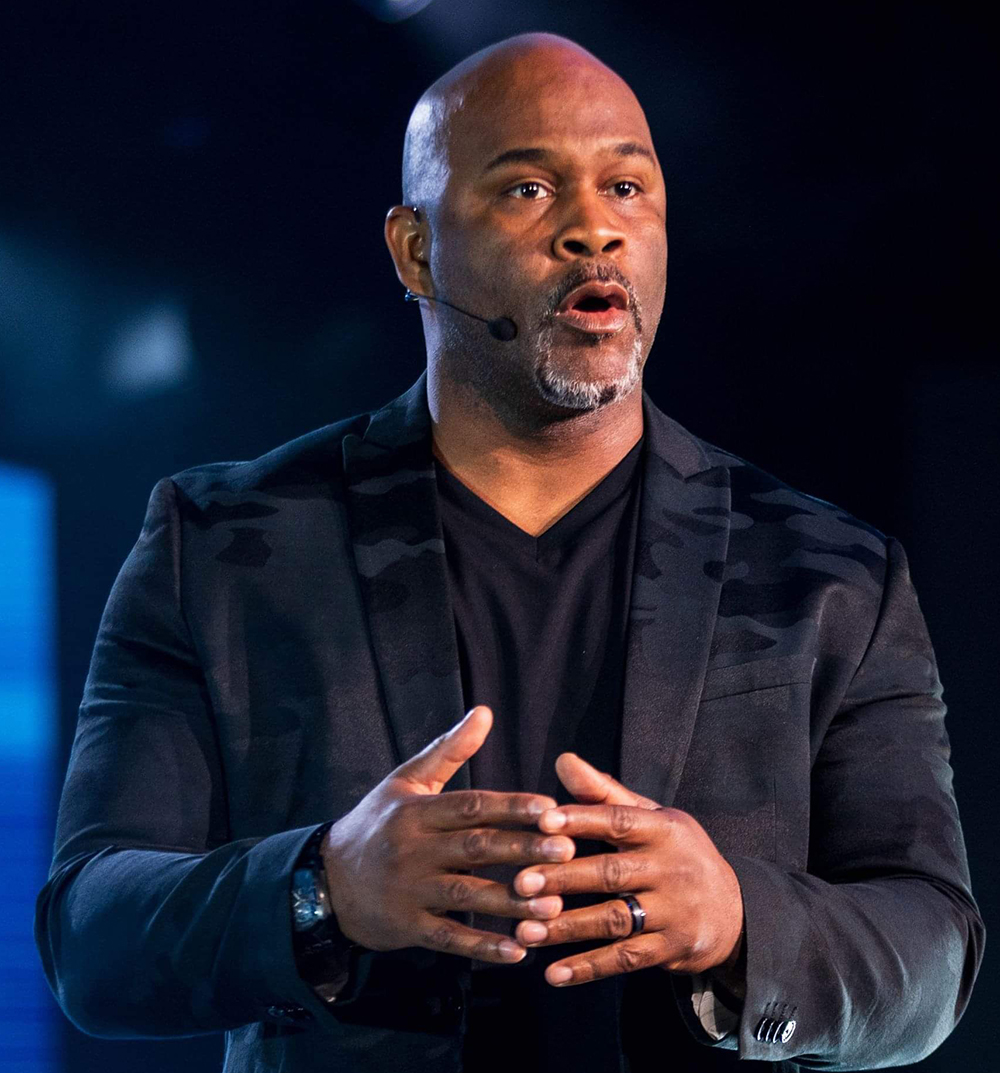
Edmond W. Davis
That moment, 104 years in the making, marks more than a gesture — it’s a blueprint. The plan includes $24 million for housing and homeownership, $60 million for historical preservation and $21 million for scholarships, grants and excavation of mass graves where victims of the massacre still lie.
This is what redress looks like when a community demands action and leadership listens. For those willing to harvest from the soil of truth, what’s being planted in Tulsa today could yield justice for generations.
“This is what redress looks like when a community demands action and leadership listens.”
But what good is acknowledgment without repair?
Decades of delay, displacement, disregard
Tulsa is not alone. It is the most well-documented case of Black economic annihilation but by no means the only one. From Elaine, Ark., to Rosewood, Fla., nearly 100 Black Wall Street-style communities thrived between 1880 and 1950. These communities were built on Black autonomy, innovation and mutual aid.
But across America, these enclaves were systematically dismantled:
- Oscarville, Ga: Flooded and now lies beneath Lake Lanier.
- Seneca Village, N.Y.: Bulldozed to make room for Central Park.
- Vanport, Ore.: Wiped out by a suspicious levee break in 1948.
- Freedmen’s Towns across Texas, North Carolina and Alabama: Legally yet immorally erased by building highways, flooded for reservoirs, and displacement with pennies on the dollar.
These were not natural disasters or progress — they were acts of political and economic warfare against self-reliant Black communities. Even now, systemic injustice thrives in property devaluation, redlining, underfunded schools, incarceration rates and the erasure of Black history in classrooms, intentionally.
The silence around these events was strategic. The destruction of these towns wasn’t just about land — it was about eliminating what Black excellence and economic independence looked like. Let’s be real: America spends billions annually abroad — more than $300 million per day was invested in Afghanistan from 2001 to 2021. Imagine if just a fraction of that was invested in descendants of those who built this country. That’s not charity — that’s justice.
“The silence around these events was strategic.”
The good future: A national blueprint for reparations
So, what does real repair look like?
- Use Tulsa as the model. Tulsa’s reparations plan is a beginning, not the end. It must be transparent, replicable and rooted in community voices. It cannot be performative; it must be transformative.
- Forgive Black debt. Clear student loans and predatory business loans for Black borrowers. Debt keeps people enslaved in a system designed to limit upward mobility. Economic agency is liberation.
- Tuition-free access to all HBCUs. America subsidizes allies like Israel, Jordan and Egypt every year. Surely it can fund the institutions that have cultivated Black talent and leadership for generations.
- Give land back. One acre per Black descendant family. Land equals wealth. In 1865, Gen. Sherman promised 40 acres and a mule. That promise was broken. Time to fulfill it.
- Create a national registry of lost Black towns. A federally supported platform to document, preserve and potentially restore historic Black communities. Not just for memorials — but for education, tourism and economic restoration.
Why now? Why not sooner?
Why has this not happened already? Because truth makes people uncomfortable.
The Department of Justice’s 2024 report confirms what many survivors knew all along — the Tulsa massacre wasn’t a spontaneous riot. It was a coordinated military-style attack. Turpentine bombs were dropped from airplanes. More than 1,100 homes and businesses were destroyed. More than 300 people died. No one was prosecuted. Insurance companies refused to pay claims. No restitution was ever offered — until now.
Descendants like Kristi Williams, a longtime reparations advocate, told the Washington Post: “Repair without investment is just rhetoric.”
She’s absolutely right. Reparations require bold action, not symbolic gestures.
We also must reflect on what happened elsewhere — like Elaine, Ark., where more than 200 Black farmers were slaughtered in 1919 based on false rumors. These weren’t isolated atrocities; they were systematic attempts to erase Black progress.
A ripple effect worth supporting
This isn’t about guilt — it’s about truth.
Reparations are not handouts. They are overdue payments for stolen wealth, unpaid labor, suppressed opportunity. And yes, every American should support them — not out of pity, but out of patriotism. Correcting historical wrongs is not radical. It’s reasonable.
If America has the resolve to spend billions on wars, it can find the courage to invest in peace at home.
Tulsa’s $105 million commitment is not perfect. But it is a spark. Now, it’s time to build the fire. Reparations are no longer a theory. They’re a moral obligation.
Greenwood never was just a Tulsa story. It was, and always has been, an American story. And now that Tulsa is finally doing the right thing, America is on deck.
Edmond W. Davis is a historian, speaker and founder of the National HBCU Black Wall Street Career Fest, held annually in Little Rock, Ark. He is one of the nation’s leading scholars on Black Wall Street communities and is committed to truth-telling, community restoration and building generational wealth in the Black community.
Related articles:
Remembering the Tulsa race massacre of 1921 | Opinion by Wendell Griffen
Tulsa Race Massacre was more planned than previously reported
Juneteenth should remind us of all the things we don’t know | Opinion by Mark Wingfield
I’m weary of hearing “I’m sorry” from white people | James Ellis III