


“We weren’t refugees. We were Americans. But to the world, we were treated like we didn’t belong.”
— Ricky Fountain, Katrina survivor now living in Arkansas
Twenty years ago today, Hurricane Katrina did more than flood a city; it revealed America’s racial and class fault lines in ways the world could not ignore.
On Aug. 29, 2005, levees broke, waters surged and more than 1,800 lives were lost, while more than 1 million U.S. citizens were displaced — many called “refugees” in their own nation.
For survivors like Angela Johnson, the neglect felt deliberate. “What hurt more was feeling like nobody cared we were drowning.”
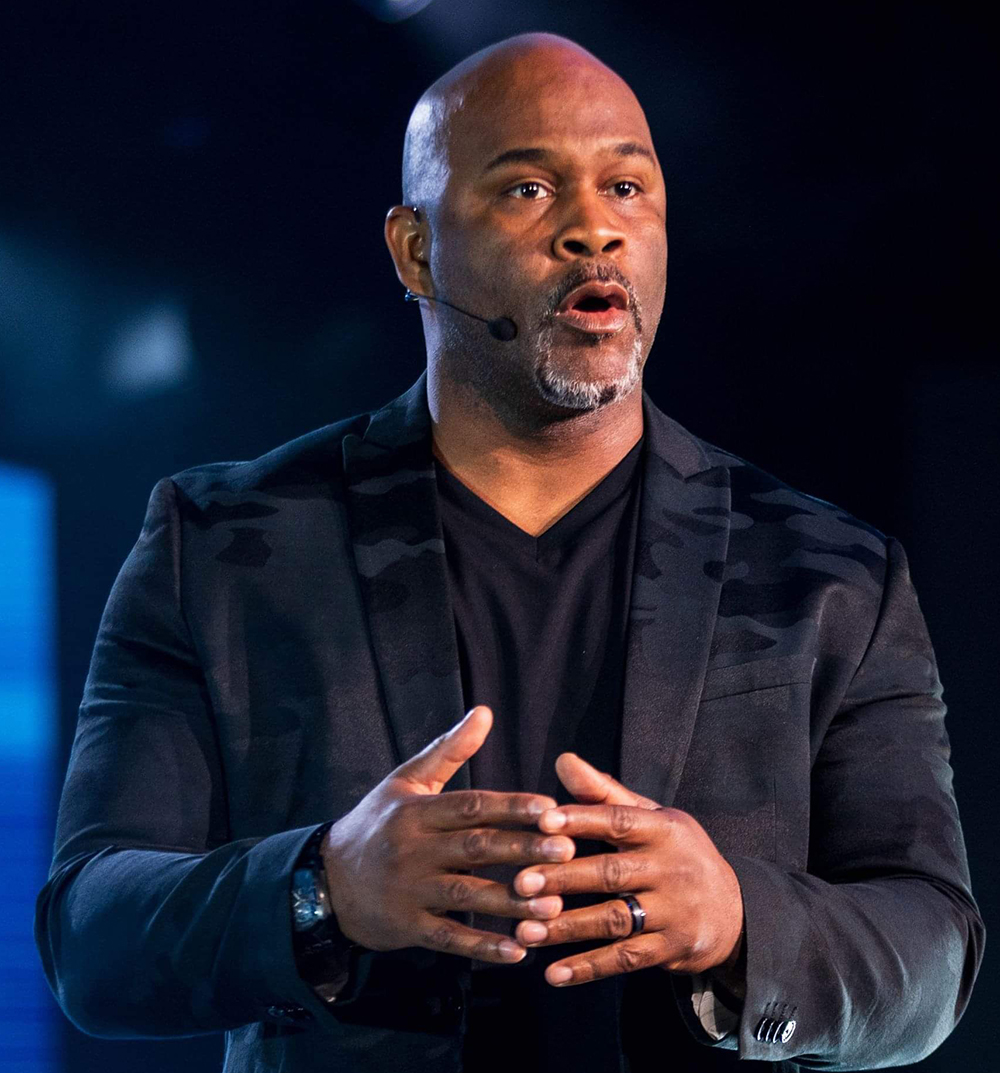
Edmond W. Davis
Families who tried to walk to safety across the Cresent City Connection bridge were met with armed officers in Gretna, blocked from escaping.
At the same time, police confiscated lawfully owned firearms from citizens — an unconstitutional act later outlawed by Congress through the Disaster Recovery Personal Protection Act of 2006.
The media also played a role. Black residents carrying food through floodwaters were labeled “looters and refugees,” while white residents were called “survivors.” This racialized framing cast poverty and Blackness as criminal, even in catastrophe.
“We were herded like cattle, treated like second-class citizens,” recalls another Arkansas transplant, who survived weeks in the Superdome. “They called us refugees. We were not in a foreign land. We were home.”

Flooded neigborhoods can be seen as the Coast Guard conducts initial Hurricane Katrina damage assessment overflights August 29, 2005, in New Orleans. (Photo by Kyle Niemi/US Coast Guard via Getty Images)
What you didn’t know
Conditions inside the Superdome and New Orleans Convention Center were far worse than televised images suggested. Heat, filth and sanitation collapse turned the Dome into what survivors called a “human cauldron.” Evacuees reported suicides, elderly residents dying of heat stroke in their wheelchairs and desperate parents pouring bottled water over children’s heads to fight suffocating heat. Allegations circulated of National Guard checkpoints turning evacuees back with guns and soldiers demanding sexual favors in exchange for food or medicine.
Meanwhile, reports surfaced that foreign nationals were quietly evacuated by trucks and buses while poor Black Americans were left behind. Officials further stigmatized survivors by exaggerating lurid claims of mass rapes and murders — rumors later proved false.
These myths justified a militarized posture toward evacuees, obscuring the truth: Americans, mostly poor and Black, were abandoned in their own homeland.
Many Katrina survivors reported hearing explosions during the levee breaches, believing they were part of a deliberate act to cause flooding. In Spike Lee’s documentary, two residents from the 9th Ward recall hearing explosions and rumors of intentional levee destruction. Additionally, social media has seen numerous claims from individuals who were present during the disaster, asserting the levees were blown intentionally to spare the wealthier white established businesses and properties. These accounts contribute to the ongoing debate about the events surrounding Hurricane Katrina.

The Rush family, who lost their roof of their home, walk down Gulfport Blvd. past a Baptist Church destroyed in the hurricane looking for water and ice. (Photo by Matt Stone/MediaNews Group/Boston Herald via Getty Images)
Is Bush to blame?
According to FactCheck.org, President George W. Bush did indeed slash funding for levee projects around New Orleans in the years before Katrina — redirecting funds in part toward the Iraq war. Local officials had warned for years that flood protection funding was inadequate, with the Times-Picayune reporting repeated shortfalls and project delays. The U.S. Army Corps of Engineers confirmed several contracts were delayed for lack of funds.
But whether those cuts directly caused the catastrophic flooding remains debated. The Corps maintains the levees were designed only for a Category 3 hurricane, while Katrina reached Category 4 strength at landfall. Critics argue that, while not a sole cause, years of underfunding and political neglect left New Orleans dangerously exposed when the storm struck.
Resilience

Hurricane evacuees wait in line to enter the Super Dome on August 28, 2005, in downtown New Orleans. The Dome was converted in shelter for people with special needs and for those who had not evacuated the city as Hurricane Katrina approached Louisiana as category five storm. (Photo by Marko Georgiev/Getty Images)
And yet, in the darkest conditions, resilience rose. “I poured bottles of water over my head to fight the heat,” one diabetic survivor recalled of her Superdome days. “The military gave my son a case of water and a few rations. That’s all we had. Somehow, we made it.”
Evacuees built micro-communities inside the Dome, sharing food, caring for elders and comforting children. Churches across the South opened their doors. Volunteers from Arkansas to Texas drove buses, picked up strangers and offered their homes. These acts of mutual aid — ordinary people saving one another — proved stronger than the state’s failures.
Resilience was not just survival; it was testimony. Survivors like Ricky Fountain still speak of the explosion they heard as the levees failed. “People say they busted from the water. No. They exploded. And the truth still hasn’t been told.”
Recovery
Katrina’s aftermath forced America to change how it prepares for disaster. The storm exposed weaknesses in FEMA, the Red Cross and the patchwork of federal and state responses. In its wake, Congress and agencies passed reforms that reshaped disaster management across the nation.
- Post-Katrina Emergency Management Reform Acts (2006) — Strengthened FEMA, clarified federal-state-local coordination, improved planning for vulnerable populations
- Disaster Recovery Personal Protection Act (2006) — Prohibited firearm confiscations during emergencies
- Stafford Act Amendments — Expanded federal evacuation and housing support
- Levee Safety Program and U.S. Army Corps Reforms — Raised flood protection standards nationwide
- National Response Framework (2008, updated 2016) — Defined roles of federal, state and local disaster response
- Red Cross federal integration — Formalized role in sheltering and aid distribution
- Special-needs registries — Created to identify and safeguard elderly, disabled and medically dependent populations
These reforms have since influenced disaster responses from Superstorm Sandy (2012) to Hurricane Harvey (2017), making U.S. cities better prepared.
Yet recovery is not only policy, it’s memory. Katrina’s survivors, many permanently displaced, still carry scars.
“The bus I caught said GLORYLAND, North Little Rock,” said one former New Orleanian. “I left my home, my history, my family graves. I’ve never been back. That was my recovery — starting life over.”
A reckoning
Katrina was not simply a hurricane; it was a reckoning. It revealed how deeply race and class determine survival in America. It birthed resilience among those abandoned. And it forced lawmakers to change systems that had failed.
But “recovery” must be measured not just in stronger levees but in stronger commitments to justice. Twenty years later, the scars remain. The smell of death still lingers in neighborhoods. Survivors still recall betrayal.
The question Katrina leaves us is not just whether we are safer, but whether we are fairer. Have we learned to protect every American equally — or still decide who gets saved first? These are sobering questions even in the face of what FEMA officials are saying according to The New York Times, that Donald Trump is gutting the disaster response.
Next year Katrina will be old enough to drink at 21 years old. The question now, and in 2026 will be are we buying drinks or closing the bar down? America has decided already: It’s hurricane season.
Edmond W. Davis is a social historian, speaker, collegiate professor, international journalist and former director of the Derek Olivier Research Institute. He is an expert on various historical and emotional intelligence topics. He’s globally known for his work as a researcher regarding the history of the Tuskegee Airmen and Airwomen. He’s founder and of America’s first and only National HBCU Black Wall Street Career Fest.
Related articles:
10 years later, one Baptist group reflects on Katrina and its aftermath
Casinos, churches alike decimated as Katrina pounds Mississippi
In the wake of Hurricane Katrina
Series: Katrina, one year later