


This year’s midterm elections highlight a debate not between Christians and non-Christians so much as a debate between Christians who read the same Bible, pray to the same God and arrive at different conclusions about what their faith requires in public life.
The conflict is theological as well as political. And it raises a question beyond any one campaign. Who gets to define what Christianity means in American public life?
Perhaps one of the most revealing ways to examine these candidacies is through a command near the center of Christian teaching: “Love your neighbor as yourself.”
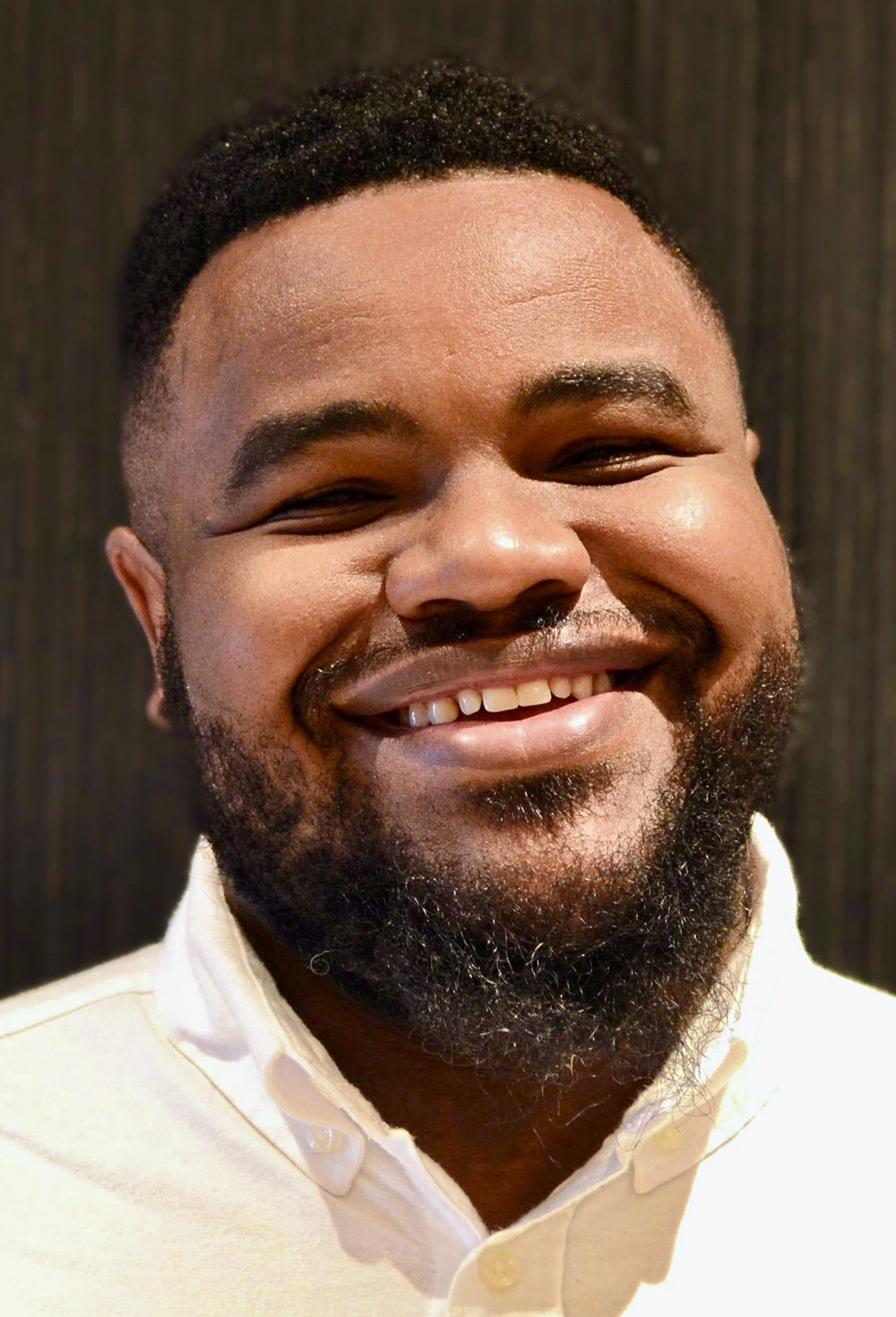
Braxton Wade
It is familiar enough to appear on church signs and Sunday school walls. Yet its implications have challenged religious communities for centuries.
In Luke’s Gospel, a lawyer asks Jesus what he must do to inherit eternal life. The conversation turns toward loving God and loving one’s neighbor.
Then comes the question that has echoed through Christian history: “And who is my neighbor?” Jesus responds with a story.
A man has been beaten, robbed and left beside the road. Religious figures pass without offering assistance. But a Samaritan, someone whose identity placed him outside the expected religious and cultural boundaries of the story, stops. He sees the wounded man. He tends to his injuries. He provides transportation, shelter and resources for recovery.
Jesus does not conclude by offering a narrower definition of who deserves compassion. He asks which person acted as a neighbor. The distinction matters. The story moves the conversation away from determining who qualifies for care and toward the responsibility of extending it.
“The story moves the conversation away from determining who qualifies for care and toward the responsibility of extending it.”
For Lindsay James, a Presbyterian minister running for Congress from Iowa, the Good Samaritan has become part of how she explains the relationship between Christian faith and public policy.
In a September NPR report, James referenced Martin Luther King Jr.’s interpretation of the parable, emphasizing that responding to suffering requires more than helping individual people after they have been harmed. It also requires examining the conditions that repeatedly place people in harm’s way.
King’s interpretation asks readers to consider not only the injured traveler but the dangerous road itself.

Lindsay James
For James, that understanding connects her experience as a chaplain with her concerns about health care and the responsibilities of government. But the relationship between theology and legislation is rarely straightforward. Christians across the political spectrum may affirm the command to love their neighbors while disagreeing about how that obligation should be expressed through taxation, government spending, immigration enforcement or health care.
A theological claim, however sincerely held, does not eliminate the need to examine the consequences of public policy.
Still, the underlying moral question remains. What does it mean to love one’s neighbor when that neighbor does not worship in the same sanctuary? When that neighbor speaks another language? When that neighbor practices another religion, or no religion at all? When that neighbor disagrees with nearly everything a candidate believes?
These are not merely questions for pastors. They are questions about representative government. A minister may serve a congregation united by shared religious commitments. An elected official serves a constituency whose members may have little in common beyond the boundaries of a district or state.
That distinction matters for the eight clergy currently running for Congress in the 2026 midterms.
The question is not simply whether a candidate can explain a policy through Scripture. It is how that candidate understands the responsibilities of public office toward people who do not accept the authority of that Scripture.
“Both roles carry responsibility, but they exercise different kinds of authority.”
The pulpit and the legislative chamber are not the same place.
A pastor may stand before a congregation and challenge an injustice without negotiating the votes required to change a law. An elected official must confront competing interests, constitutional limitations, public budgets and the practical consequences of government decisions.
A preacher may call people toward a moral vision. A legislator must determine how that vision can be translated into policy while remaining accountable to a diverse public.
Both roles carry responsibility, but they exercise different kinds of authority.
Some religious leaders have understood their calling as requiring independence from political office, believing the church’s prophetic responsibility is best exercised outside institutions it may need to challenge. Others have concluded that entering those institutions offers an opportunity to address conditions they have encountered through pastoral ministry.

Frederick Haynes
In Texas, Pastor Frederick Haynes of Friendship-West Baptist Church speaks directly to that tension through his prophetic pulpit and political podium. He’s running for U.S. Congress to take the seat currently occupied by one of his congregants, Jasmine Crockett.
Can someone accustomed to preaching against injustice retain that moral independence while participating in the negotiations of government? Can the habits of listening, pastoral care and community leadership contribute to political institutions often characterized by division? And what happens when political loyalty conflicts with the theological commitments that first shaped a minister’s sense of calling?
Across the country, pastors, former pastors and seminarians are seeking elected office. They are stepping out from behind pulpits and onto campaign stages, trading Sunday sermons for stump speeches and asking voters to consider not only their political platforms but also the religious convictions shaping their understanding of public service.
Their candidacies raise an old question in an important political moment: What happens when those called to proclaim good news decide they must also participate in the political institutions that shape people’s lives?
Clergy seeking political office is hardly new. But the visibility of this year’s progressive candidates is significant in a political environment where conservative evangelical Christianity has dominated national conversations about religion, Christianity and public policy.
James and Haynes and others seek to exercise a different kind of responsibility. Their campaigns reflect an American Christianity that is neither politically uniform nor easily contained within familiar partisan categories. They also expose enduring tensions between religious conviction, democratic pluralism and political power.
Nearly 2,000 years after the earliest Christians proclaimed euangelion in the shadow of Rome, the language of good news continues to intersect with the language of government. But the distance between proclaiming a kingdom and governing a democracy remains significant.
Who is my neighbor? Not simply the neighbor who looks like me, believes like me, worships like me or votes like me. But the neighbor whose life will be shaped by decisions made in the halls of government. The neighbor who may never enter my church. The neighbor who may never share my faith. The neighbor who may never vote for me.
For clergy seeking public office, the answer to that question may reveal as much about their understanding of the gospel as anything they have ever preached.
Braxton Wade is a Clemons Fellow with BNG. He is a graduate of the University of Richmond and Chicago Theological Seminary and lives in Richmond, Va. He is currently a Ph.D. student at Yale Divinity School.
Related:
In a year of faith-talking Democrats, a Muslim candidate speaks up
Renewed debate on churches as polling places
A wicked rally in Kansas | Opinion by Brian Kaylor