


Forty years ago, a reactor exploded at the Chernobyl nuclear power plant. The consequences of this largest technological disaster in history — environmental contamination, ecological catastrophe and socio-economic losses — will continue to affect us for many decades.
But the most terrible impact of this vicious disaster was not on nature or the economy, but on human beings and society.
I remember how, in the first months after the accident, even people far from the church were whispering about the “Star Wormwood” from the Apocalypse of John the Theologian. At that time, most people did not have a Bible at hand to check the context, but the sense was stronger than the text itself: What had happened seemed to go beyond ordinary history.
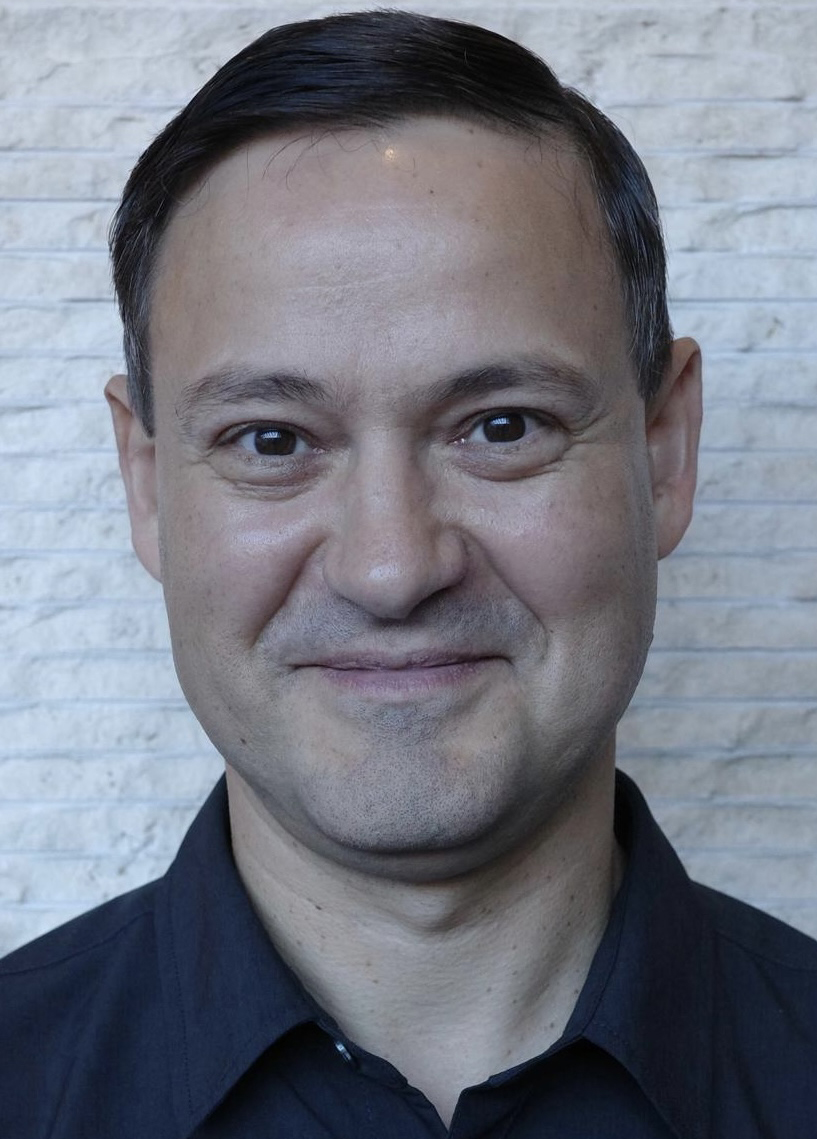
Mykhailo Cherenkov
People instinctively tried to interpret the catastrophe through the language of prophecy. The coincidence between the name of the city — Chernobyl (wormwood, chernobylnik) — and the biblical image of bitter waters felt disturbingly symbolic.
Revelation 8:10-11 says: “The third angel sounded his trumpet, and a great star, blazing like a torch, fell from the sky on a third of the rivers and on the springs of water; the name of the star is Wormwood. A third of the waters turned bitter, and many people died from the waters that had become bitter.”
Ordinary people felt something essential: Something more than an accident was taking place in history. The biblical language helped express the fear of a moral and historical dimension of catastrophe.
At the same time, another intuition emerged: God is opposed to lies, to pride and to systems that live by the illusion of control.
The Soviet authorities responded in their usual way — with deception, concealment and attempts to maintain the image that “everything is under control.” But control already had been lost.
Chernobyl became a prelude to the collapse of the USSR. Against its backdrop, other tragedies of the late Soviet period — the war in Afghanistan, the Armenian earthquake, economic crisis and ethnic conflicts — began to appear as links in a single chain.
Gradually, the topic of Chernobyl faded from public attention. The victims died forgotten, and new generations preferred not to look in that direction. But the bitterness remained.
Chernobyl became a background for understanding all other events, a symbol of judgment, curse and devastation, like “wormwood” in the Bible. I have carried this theme with me since childhood.
“God was there, but people were no longer.”
I remember miners who were sent to deal with the consequences of the disaster. Many returned changed forever, internally broken. One neighbor would insist: “I died there already; I’m not afraid of anything anymore!”
In 2006, I visited the Chernobyl exclusion zone. The most powerful impression was the silence. Not just the absence of people, but the absence of life. Even birds seemed rare.
In one of the villages, I entered an Orthodox church that had been preserved. Services were still occasionally held there. In that place of silence, I suddenly felt the need to pray, to break the grave silence with words of confession and hope. God was there, but people were no longer.
I kept thinking about what it is about Chernobyl that does not let go of my consciousness. Perhaps it is the endless lie that everything is fine; that everything is under control; that the worst is behind us.
But Chernobyl is not only the past. It is also a warning.
It is naïve to think the nuclear destruction was merely a tragic coincidence. The Soviet system already was structurally collapsing, and a chain of events unfolded: Chernobyl in 1986, the Armenian earthquake in 1988, the war in Afghanistan that ended in 1989, the economic decline of the late 1980s, and systemic breakdown. The USSR itself collapsed in 1991.
But trying to “bury” Chernobyl together with the USSR is another illusion. In 2022, the Russian army used the Chernobyl area in Ukraine as part of its advance toward Kyiv, and the Chernobyl nuclear plant was seized. The symbol returned, now in an even darker form.
The history of Chernobyl continues because the logic of human deception and violence continues. The only way to break this cycle is through truth and repentance.
In her book Chernobyl Prayer, Nobel Prize laureate Svetlana Alexievich records the testimony of survivors, many of whom were shocked not only by the state’s inefficiency but by its constant lying: “There were so much lies connected with Chernobyl that only 1941 could compare … under Stalin.”
Another point is even more disturbing: “The mechanism of evil will continue to work even in the apocalypse. … People will still gossip, flatter their superiors and protect their television sets and fur coats. Even at the end of the world, man remains the same.”
“For many, truth remains more frightening than Chernobyl itself.”
It is not surprising that in her native Belarus, Svetlana Alexievich was treated as an enemy of the state. For many, truth remains more frightening than Chernobyl itself. But truth cannot be hidden forever.
As one character in the HBO series Chernobyl says, “Every lie we tell incurs a debt to the truth. Sooner or later, that debt will be paid.”
Chernobyl was not only a sign of the collapse of the USSR; it remains a sign of the fragility of any civilization built on deception and violence. Let us pray: God, protect America from self-deception and overconfidence that could lead to the decline of this great nation, founded upon Judeo-Christian values.
The star called Wormwood reminds us of what has been — and what may come again — on an even larger scale. The frenetic pace toward apocalypse continues. It’s our time to pray and act.
“When you see these things taking place, you know that he is near, at the very gates.” — Mark 13:29
Mykhailo Cherenkov serves as pastor of Ukrainian Gathering Baptist Church in Vancouver, Wash.