

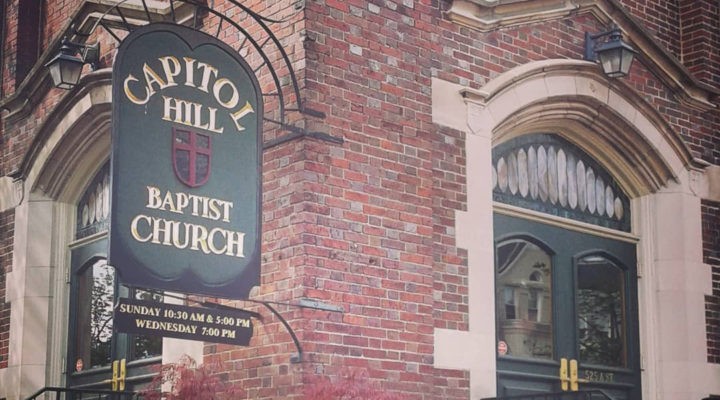
While national attention has been focused on the West Coast battle between pastor John MacArthur and Los Angeles County over public health restrictions, a new challenge has emerged on the East Coast by another prominent Calvinist pastor, Mark Dever. Only this time, the stated reasons for the challenge are more explicitly theological.
Nationwide, houses of worship have fought public health restrictions on large indoor gatherings of people meant to slow the spread of COVID-19, although the vast majority of Christian churches have abided by local regulations.

Mark Dever
Now, Capitol Hill Baptist Church in Washington D.C., has filed a lawsuit against the District’s public health restrictions limiting indoor gatherings to 100 people or fewer. Rather than focusing their argument almost exclusively in legal terms, as MacArthur and his Grace Community Church have done, D.C. pastor Mark Dever says the restrictions are an affront to his congregation’s theological beliefs.
The D.C. situation
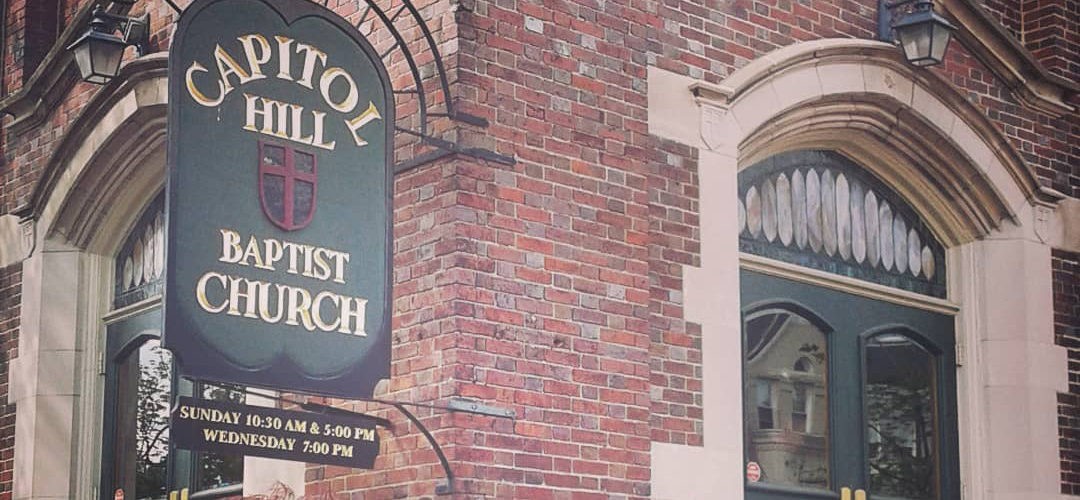
Capitol Hill Baptist Church is a Southern Baptist congregation situated only a few blocks from the United States Capitol in Washington, D.C. The church has a membership of around 1,000. Dever has served as pastor there since 1994 and is the president of 9Marks, a parachurch organization that advocates for particular “biblical church” practices. He is a prominent teacher of Calvinistic theology and a local church ecclesiology that requires elder-led governance.
On Sept. 22, Capitol Hill Baptist Church filed suit against the District of Columbia, grounding its petition on the essential nature of in-person gatherings for Christian communities. In a statement on the congregation’s website, Congregational Elder Justin Sok says the church has met in person every Sunday since the congregation’s founding in 1878 — barring “three weeks during the Spanish Flu in 1918.” Sok notes that the congregation has applied for “multiple waivers” to be able to meet in person, but “District officials refuse to provide CHBC with a waiver beyond 100 persons as part of mass gatherings.”
The church’s suit against the district cites its right to freedom of speech and free exercise of religion under the First Amendment. It also cites the Religious Freedom Restoration Act, legislation passed by Congress in 1993 that says government may only restrict the free exercise of religion when it has a compelling governmental interest to do so, and it must take the least restrictive means of furthering that compelling governmental interest.
Both churches claim that if outdoor protests and rallies in excess of 100 people are allowed, so too should religious gatherings of more than 100 people.
One point of overlap with the arguments of MacArthur and Grace Community Church claims that indoor church gatherings are being treated differently than the massive outdoor protests seen across the nation this summer. Both churches claim that if outdoor protests and rallies in excess of 100 people are allowed, so too should religious gatherings of more than 100 people.
A particular theology and a workaround
In a religious landscape that had increasingly gone to multi-site, livestreaming and video-based delivery systems even before the pandemic, Capitol Hill Baptist Church stood out for its stance against anything other than in-person worship.
“Gathering as one church in a single worship service is an essential component” of the church’s exercise of religion, the D.C. lawsuit says. To that end, Dever’s church has not used livestreaming or video-based services during the pandemic.
From mid-March to early June, the church cancelled worship services. As the ban on large gatherings continued into the summer months, however, Dever’s congregation began to circumvent the D.C. restrictions by meeting across the Potomac River in Virginia, where restrictions continue to be less stringent. The church has been meeting outdoors ever since.
Dever reports that congregants have practiced social distancing and used masks out of “an abundance of caution.” He acknowledged that having the option to meet in nearby Virginia has made him more compliant with the D.C. restrictions.
Meeting in the parking lot of a Baptist congregation in Virginia on Sunday afternoons, Capitol Hill Baptist’s website encourages members to print out or bring an electronic bulletin with them. The church website also provides members a two-page logistical guide explaining where the congregation will be meeting, how to get there and safety protocols the congregation will abide by.
As summer gives way to fall and winter, however, the viability of outdoor worship becomes much more difficult in this region of the country. The church’s lawsuit likely arises as a preemptive push to be able to hold indoor worship services through the winter months when it would be too cold to hold outdoor services.
The case for in-person worship
The church’s website currently includes a video of Dever explaining the importance of Christian gatherings. He lays out his theological and historical justifications for why it is imperative for Christians to gather in person. The video implicitly seeks to explain why prohibiting large in-person worship services uniquely infringes upon his congregation’s ability to practice their Christian faith.
The video implicitly seeks to explain why prohibiting large in-person worship services uniquely infringes upon his congregation’s ability to practice their Christian faith.
In the five-minute video, Dever argues that Christianity is a unique religious tradition because of its emphasis on gathering. Drawing upon the book of Acts, he articulates a vision of the early church in which Christians consistently gathered with one another at the beginning of the week. These gatherings, he explains, provided opportunities to pray, hear the word of God read aloud, sing and partake of the Lord’s Supper. He takes issue with Christian monastic practices and the belief that someone can practice Christianity in isolation. These forms of Christianity, he suggests, are not biblical.
“Ultimately,” Dever concludes, “the church is not something we want to be in as a building, it’s a people we want to be with.”
Analysis of Dever’s position
For many Christians, this is a well-worn phrase, and for good reason. It encourages Christians to focus less on the material and more on the personal. In the process, however, such a phrase may encourage passivity on the part of the church. By focusing solely on the people, we lose sight of the reality that the church also is a mission, an act, a work.
“Dever not only neglects 2,000 years of history, but he also neglects the realities of the biblical text.”
By trying to draw a parallel from the present day to the church described in the biblical text, Dever not only neglects 2,000 years of history, but he also neglects the realities of the biblical text. The New Testament routinely mentions how early Christians met in homes. It records many congregations meeting in the homes of Aquila and Priscilla (1 Corinthians 16:19), Philemon (Philemon 1:1-2), and Nympha (Colossians 4:15). Such gatherings were far different from the services held today in large sanctuaries.
Making this historical leap, Dever claims that churches are “built solely for Christians to be able to gather in.” Such a suggestion neglects the ways in which church architecture has developed over the course of Christian history. While the gathering of Christians may be the primary reason for the construction of church buildings, over the last century, congregations have built gymnasiums, dining halls and educational buildings to serve the local community. Buildings facilitate the work of the church, not simply the gathering of the church.
Dever also seems to have focused all his theological attention on the importance of a particular type of gathering — one that is both weekly as well as not mediated by technology. While his church hosts a number of virtual Bible studies throughout the week, such virtual gatherings have been deemed insufficient for Sunday morning services.
Technological advances, however, have consistently changed how we gather and experience in-person worship services, particularly for large congregations. From microphones to projectors to electronic bulletins, Christian gatherings in the 21st century are far different gatherings from those experienced by the early church.
Without technological advances in transportation like cars and public transit, many of Dever’s congregants would be unable to attend in-person gatherings with regularity. And while Dever suggests that in-person gatherings must be held weekly, he neglects the history of many rural American congregations that would gather every other week if not monthly as pastors road a circuit leading multiple churches.
Yes, meeting in person is preferable to meeting online. Zoom church or Facebook Live church is not the same, and it is not as fulfilling. This technology, however, allows us to keep older church members and the most vulnerable in our communities safe during this pandemic.
Instead of filing lawsuits to circumvent public health restrictions, perhaps congregations should seek new ways to carry out the work of the church in their local communities. How might congregations use their buildings in new ways to serve the community in a time of public health crisis? How might they ready their facilities to welcome the homeless during the cold winter months? And instead of facilitating large gatherings as a congregation normally might, what would smaller gatherings in the homes of congregants look like? Probably much more like the early church than Dever suggests.
 Andrew Gardner holds a Ph.D. in American religious history and is the author of Reimagining Zion: A History of the Alliance of Baptists.
Related articles:
Noah had a quick trip compared to John MacArthur’s battle with Los Angeles County
Veteran of Southern Baptist Calvinist ‘reformation’ reflects on success