

By Corey Fields
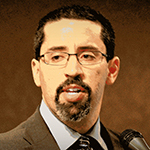 Last month, former Seventh-day Adventist pastor Ryan Bell (not to be confused with Rob Bell) dropped the bombshell: he doesn’t believe in God anymore.
His story has hit national media outlets such as NPR and the Huffington Post. Bell was the pastor who tried the experiment he called “a year without God,” blogging through the experience.
He sought to “live as if God doesn’t exist.” In a post dated 12/31/13, he tried to explain what this would mean. “I will ‘try on’ atheism for a year,” he wrote. “I will not pray, read the Bible for inspiration, refer to God as the cause of things or hope that God might intervene. … I will read atheist ‘sacred texts.’ … I will also attempt to speak to as many actual atheists as possible.”
Apparently, after “trying it on,” it fit. In an interview with Chris Stedman of Religion News Service, he said that his stance remains “provisional,” but said, “The intellectual and emotional energy it takes to figure out how God fits into everything is far greater than dealing with reality as it presents itself to us.”
Despite hoping that Bell doesn’t use such criteria to determine if other things in life are worth it, I did find some of his insights helpful and appreciate the bridge building he’s already doing between believers and atheists. He said he wishes “more Christians knew that atheists are not nihilists who have no meaning to their lives or people with no moral compass.” Conversely, he wishes “more atheists knew that Christians care very deeply about knowledge and truth … [and] are not stupid.” Amen to both.
I honor and appreciate his experience. I do not wish to dismiss his journey and I applaud his vulnerability. I simply wish to make an observation.
Ryan Bell says he spent a year without God. I would suggest that such an experiment is not possible.
There is no such thing as life without God. When I speak of God, I’m speaking of a Spirit that is so fundamental to existence, a reality so fundamental to life, that talk of believing or disbelieving is ultimately nonsensical. It’s our own beliefs that we disbelieve in, not God.
“In him, we live and move and have our being” (Acts 17:28). To say that one is living without God is not very different from saying that one is swimming without water or breathing without air.
In Joining the Dance, Molly Marshall notes that even though we readily affirm that God is omnipresent, “the way we often speak about the Spirit seems to deny this reality. We locate the Spirit in rather specific, at times restrictive, places.”
In The Spirit of Life, Jurgen Moltmann says that the “possibility of perceiving God in all things, and all things in God, is grounded theologically on an understanding of the Spirit of God as the power of creation and the wellspring of life.”
I like the analogy of a ship sunken in the ocean. We are the ship, God is the ocean. While the ocean fully contains the ship and much more, the ship only contains a small piece of the ocean.
We need to remember that God is “beyond belief.”
It is necessary and natural that humans rely on metaphors, images and names to speak of God. We have to. What’s important is to realize that, as long as we are human, they will be limited. When we put too much stock in them, we’re headed for trouble. Agnosticism and atheism boil down to not having a metaphor, image or name that meaningfully speaks to one’s experience of the divine in our current context.
In his book Long Ago God Spoke, William Holladay put it well: “Theology is learning to say the least wrong thing about God. All God talk is wrong to some degree. The trick is to reduce the wrongness to a minimum.”
Our beliefs, creeds and confessions all play a vital role in grounding our faith and seeking to understand how God relates to us, but, as Peter Rollins put it, “Naming God is never really naming God but only naming our understanding of God.”
In recent years, so-called “new atheists,” authors like Richard Dawkins, Sam Harris, and Christopher Hitchens, found a niche shooting fish in a barrel; i.e., pointing out the inadequacies of particular concepts of God and expressions of belief. The works of these authors rely on a surprisingly elementary conflation of God and religion or God and Scripture. Again from Peter Rollins: “God is not the name. God is that which generates the name.”
It’s noteworthy that Bell spent much of his introductory blog post on 12/31/13 talking about the issues he had with his church and denomination. “Things I was most proud of in my ministry earned me rebuke and alienation from church administrators,” he wrote.
Before Bell’s “year without God” began, it’s clear that he had already begun to feel a disconnect with the culture of church. “I struggle to relate to church people, preferring the company of skeptics and non-church-goers.”
It comes as no surprise to me that Bell found the culture of church to be an unwelcoming place for skepticism and doubt. This is an unfortunate reality we’re still dealing with. Like Bell, I too find a lot of common ground in the company of skeptics who like to ask questions and refuse to take things at face value.
But none of that poses any threat to the reality of God.
Bell’s experiment included “talking to as many atheists as possible” and reading certain books from which he had previously steered clear. I certainly hope such actions don’t constitute “life without God”?
For me, it’s just the opposite. Like many, I’ve had to navigate doubts and questions in my own journey. But I have begun to see new questions and new insights as that which brings me closer to the heart of God, not further away. From Moses to the psalmists to the disciples and Paul, Scripture tells the story of God surprising people, taking them beyond where they thought they would go, and revealing God’s self as bigger than they thought.
I have a hunch that still happens today.