


For much of my life, I did not fully grasp the depth of my mother’s anxiety regarding my journey until I witnessed the experiences of those who came after me. I never truly understood the scope of her concern each time I ventured out with my friends.
Like many Black children sought after for our “potential,” I attended a predominantly white high school and nearly attended Western Reserve Academy. I spent time in Finland as an AFS exchange student, navigating spaces where my presence was a novelty. When people told me they “didn’t see my brownness,” I internalized the subtext: That there was something inherently wrong with my Blackness — my “swag,” my imagination, my hair, even my voice.
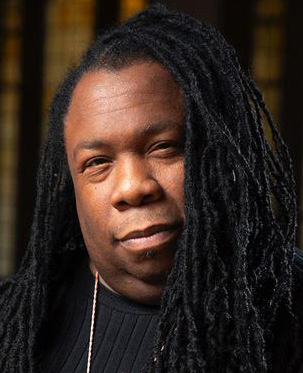
TJ Williams Hauger
In these spaces, I became a “white evangelical,” a transformation that served as a psychological defense mechanism against the constant microaggressions and the underlying message that I was “not one of them.” My parents may have believed that proximity to these institutions offered protection, but proximity is not a shield.
I endured physical abuse and systemic cruelty, including a haunting memory of being followed down the hallways of Youngstown Baptist by a classmate and by individuals making monkey sounds as I walked. Having served in ministry for more than 20 years, I can attest that the cost of being “the only” is a collection of deep emotional scars.
The recent story of Nolan Xavier Wells, a college student at Southwest Mississippi Community College, serves as a tragic mirror. Nolan was a young man in peak physical condition, yet he found himself vulnerable in a world that often views Black excellence as a target. Many parents believe that because someone invites their child over, laughs with them or plays sports with them, there is a mutual understanding of experience. However, friendship does not automatically equate to awareness, and proximity does not guarantee protection.
We must ensure our children understand their inherent worth before the world attempts to define it for them. Sometimes, in our urgency to secure a seat for our children at someone else’s table, we forget to ask what they must sacrifice to sit there.
Elite schools and affluent neighborhoods mean nothing if a child loses their confidence or their soul in the process. We must have the uncomfortable conversation: What we perceive as protection may actually be exposure to profound harm.
“Sometimes, in our urgency to secure a seat for our children at someone else’s table, we forget to ask what they must sacrifice to sit there.”
I recall an incident in Lynchburg, Va., when I was 23. I was a student at Temple University and had befriended a group of wealthy whites. They invited me to a Labor Day gathering on a rooftop in Rittenhouse Square. I was the only Black person among 15. After a few hours, the group went downstairs, claiming they would return shortly. I remained on the rooftop for three and a half hours, eventually realizing they had locked the door.
I waited until a worker on an adjacent roof assisted me with a ladder. When I finally rejoined the group, they laughed. They dismissed it as a “practical joke,” a test to see how I would “hold my own.”
It was then I recognized the reality of “hunting season.” In these circles, the Black friend is often treated as prey — subjected to “sport” to test their resilience, their stamina or their ability to navigate traps. They wanted to see if the Black man from the inner city could survive their manufactured crisis.
I realized that these were not accidents; they were manifestations of malice disguised as humor. Whether on a rooftop in Philadelphia or at a waterpark at Dorney Park or university dorms or at church, the dynamic remains the same: We are viewed as the deer, the rabbit or the wolf to be studied and broken.
My mother’s ultimate prayer was for me to stand in the confidence of my Blackness, unbowed by the spaces I choose to enter. As a minister and a scholar of resistance, I recognize our survival depends not on assimilation into white spaces, but on the radical reclamation of our worth and the dismantling of the systems that treat our lives as a game.
TJ Williams Hauger is a Baptist pastor in Chicago, an activist and content creator. He earned a master of divinity degree from New York Theological Seminary and is a doctoral student.