


“Ya know, sometimes it takes a lot more courage to live than it does to die.”
It’s one of those movie lines worth watching on repeat. In the 1961 Western Two Rode Together, the snobby townspeople want to know why kidnapped Elena didn’t kill herself rather than suffer the indignity of being married to a “savage.” Marshal Guthrie McCabe, played by the great World War II combat pilot Jimmy Stewart, defends Elena’s decision by scolding the established order with that great line.
Many of us say we would die for our country — willing to wind up dead in a coffin. But are we willing to wind up alive in a cage for an even higher principle?

Henry David Thoreau (1817-1862)
In 1848, Henry Thoreau, author of Walden Pond, was jailed for refusing to pay the poll tax funding the Mexican-American War. Why wasn’t he paying his taxes? He found the war to be unjust. He was a passionate abolitionist, and the war was being waged in part because Texas wanted to be independent of Mexico, which had banned enslavement.
An unconfirmed legend describes fellow abolitionist Ralph Waldo Emerson coming to visit Thoreau and saying, “Henry, what are you doing in jail?” In the Vietnam-War-era play The Night Thoreau Spent in Jail, Thoreau is portrayed making the incisive reply, “Waldo! What are you doing out of jail?”
After his jail experience, Thoreau wrote his famous essay Civil Disobedience. Reading it makes clear that the account of the Emerson-Thoreau conversation certainly reflects the mindset of Thoreau.
Some might find Thoreau’s anarchist leanings to cross the line into naïveté at times, but we can admire the longing for human growth. However, we cannot go forward until we stop the slide backward into the Dark Ages.
Sober anticipation
For those willing to see it, evidence of the modern demise of American democracy and the undermining of intellectualism explodes with the brightness of an urban redlight district. Deniers of this reality say Donald Trump just talks big and won’t actually do things like launch a military campaign against Panama or Canada or Greenland. These same people said he wouldn’t pursue Project 2025, but when he did, they said, “This is why I voted for him.”
Our current situation merits sober anticipation. Trump recently escalated his chest-pounding rhetoric to action when he directed military commanders to prepare contingencies for “reclaiming” Panama. He also would not rule out using the military to claim Greenland. Again, many will say this is just blather and posturing — like the way his talk of pardoning insurrectionists was just bluster. The Scout motto wisely says, “Be prepared.” Thus, we need to mentally prepare for how we will respond to an imperialistic land grab.
Remember McKinley
First, we need to consider the history that informs the prospects. Trump lauds President William McKinley as a great businessman who claimed Puerto Rico for the United States. McKinley also ordered the invasion of the Philippines. He said he did this because after praying he felt led by God to “Christianize” the Filipino people.
What a disgusting false prophet. First, hundreds of years of Spanish rule had made the Philippines largely Catholic, so McKinley — addressing a group of Methodists — spoke in code to make the Filipinos not Christian but Protestant.

Filipino casualties on the first day of the Philippine-American War. Original caption is ‘Insurgent dead just as they fell in the trench near Santa Ana, February 5th. The trench was circular, and the picture shows but a small portion.’ (Source: Wikimedia)
Look at this photo of defenders of their country slaughtered by U.S. soldiers. Do they feel the love of Christ? Is this the answer to “What would Jesus do?”
No, but this is Donald Trump’s answer to “What should a president do?”
And look at this photo of caskets. Zoom in on the names. This is a small sample of the U.S. soldiers who gave their lives for McKinley’s ignorant folly. Total U.S. deaths were more than 4,200 (more than on 9-11). Estimates of Filipinos killed range from 200,000 to 1 million.
Now picture all those bodies piled upon one another. That is Mt. McKinley. Indigenous Alaskans have yet another reason for the majestic Mt. Denali not to be sullied by this particular imperialist’s name.
As we get closer to considering how to respond if we find ourselves with orders to prosecute an unjust war, let’s listen to the words of some of the soldiers who carried out President McKinley’s orders. The research of historian Rowena Bailon passes along these words preserved by the efforts of the Anti-Imperialist League, which sought to document the war through soldiers’ accounts since “General Elwell Otis imposed a strict censorship on news.”

(Source: Wikimedia)
This reference from Bailon’s article represents soldiers with the integrity to at least internally question the legitimacy of the actions:
Included in their letters are their grievances, disillusionment and criticism of their duty as agents of the state. A number of letters were of this nature. Sergeant Arthur Vickens of the First Nebraska Regiment wrote, “I am not afraid, and I am always ready to do my duty, but I would like someone to tell me what we are fighting for.”
Then, tragically, there are those like these — representing the worst of humanity of which we do well to avoid becoming. Bailon reports:
Sergeant Will A. Rule of Co. H, Colorado Volunteer thus defined Filipino warfare as “when (…) an order calling out all of the women, and children, and then setting fire to houses and shooting down any niggers attempting to escape from the flames”

William McKinley (Wikipedia)
The researcher also notes:
The soldiers’ letters also contained racist rhetoric that benefitted the AIL. From the Soldiers’ Letters published by the AIL, words soldiers commonly used in describing their actions were “goo-goo hunt,” “nigger-fighting business,” “rabbit hunting,” “kill and burn business” and in regarding the Filipinos were “niggers,” “brainless monkeys,” “jack-rabbits,” “heathens,” “Injuns,” “dark-skin,” “goo-goos,” and “Indians.”
In the process of writing this piece I was put in contact with a Vietnam War veteran whose position on the war I did not know. When he understood his being drafted was inevitable, he enlisted because of advantages in the timing of boot camp. In response to the preceding passage on racism, he said:
My official Army training taught us that the North Vietnamese were “Gooks” and perhaps even a bunch of the South Vietnamese were as well. I particularly remember a fairly long movie with the aim of dehumanizing the Vietnamese which made it easier to kill them. … When one is being attacked with bullets or, in my case usually rockets sent from afar, it’s very easy to hate and want to harm the person attacking. So many sad stories of macho stupidity and just total incompetence form the foundation of the war. … I was attached to (and) ran security for a battalion of humongous bull dozers whose goal was to bulldoze a mile-wide swath through the jungle to deny the “enemy” cover. I can still picture one afternoon when there was a shooter in some jungle nearby and our CO called in a napalm strike on them. I’m not proud of the yelling and shouting by our group making fun of the “crispy critters” that were the result of that strike. Just writing that makes my heart shudder and I can still picture that event as if it happened this morning. … I spent some time working with an amazing counselor (who challenged me to find the wisdom I could glean from the horror of the war). … Some 20 years after (the counseling) and 50-plus years since the events happened, I can see those experiences informing my life in ways that are constructive.
Do we want history to see us in the way Bailon reports many U.S. soldiers in the Philippines-American War — and like the Vietnam veteran just quoted — saw themselves in hindsight?
The Philippine-American War tarnished the “exceptional image” of the U.S. It changed the mindset of some of the idealist soldiers who enlisted in the belief that they are helping a country out from bondage.
These soldiers had been deceived. However, it can be argued that thanks to the work of the AIL, using the soldiers’ letters, the carnage was shortened, although not by as much as it could have been had it not been for a stubbornly arrogant U.S. foreign policy:
The soldiers’ letters, together with the AIL’s propagation of anti-war sentiment, prompted the policy makers to act. President Roosevelt officially ended the war, although the fighting was still ongoing and would last a decade more in the southern part of the Philippines.

Martin Luther King Jr. at Riverside Church, 1967.
Remember Vietnam
More recently, the United States experienced great conflict over the legitimacy and morality of the Vietnam War. President John F. Kennedy appointed as secretary of defense Robert McNamara, who had served in World War II as a bomber efficiency statistician. When recruited to his new position in government, he was serving as a $3 million-dollar-per-year executive in the automotive industry. (Sound familiar?) He was a highly effective bean counter with little to no experience in foreign policy. President Lyndon Johnson inherited the Vietnam War upon Kennedy’s assassination.
The Vietnam veteran who reviewed this article added:
Johnson didn’t just inherit the war; he used a false narrative (Gulf of Tonkin Incident) — which he KNEW was false — to greatly expand the war because Barry Goldwater was pushing him as being soft on the commies. (Johnson) desperately wanted to be re-elected so that he could continue his rise in power on his “own merits.”

Lyndon B. Johnson
When asked why he didn’t just pull American troops out of Vietnam, Johnson reportedly said — using the logical fallacy of sunk costs in grossly callous fashion — “I will not be the first president to lose a war.” Some 20 years after the war, McNamara would pen an autobiography unequivocally describing the United States’ action in Vietnam as a mistake. A United Press International article poignantly summarizes the confession:
McNamara, unsparing in his criticism of himself, wrote that, ‘I had never visited Indochina, nor did I understand or appreciate its history, language, culture or values.’ The same was true of all other top Kennedy advisers, he said. ‘Worse, our government lacked experts for us to consult to compensate for our ignorance about Southeast Asia,’ with the State Department’s top Asian experts having been purged during the ‘McCarthy hysteria of the 1950s.’ Without good advice, the Kennedy team ‘badly misread China’s objectives and mistook its bellicose rhetoric to imply a drive’ to take over the region.
We can commend McNamara for his humility in admitting a mistake. Both veterans who gave feedback for this article — and completely independently of one another — recommended H.R. McMaster’s book Dereliction of Duty: Lyndon Johnson, Robert McNamara, the Joint Chiefs of Staff, and the Lies that Led to Vietnam. These books are retrospective. What of the draftee or even enlisted personnel who see mistakes happening in real time?
We’ll come back to that. For now, let’s move from history to the psychology of morality.
Moral development
In his 1958 dissertation, psychologist Lawrence Kohlberg described his first formulation of the stages of moral development — the notion that mature morality emerges sequentially but not as fully in some as others. Kohlberg assessed the level not based on what people decided was the right thing to do but on how they made the decision. (For instance: “I wouldn’t vote for the candidate because I disagree with her policies” versus “I wouldn’t vote for the candidate because she’s Black.” Both voters propose the same behavior, but one reaches the conclusion on the basis of racism.)
Kohlberg gave academic labels to the six stages of moral reasoning that move from concrete to increasingly abstract. They can be simplified this way:
- Something is wrong if I will be punished for it.
- Something is wrong if I feel bad for it.
- Something is wrong if I lose other people’s approval.
- Something is wrong if it breaks the rules. (According to Kohlberg, most folks stop here.)
- Something is wrong if it breaks principles of justice. (For example: “The law is wrong, I will not move to the back of the bus.” According to Kohlberg, only 10% to 15% of people achieve this level.)
- Something is wrong if it deviates from promoting the abstract principles of equality, dignity and respect. (We’re talking here about folks like Jesus, Gandhi, Mother Theresa and Martin Luther King Jr. Very few operate at this level.)
How do we apply this to the politics of war? McKinley mistook greed for the voice of God instructing the slaughter of thousands. Kennedy, McNamara and Johnson prosecuted a war of paranoia and pride that led to conscientious objectors being labeled “draft dodgers” for breaking the law. More than a century earlier, Henry Thoreau was serving as a model of thinking at a level beyond “the law”:
“McKinley mistook greed for the voice of God instructing the slaughter of thousands.”
Must the citizen ever for a moment, or in the least degree, resign his conscience to the legislator? Why has every man a conscience then? I think that we should be men first, and subjects afterward. It is not desirable to cultivate a respect for the law, so much as for the right. The only obligation which I have a right to assume is to do at any time what I think right. It is truly enough said that a corporation has no conscience; but a corporation of conscientious men is a corporation with a conscience.
It is difficult to apply this concept when the majority of folks operating at level four see this kind of level six thinking as a threat to their power rather than a path to greater civility. Yet, it is not pie in the sky. We have the success of the Civil Rights Movement to show for it.
It’s just that the law is slow to catch up with supreme principles. That’s no reason not to press on and certainly no reason to regress.
What will you do?
So, what will you do if an administration proposes military action not to protect and defend the United States but to offensively infringe on a sovereign nation’s rights to self-determination?
In the movie A Few Good Men, Lt. Weinberg points out that the argument “I was just following orders” was not an accepted defense for William Calley, the U.S. officer who massacred 22 civilians at Mỹ Lai, Vietnam. Nor was it an accepted defense for the Nazis at the Nuremberg trials after World War II. We should note that, in contrast to Calley, U.S. Army officer Hugh Thompson Jr. intervened, leading his helicopter crew to several Vietnamese civilians by “threatening and blocking American officers and enlisted soldiers” who were carrying out the massacre — and by personally escorting civilians to safety.
My Vietnam veteran reviewer of this article commented:
Mỹ Lai is just one small story in a sordid list of events like this. It was “seen” and thus was publicized, but I have heard other stories from vets who suffer every day from the memories of napalm on inhabited villages, of machine gun emplacements shooting into inhabited dwellings (men, women and children) and the like. Mỹ Lai was not the exception to the rule. Body counts were the currency of the day. I’ve had intimate conversations with a local veteran who was a noncommissioned officer in the Army and was ordered to do some of the above and relives it in tears every day now over half a century later.
I also spoke to a military friend who gave me some pointers on the difficulty of the question of when and how to disobey an order. The United States allows citizens to declare themselves conscientious objectors to war.

President Harry Truman awards Cpl. Desmond Doss the Medal of Honor. (Photo courtesy of the Desmond Doss Council)
The story of one such person, Desmond Doss, is famously portrayed in the Academy Award-winning movie Hacksaw Ridge. For religious reasons, Doss refused to carry a weapon during World War II but was twice awarded the Bronze Star and earned the Medal of Honor for saving about 75 fellow soldiers at the Battle of Okinawa.
Two other conscientious objectors have been awarded the Medal of Honor: Thomas Bennett and Joseph LaPoint Jr. In response to this paragraph, the Vietnam veteran reviewer commented: “I knew a few COs who served in Vietnam as medics, and they did so without carrying weapons of any type. Those are heroes to me.”
But what about refusing to participate after taking the oath? My consultant acknowledged that is a sticky matter, especially given that enlisted personnel take a different oath than commissioned officers. Enlisted personnel make this pledge (with the first section I’ve italicized being the same for officers):
I, _____, do solemnly swear (or affirm) that I will support and defend the Constitution of the United States against all enemies, foreign and domestic; that I will bear true faith and allegiance to the same; and that I will obey the orders of the president of the United States and the orders of the officers appointed over me, according to regulations and the Uniform Code of Military Justice. So help me God.
By contrast, note that the oath for commissioned officers, ends differently, not pledging obedience to the president or other officers:
…that I take this obligation freely, without any mental reservation or purpose of evasion; and that I will well and faithfully discharge the duties of the office on which I am about to enter. So help me God.
“The Nuremberg trials only prosecuted officers because they have more latitude to countermand immoral orders.”
My military friend noted parenthetically that the Nuremberg trials only prosecuted officers because they have more latitude to countermand immoral orders. However, we must note that as an extra warning to officers and not a pass to the enlisted — as noted by the case of William Calley.
Two complicating factors
We now come to two complicating factors. First, while the oath for enlisted personnel requires obedience to the president and officers, the oath qualifies that the orders obeyed must be consistent with military regulations and the Uniform Code of Military Justice. An article by former military prosecutor John Ford points to several cases where soldiers were found criminally liable for following orders that broke this qualified condition.
Ford’s article raises the second complicating factor, stating, “The president’s authority to use military force is a hotly debated legal topic. … The fact that the president’s war-making powers are hotly debated is why it would be virtually impossible for a servicemember to refuse to deploy because he believed the war was improperly commenced.”
What Ford reports next merits quoting at length:
A few servicemembers have tried unsuccessfully to disobey orders to deploy in support of these operations. In 2006, 1st Lt. Ehren Watanda refused to deploy to Iraq because he believed the war was illegal. His arguments fell on unsympathetic ears. In fact, Watanda was not even permitted to present his preferred defense because “the order to deploy soldiers is a non-justiciable political question … an accused may not excuse his disobedience of an order to proceed to foreign duty on the ground that our presence there does not conform to his notions of legality.”
Notice two key issues about all this: First, the preceding quoted passages from Ford’s article only address the legality of the orders, not the morality of the orders. There are many communities where gambling and prostitution are legal but these activities go against many individuals’ moral fiber. It would be absurd to think a person should be compelled to engage in either of those behaviors, but soldiers who find a presidential military invasion to be immoral are, in terms of legal defense — sadly — out of luck. Or, as my military friend said, “If you can’t get support for your decision not to obey an order, you have to be ready for the consequences.”
Where’s your line?
That brings us back to the rubber-hitting-the-road question of what to do if a president orders the invasion of a country not for defense against a military or terrorism threat but as an effort of expanding territory or economic advantage. If your neighbor wanted to kill your family to have more land or less competition, would that be OK with you? What if your spouse and children were killed and the adult killer said, “My parents told me to do it, and the Bible says to honor your father and mother?”
“If your neighbor wanted to kill your family to have more land or less competition, would that be OK with you?”
We are, of course, not OK with either of these scenarios. Thus, doing to our global neighbors what we would not want done to us means we must mentally prepare for the consequences of refusing to take part in tyranny — whether directly or in material support.
As Gandhi said at his sedition trial — in route to leading India to independence from Britain: “In my humble opinion, noncooperation with evil is as much a duty as is cooperation with good.” He served two years of a six-year sentence in prison.
There are more contemporary precedents of following one’s conscience in the face of a superior’s orders. Sometimes it even is rewarded.

Ghandi
In my home state of Tennessee, one of my former college classmates, Steve Crump, was serving as a district attorney when the governor ordered the shutdown of certain businesses during the COVID pandemic. His oath was not to obey the governor but to support the constitutions of both Tennessee and the United States. My friend publicly announced that he found the governor’s order criminally at odds with the Tennessee Constitution and that he would not prosecute violators of the executive order, asserting that doing so would conflict with his obligation to the Tennessee Constitution. Three years later, Crump’s peers elected him executive director of the state’s District Attorneys General Conference.
Of course, Crump’s decision not to cooperate with the governor’s order was fraught with sticky implications for civic order. But as Thoreau said, the individual is responsible to their conscience — which comes with the willingness to lose our jobs if the system doesn’t side with us. However, society needs to carve out room for conscience and jobs.
Those defending the right of a baker not to make a cake for a wedding they find immoral like to say: We must navigate how to honor people’s “sincerely held beliefs.” This means an individual’s sincere and conscientious moral constitution ranks above a government document. And if not baking a cake can be rooted in a sincerely held belief, surely the right not to shoot and kill a person or attack their land is at least this sacred.
“If not baking a cake can be rooted in a sincerely held belief, surely the right not to shoot and kill a person or attack their land is at least this sacred.”
Sadly, in our culture we often elevate military valor above all other types of valor. At a church-related event, I once heard a speaker boast that he volunteered for service in Vietnam because people from his state were patriots and didn’t dodge the draft. Later, in one of the most truth-evoking fits of rage I have ever witnessed, the person screamed, “I know what it’s like to (lose something). My drunk father lost our house my senior year in high school.”
I thought, “Dear God. You didn’t volunteer because you were a patriot. You volunteered because you needed a job when your daddy lost his.”
By contrast, I’ve known many who sincerely believed their service in Vietnam was the right thing to do. I honor them and the pain of their remorse as I do those who were killed on both sides. We all need to condemn society’s use of the need for employment to recruit soldiers and then trap them in an oath that is used to manipulate their conscience.
Remember Obadiah Holmes

The Whipping of Obadiah Holmes in Boston (Common domain)
While most of the foregoing has addressed the agonizing position of military personnel, I cannot ask you soldiers, sailors and marines to risk your liberty if I am not willing to do the same. It is not fair for civilians like me to call for the consideration of accepting consequences of foregoing an immoral order if we are not willing to face such consequences in our own hypothetical noncooperation with evil.
I have written this from the perspective of a historically rooted Baptist — with role models like layperson/deacon Obadiah Holmes (a fifth great-grandfather of Abraham Lincoln) who was jailed and then viscously flogged for refusing to pay a fine. What law did he disobey that led to his conviction by, among others, William Bradford and Miles Standish? He assisted in leading a worship experience in a private home despite the law of the Massachusetts Bay Colony saying all religious services had to be approved by the colony’s official government church.
Sometimes appropriate disobedience involves doing something that shouldn’t be prevented; sometimes it means not doing something that is wrongly instructed.
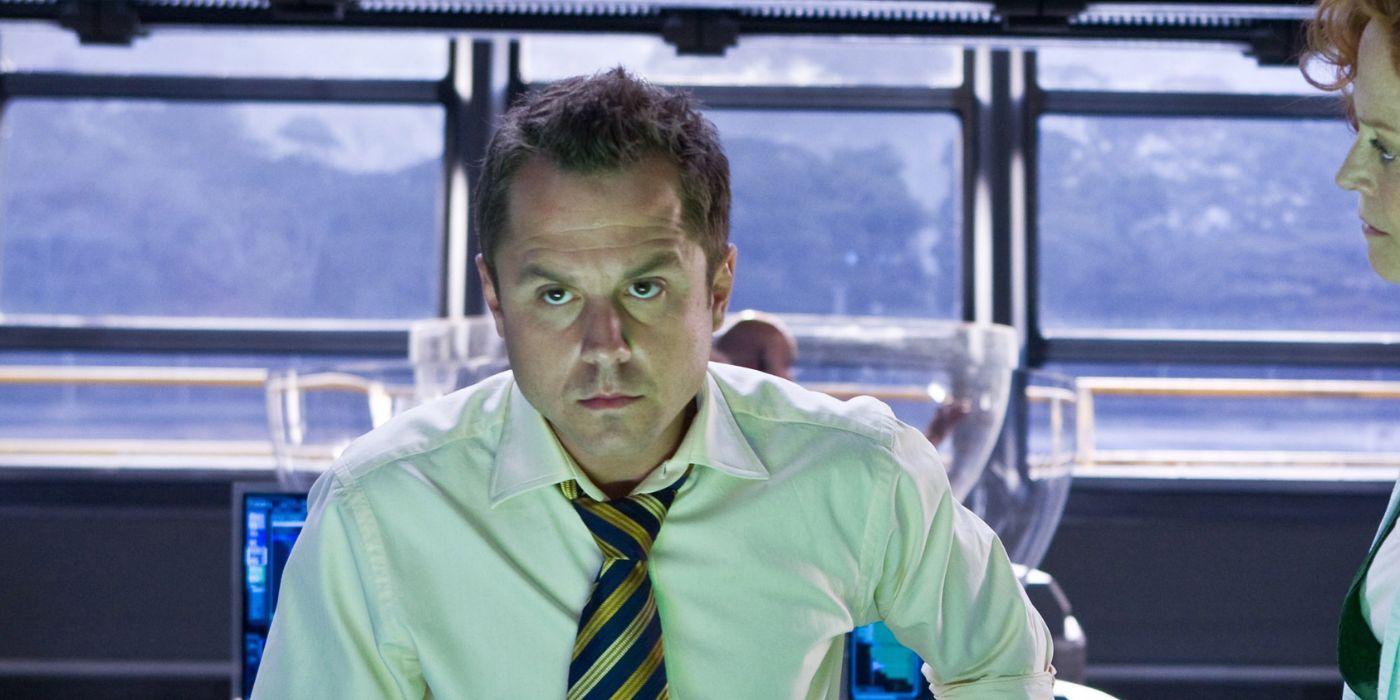
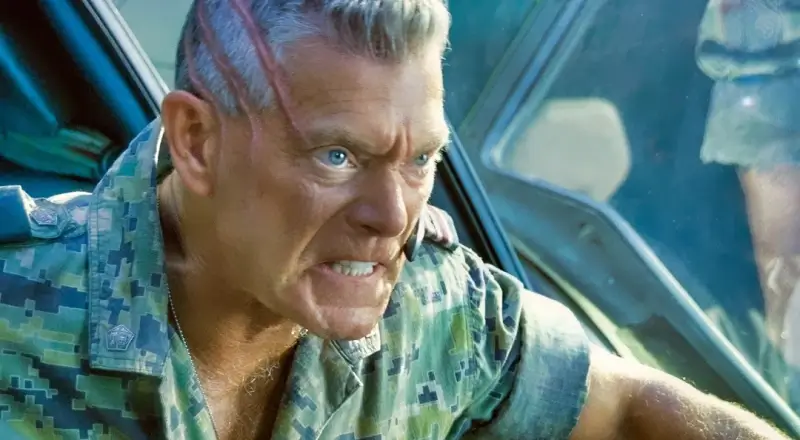
For contemporary young soldiers most likely to face a decision on immoral orders, the movie Avatar contrasts two types of moral commitments: one to selfish economic dominance and one to equity and justice. The U.S. government wants to claim the natural resources of another planet. A military operation is launched to attain the planet by force via the slaughter of the indigenous inhabitants and the pillaging of the land and its creatures. This rape and pillage is led by two people: Civilian contractor Parker Selfridge, whose constitution makes him what kids these days call a “quintessential douchebag,” and by military commander Col. Miles Quaritch, who takes toxic masculinity and cubes it. The character Jake Sully is a U.S. Marine whose conscience gets pricked by a bunch of civilian lovers of peace and justice led by Dr. Grace Augustine. (Talk about symbolic names!). Jake’s experience with Grace — and with indigenous people he encounters — calls him to oppose the wrong-headed and evil behavior of his superiors. Both Grace and Jake risk everything — and Grace even gives her life — standing for respect and justice.


I grew up in the Tennessee county where Davy Crockett got married. I regularly pass a historical marker in Maryville commemorating the site where Sam Houston joined the army in which he and Crocket wound up at the Alamo. They believed their cause was just.
Today, when we “Remember the Alamo,” we now know better. Thoreau was right. Inspired by him, Gandhi’s position on nonviolence and noncooperation has been summarized in this quote attributed to him: “There are many causes I would die for. There is not a single cause I would kill for.”
In considering our legacy and our responsibility to society, may we always remember our country was founded on the higher principle that all people are created equal. When others seek to undermine that, may we “Remember the Avatar.” Then, refusing to cooperate with authoritarian selfishness, may we Thoreau-ly stand for justice, dignity and equity.
This means we will pursue these ideals sacrificially, courageously and forcefully. Come what may.

Brad Bull
Brad Bull has served as a hospital chaplain, pastor, professor and therapist. In seminary in his 20s, while working in a psychiatric hospital, he was ordered to assist in the violent restraint of a 15-year-old girl. During debriefing, Brad angrily said the methods used were inappropriate, ending, “You can fire me, but I will never do that again.” He is still haunted by the girl’s screams and tears, and remembers what he prayed that night: “God, for the rest of my life, I will be the last person to follow a good order before I am ever again the first person to follow a bad one.”