


A woman, not a man, has done more for HBCUs than any person in history in just five faithful years.
MacKenzie Scott has rewritten the moral and financial law of modern philanthropy. She has done what few policies, pledges or political speeches have achieved: Changed lives, shifted systems and restored integrity to the act of giving itself.
In less than five years, Scott has transformed the national conversation about equity-based philanthropy. Her approach — rooted in quiet generosity, deep trust and humility — has reached historically neglected institutions, many of which serve marginalized populations left behind by America’s traditional wealth pipelines. Unlike the transactional legacy of old-money donors or the self-branded billionaires of today, Scott’s giving isn’t about headlines; it’s about healing.
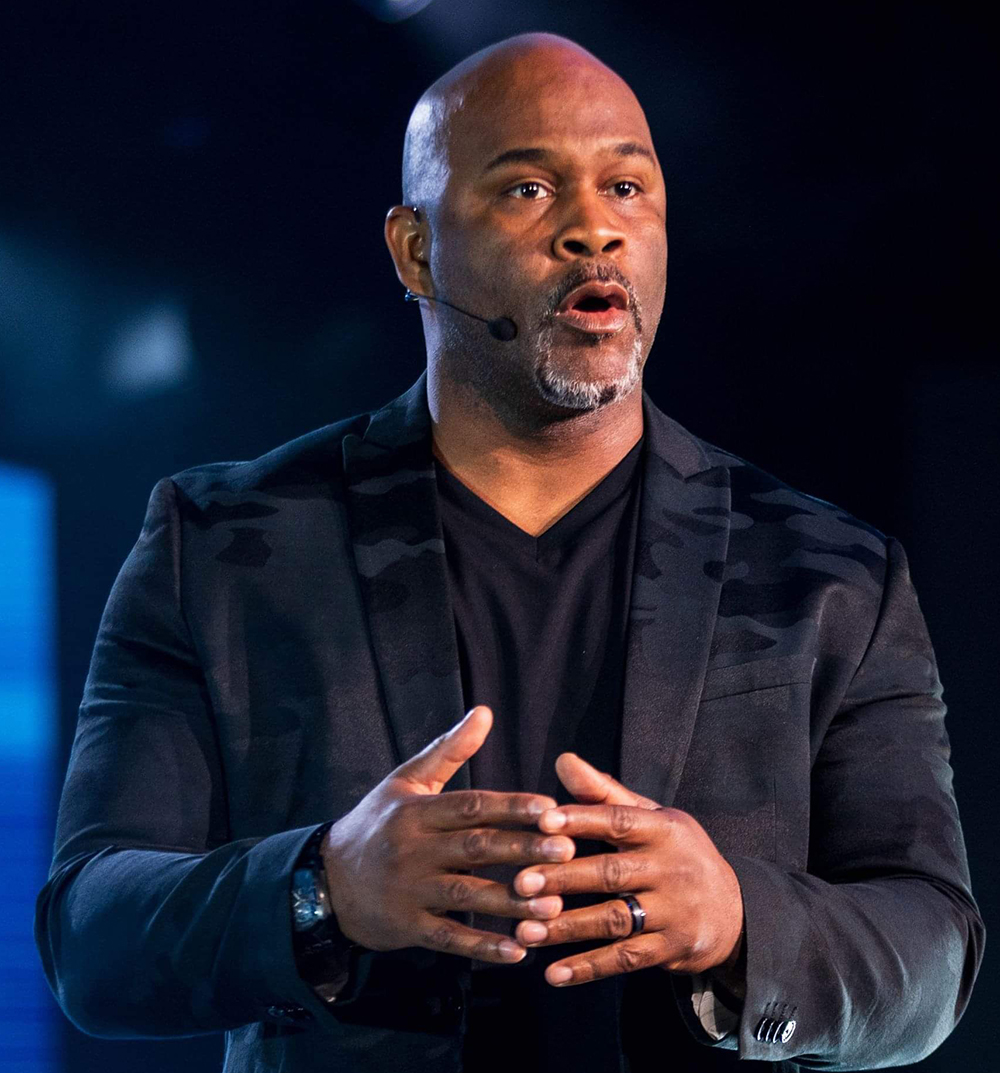
Edmond W. Davis
Through her visionary and unrestricted philanthropy, MacKenzie Scott has given more than $19 billion to more than 1,600 organizations, reports Yahoo Finance and Fortune. Among her most profound impacts has been her record-breaking investment in Historically Black Colleges and Universities, where she has quietly directed more than $1 billion in donations to three dozen campuses nationwide.
Her giving came without applications, without red tape and without the usual stipulations that too often strangle institutional freedom. Instead, she entrusted each institution to know best how to serve its students, faculty and surrounding communities. This radical trust is both symbolic and systemic. It challenges centuries of philanthropic paternalism and redefines how wealth can repair, not reinforce, inequity.
No single donor in American history — not Rockefeller, Carnegie, Mellon, Vanderbilt, Morgan, Buffett, Musk or Gates — ever has invested more directly and broadly into Black higher education than MacKenzie Scott. Her name stands alone in the giving to HBCUs, a unicorn in American philanthropy.
For more than a century, HBCUs have stood as beacons of resilience. Founded often under duress — some by abolitionists, others on church grounds, many in the shadows of Reconstruction — they educated those whom America excluded.
Yet even with their monumental social and cultural impact, HBCUs have been systemically underfunded and chronically undervalued. Federal and state budgets consistently shortchanged them. Private endowments paled compared to those of predominantly white institutions. And media coverage often overlooked their contributions.
Then came MacKenzie Scott.
Her strategic, unrestricted donations didn’t just fund programs — they fortified legacies. They restored confidence in institutions that had been financially fragmented by decades of benign neglect. Her giving has allowed HBCUs to pay down debt, expand scholarship access, build endowments and launch initiatives in AI literacy, workforce development and community entrepreneurship.
“Her strategic, unrestricted donations didn’t just fund programs — they fortified legacies.”
At institutions such as Prairie View A&M University, Morgan State University, Philander Smith University and Dillard University, her generosity has created ripples of sustainability. It has allowed presidents, provosts and students to dream — and execute — beyond survival.
Out of respect for her values, we must refer to her simply as MacKenzie Scott — not by association with anyone else when it comes to her philanthropy. Her vision and her voice stand independently of any prior relationship or external influence.

Mackenzie Scott (Shutterstock)
Her giving is distinctly feminine in its leadership style — quiet yet disruptive, graceful yet unapologetically transformative. She listens, trusts and empowers rather than dictates. In an age when philanthropy often feels performative, Scott’s humility has made her revolutionary. She speaks less and gives more. She doesn’t just write checks. She writes a new moral code.
And she does it while refusing public adulation.
That is why any effort to name a college or university after her must be approached with deep respect for her known preference for anonymity. But the philosophy behind her giving — what it represents to HBCUs and higher education — deserves to be institutionalized.
Rather than renaming a college, the nation’s HBCU consortia and philanthropic networks should consider establishing The MacKenzie Scott Center for HBCU Philanthropy & Equity — an inter-HBCU hub dedicated to strategic philanthropy research, endowment development, and donor relations and equity training.
This center would serve as a living testament to her philosophy — a collaborative space where HBCU leaders and global philanthropists work to advance trust-based, equitable giving for generations to come.
Scott’s work is a moral renaissance. Her giving reminds us that empathy still has a place in economics and justice still belongs in generosity. By choosing to remain humble, by centering humanity over hierarchy, and by trusting those who’ve too long been overlooked, she has done something no endowment or government grant could ever achieve: She has reintroduced faith into philanthropy.
She has proved that giving without strings can untangle centuries of inequity. And she has reminded the world that when it comes to shaping the future of education and equity, it took a woman to rewrite the rules of giving, not a politician, not a celebrity, not a soldier, not a wealthy man or president. MacKenzie, all HBCUs salute you. I salute you. We salute you, and others salute you.
Edmond W. Davis is a graduate of Grambling State University and serves as a professor at Arkansas Baptist College, adjunct faculty at Philander Smith University and founder of the National HBCU Black Wall Street Career Fest.